Category Archives: Reviews

Looking at my reading list from some different angles

I’m not a competitive reader. I don’t typically sign up for the “read 100 books in a year” challenges et al. The prospect just leaves me a bit intimidated, a bit bewildered, and a little worried that the unalloyed joy of reading would go right out the window if I set myself on a path like that. Kudos to you who try them – they’re just not for me.

That said, a couple of reading challenges have come across my radar that had me thinking about how I stacked up without being conscious of setting out to meet those specific challenges. I made some interesting discoveries.

The 5th Annual Canadian Book Challenge
from The Book Mine Set blog, by John Mutford

The concept of this challenge is to read and review at least 13 Canadian books (of any genre or ilk) in the period from July 1st (Canada Day, of course) to the next July 1st. Participants share links to their reviews on Mutford’s blog. Yes, there are prizes, but Mutford emphasizes throughout that the main point is to share one’s delight in Canadian literature and have fun.

If I was part of this very worthy challenge, how would I fare? From July 1st, 2010 to July 1st, 2011, I read and reviewed 24 Canadian books of fiction (novels and short stories) and poetry, as follows:


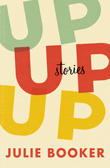
Up Up Up, by Julie Booker

In that period, I read one more Canadian book of short stories, Up Up Up by Julie Booker, for which I haven’t yet written a review. I adored that feisty, ebullient collection of indelible characters, many of whom seemed able to simultaneously squeeze the heart and tickle the proverbial funnybone. I know I was extremely busy with the day job around that time (and Up Up Up probably buoyed me through that patch), but I do need to go back and fill that gap in what I know I wanted to review this year. Till then, here’s a review that I think captures quite nicely what that charmer of a book is all about. (1)

So far, from July 1st, 2011 to the present, I read and reviewed 7 Canadian books of fiction (novels and short stories) and poetry, as follows:

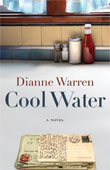
Cool Water, by Dianne Warren

I’ve read, but not yet reviewed, the following. Since I haven’t reviewed them, I’ve found and linked to some other interesting and astute reviews.

So then … I’d say I’m pretty enthusiastic about literature from my home and native land. That’s not such a bad thing, eh? In the July, 2010 to July, 2011 period in which I read 25 Canadian books, I read a total of 39 books – 64% CanLit.

If I wanted to spawn a personal challenge from these findings, I could go in different directions. Do I challenge myself to read yet more CanLit, or do I challenge myself to venture further outside Canada’s borders for my reading choices? How conscious/premeditated/planned versus unconscious/spontaneous/instinctual should my reading list be? Fellow readers, how much do you think about, plan or not plan your reading in this regard?

Here is another reader challenge that was promoted this year:

Year of the Short Story

As it states on the web page, YOSS (Year Of the Short Story) aims to unite fellow writers and readers everywhere in one cause—to bring short fiction the larger audience it deserves.

So far this year, I’ve read 4 short story collections:

I’m still hoping to read at least two more this year:

  • The Odious Child, by Carolyn Black
  • The Collected Stories of Lydia Davis

In 2010, I only read one short story collection:

In 2009, I read four short story collections:

I do think I want to both read and review more short story collections. I’ve certainly enjoyed the collections I’ve encountered in recent years … so yes, why not more?

It’s been interesting to step back a bit and assess the patterns or trends or inclinations in my reading, to see if I want to consciously adjust them in any way. Are you doing that with your own reading? Is that a good thing to do from time to time … or should reading just be an uncatalogued, spontaneous, follow your heart/go with the flow kind of thing?

Notes

1. Book Review: Up Up Up by Julie Booker, by Katherine Laidlaw, This Magazine, September 14, 2011

2. The Canadian Book Review, March 9, 2011

3. Reading for the Joy of It blog, Janet Somerville, October 3, 2010

4. The National Post, Katherine Govier, March 20, 2010

5. Quill & Quire, rob mclennan, November, 2010

6. Pickle Me This blog, Kerry Clare, September 15, 2011

7. Globe and Mail, review by Andrew Pyper, September 17, 2011

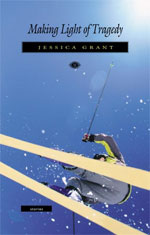
Making Light of Tragedy, by Jessica Grant

Making Light of Tragedy, by Jessica Grant

Jessica Grant has reminded me to exercise some long-neglected, or perhaps never fully understood or appreciated muscles. Throughout the exhilarating journey through the short stories of Grant’s Making Light of Tragedy, I sensed something charmingly, arrestingly askew in each story’s setting, interplay of characters and/or narrator’s voice … but could not quite zero in on what it was, and why it felt pleasantly dizzying, but not queasy-making.

Then I came to “Milaken”, the final, most extended and quirkily warmest story of a heart melting series, and I had my answer:

“Tad shuts his eyes and convinces himself his bed is in a different part of the room. This requires a certain muscle, which not everyone has, and which must be exercised regularly and built up, over time. It is not just a matter of visualizing. It is a matter of believing.

Tad trained himself as a kid by rearranging the furniture in his bedroom. Every Sunday, he pushed his bed into a new position – up against a different wall, into a new corner. He bisected the room four different ways, blocked the closet, blocked the door. Until he could move the bed around in his head, with himself in it, and believe in each new position, one hundred percent.”

You don’t just picture the fate of the Olympic ski jumper – Grant convinces you of it, through the grammatical certainty of his bewildered but unwavering wife. You don’t just see the cozy dinner party circle with the Dean of Humanity and imagine theorizing about where in the world you would take a war criminal – Grant forever alters that place in your world. You don’t just immediately see and hear the familiar faces and voices of Peter Mansbridge and Chantal Hebert – Grant has made you certain that Chantal will indeed give Peter a friendly punch the next time you tune in to the At Issue panel. Grant doesn’t just make you see, she makes you believe, however vaguely off-kilter each story’s world is. On one hand, you might find it over the top that a young girl at a birthday party would precociously declare herself suicide bomber O-Sara bin Laden, but then on the other hand, mere pages later, when Peter’s newcast includes an abrupt, segue-less report of a female suicide bomber who seems to have changed her mind … well, you’re convinced and it’s very real.

Tad illustrates what Grant does with each story in Making Light of Tragedy. As he rearranges his furniture (and later teaches his daughter to do the same thing, a gift as wonderful as her marvellous name), so does Grant take characters and keeps reinserting them back in their own, slightly altered stories, with the elements moved around just a touch (oh, a Tad!) … and checks again to see how they’re coping. The steps to falling out of love and then into unattainable or implausible love to cope makes strange, mad but then oddly feasible sense. An entanglement of complicated multisexual office romances escalating to possible threats of violence suddenly boils down to two people trying to sort it out in an office cubicle, perhaps a cubicle that you walked past at work today.

Jessica Grant came to popular and critical attention in 2009 with her first novel, Come, Thou Tortoise. This short story collection predates the novel by about four years, and the story “My Husband’s Jump” was a Journey Prize winner in 2003. Having read Making Light of Tragedy first, this reader is now eager, ready and willing, with the seeing and believing muscles suitably trained, to move on to the novel and to look forward to more from this preternaturally assured author.

Thank you to The Porcupine’s Quill for providing a review copy of Making Light of Tragedy, by Jessica Grant.

Elimination Dance, by Michael Ondaatje

Elimination Dance, by Michael Ondaatje

La Danse Eliminatoire (Traduction de Lola Lemire Tostevin)

This exquisite little gem of a book is a pointed marvel. The words, the translations and even the illustrations (including the sardonic maps at the end) all provoke laughter – much of it delighted, some of it more than a bit pained.

In 1998, filmmaker Bruce McDonald produced a short film vividly and wistfully interpreting Elimination Dance.

Thank you to Brick Books for providing a review copy of Elimination Dance: La danse eliminatoire, by Michael Ondaatje.

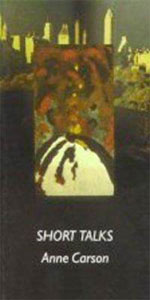
Short Talks, by Anne Carson

Short Talks, by Anne Carson

Each piece in Anne Carson’s Short Talks is a startling gem – some disorienting, some intimate, some wry, some wistful, many bright and impish. My favourite, combining almost all of those states, is:

Short Talk on Bonheur D’Etre Bien Aimee

Day after day I think of you as soon as I wake up. Someone has put cries of birds on the air like jewels.


This volume, slender in multiple dimensions, will be so easy to go back to again and again.

Thank you to Brick Books for providing a review copy of Short Talks, by Anne Carson.

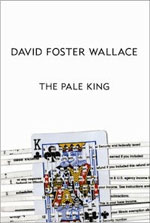
The Pale King, by David Foster Wallace

The Pale King, by David Foster Wallace

It’s actually fairly easy to compose a review – be it for a book, concert, what have you – for something that didn’t meet expectations or just didn’t really click for you. You can clinically delineate the disappointing elements or ingredients, sum it up, be done with it. No joy in that – perhaps no point in that – but there you go.

It’s even fairly straightforward to compose a review for something that didn’t make the grade, at least for you, but in which you try, however painfully, to say something constructive or useful. There is maybe some grim satisfaction in at least offering suggestions for improving the experience next time out. Maybe the artist will see your review and take note, and/or someone else will take note, and/or you’ll adjust your expectations accordingly or just not make a return visit to that artist’s offerings, life being too short and all that.

And of course, light, happy, effusive reviews for the delightful … well, are clearly delightful, to revel in, to share with others, to be part of the collective joy.

What hurts and doesn’t work and won’t come out right is when you try to write something about a work that you love, when you know quite rightly that not everyone will love it or care … or should, because you know it isn’t for everyone …. and especially when you know it is the last thing you will hear from a beloved artist. So I’m just going to write what has been percolating for weeks and weeks since I rather unwillingly finished the last page of this book, and be done with it, however inadequate it’s likely to be.

The Pale King by David Foster Wallace is the author’s most intimate and courageous work in a body of work characterized by much intimacy and courage, viewed both from what is within the book’s covers and viewed externally, in terms of its place in Wallace’s oeuvre and in the context of what happened while the work was in progress. When editor Michael Pietsch gathered and attempted to shape what his friend had left behind upon his death, one can only imagine the intimacy and courage attendant in that unanticipated and daunting mission. While a nascent bone structure of plot, theme and character is clearly evident, even the final product with which Pietsch leaves us is not and couldn’t possibly be fully formed. Interestingly, it doesn’t feel like it needed editing and paring, but likely as if it would have blossomed and grown even more complex, but would have had more elements come full circle, connect and resolve in what Wallace would have considered and delivered as the finished work.

The Pale King is ostensibly about the backgrounds and somewhat intertwined experiences of a cross section of employees of the Internal Revenue Service in Peoria, Illinois. Through their experiences, the reader learns about and, if the reader can bear to stick with it, absorbs the intensity and seeming futility of boredom, especially boredom bred of layers and layers of unquestioned rules, regulations and process. Amazingly, that boredom somehow becomes transcendent, counterpointed by a sense of the nobility of contending with boredom for seemingly greater causes, personal, social and even spiritual.

I was astonished at how Wallace made dealing with boredom so heroic, poignant and spellbinding. The standout sequence featuring IRS co-workers Shane Drinion and Meredith Rand is hypnotic, because Drinion is so arrestingly zen, compassionate and invested, listening so attentively to the story of Rand’s troubles, even though it was tedious, repetitious and self-absorbed. But it was still an absorbing sequence. And it showed what compassion and incredible attention to detail Wallace had himself. Perhaps it was that same intense sympathy and empathy that – who knows – drove him to what he did. So, the whole reading experience was both gorgeous and immensely bittersweet on numerous levels.

This is by no means the book with which readers should try to introduce themselves to David Foster Wallace – that could be anything from This is Water (which you can digest in a relative blink online), Consider the Lobster, possibly even Brief Interviews with Hideous Men. However, it is a wrenching and essential, albeit sadly premature last installment for Wallace devotees.

See also:

THE PALE KING: Monologues From The Unfinished Novel By David Foster Wallace
(a PEN benefit from April, 2011)

A Reunion with Boredom, by Charles Simic
(from New York Review of Books, August, 2011)

The Ghost Brush, by Katherine Govier

The Ghost Brush, by Katherine Govier

Guy Vanderhaeghe’s works such as The Englishman’s Boy and The Last Crossing have set the gold standard in Canadian historical fiction. The respected author mused recently about the challenge of letting readers know where history leaves off and whole cloth story begins:

“… There are many people who make the argument that there is very little distinction between history and fiction, because they are both authorial constructions. I do see a very great difference between the two.

“History tells us what people do; historical fiction helps us imagine how they felt. It allows contemporary people to under what it was like in another time. The second argument I would make is that history, as it is often written, makes people think that history was predetermined, that no other outcome was possible. Historical fiction inserts the idea that individual choices matter.”(1)

Katherine Govier tackles this very dichotomy in her extensively researched and exquisitely crafted The Ghost Brush, and as such, helps to define that gold standard. She does that by vividly raising one individual from the footnotes of another individual’s historical record. It’s history turned to fiction, then provocatively and not improbably turned back into history – and it’s unforgettable.

Katsushika Hokusai was a revered, prolific Japanese painter and printmaker of the Edo period, when Japan was ruled by the Shogun military dictatorship. Hokusai worked hard and managed to comparatively thrive both personally and artistically during that largely repressive rule, producing an astonishing range of work from the late 1700s to mid 1800s. He is perhaps best known for the print series Thirty-six Views of Mount Fuji, which includes the iconic, still prescient image The Great Wave off Kanagawa.

Hokusai was an astonishingly accomplished, innovative and brave artist and vibrant human being in his own right. However, Govier forges an even more captivating tale out from under Hokusai’s formidable shadow, that of the story of his equally if not possibly more gifted daughter, Oei, the titular presence of Govier’s singular novel.

Against the rich backdrop of 19th century metropolitan Edo, with its fascinating districts and social strata, Govier focuses on the thorny, symbiotic but ultimately loving collaboration and partnership between father and daughter. It becomes increasingly evident that Hokusai’s accomplishments reasonably and realistically exceed his age, health, lifestyle, abilities and inclinations, and there is confusion about who is signing what signature to various works. The fundamental mystery of Oei is whether or not she willingly subsumes her skills – her ghost brush – to the will of her brilliant, domineering father, to the constraints and expectations of Japanese society, or to her own ideas about achieving a perverse kind of freedom out of the spotlight. As one outsider to both the relationship and the social context observes, after meeting Oei:

Take Japanese women, for instance. The rare sophisticated woman ran a family inn or store. Others, earthier, were skilled in weaving or silk production. But even the most independent of them withered in the presence of a male relative. Women, he observed, had no social context of their own. They rarely appeared alone in public; it was positively Arab that way. Here was the greatest puzzle: there appeared to be no coercion. Women were willing partners in their own invisibility. Why was the Japanese woman so dependent, her very existence defined by obligation?

And yet, as seen today, why was the opposite evident, at least this once?

While the father-daughter relationship and collaboration is central to The Ghost Brush, Govier also introduces other relationships relative to Oei that to some extent crack the enigma and round her out as an intriguing but also believable character and singular woman. It’s not her relationships with other men – an off-kilter, brief marriage, various lovers – but Oei’s connection over the years to the feisty courtesan Shino that truly bring Oei to life, both setting her choices and perceived shortcomings in relief against a contrasting but equally strong female figure. Interestingly, the Oei/Shino relationship reminded this reader of another recent pairing of female/feminine characters offering each other both a counterpoint and counterbalancing support: the relationship of Wayne and Wallis in Annabel, by Kathleen Winter. Both Oei and Wayne exist in the shadows of strong father figures, struggle with their respective identities on one level or another, and find friendship, support and guidance from a figure who is sister and/or mother and/or full or partial alter ego.

Govier has acknowledged that she strove to use “fiction as restoration” to create Oei’s story. She has seamlessly blended her considerable research and a profound understanding to not only create a thoughtful and memorable story, but to subtly and firmly force a reconsideration of the original historical account.

As Vanderhaeghe points out, effective historical fiction posits that “individual choices matter”. In this case, the real Oei’s individual choices mattered as they affected her place in history and how it was interpreted and presented. Govier gives us the wonderful opportunity with The Ghost Brush to also make our own individual choices as readers in interpreting how just and accurate history was with Oei’s story and true accomplishments.

Notes

1. Guy Vanderhaeghe quoted in A Good Guy, by Allan Casey, in Quill & Quire, September 2011

See also:

Hokusai article in Wikipedia
http://en.wikipedia.org/wiki/Hokusai

The Ghost Brush web site
http://www.theghostbrush.com

Thank you to the author and to HarperCollins Canada for providing a supplementary copy of The Ghost Brush, by Katherine Govier that includes the afterword. I’m also grateful for my original copy of the trade paperback version of The Ghost Brush, acquired through the online Slave Lake Book Auction, generously donated by the author,

Hooked, by Carolyn Smart

Hooked,by Carolyn Smart

Carolyn Smart’s Hooked uses a wickedly irresistible premise: a twisted chorus of famous/infamous female figures from history and letters expounding vividly on obsession. Smart has fascinatingly curated the stories of women who made misguided and horrific choices for their objects of desire, and determinedly saw that desire through to often tragic conclusions: Myra Hindley, serial killer partner to Ian Brady (for Canadians,  the pairing is clearly Homolka-Bernardo); Unity Mitford, aristocratically born contrarian who became a confidante of Hitler; Zelda Fitzgerald, gifted, increasingly fragile spouse of F. Scott Fitzgerald; Dora Carrington, a painter associated with the Bloomsbury Group who carried a lifelong, unreciprocated passion for writer Lytton Strachey; Carson McCullers, a renowned writer who struggled with relationships, ill health and alcoholism; Jane Bowles, a talented, underrated writer who lived an unconventional and peripatetic life with husband Paul Bowles; and Elizabeth Smart, a poet whose work was overshadowed in her lifetime by the scandal of her enduring passion for poet George Barker, with whom she had and then singlehandedly raised four children.

As perversely and diversely interesting as the subject matter and cast of characters are, the voices from segment to segment in Hooked are somewhat disappointingly similar. Rhythm, cadence and pace are not so vividly distinguished as one might expect given the women’s different nationalities, social upbringings, mental states and time periods in which they lived, not to mention the varieties of types of charisma and inaccessible attractions with which each was enraptured. In some cases, there is too much admittedly clever direct quoting of sources (clear as such because it is italicized), but not enough true transmutation and alchemy to turn those sources into fresh perspectives and something of Smart’s own.

Hooked has inspired me to revisit or expand my reading on all of these figures, both in biographical and fictional realms. Less so, Hooked has impressed me with Smart’s inventiveness as a poet, but her resourcefulness with respect to exploring subject matter will still likely compel me to seek out more of her work.

Thank you to Brick Books for providing a review copy of Hooked, by Carolyn Smart.

Rin Tin Tin, The Life and the Legend, by Susan Orlean

Rin Tin Tin, The Life and the Legends

Rin Tin Tin, The Life and the Legend, by Susan Orlean, is a book that will satisfy a variety of readers in a variety of ways. Orlean has researched with heart and commitment the story of US army corporal Lee Duncan, a lonely young man who discovers a litter of abandoned German Shepherd puppies in rural France near the end of World War I. He goes to great lengths to transport two of the puppies back to US with him, one of the puppies does not survive beyond her arrival on American soil, but the surviving puppy goes on to become the genesis of the Hollywood and television legend Rin Tin Tin.

The story of Lee and Rinty – their devotion to each other, their collective determination to succeed, their collaboration and dedication to an unusual type of performance craft and most importantly, their profound bond – is a sufficiently absorbing and heartwarming tale unto itself. On that basis alone, Orlean offers a book that will captivate readers who are pet owners and animal lovers.

But Orlean takes that story as a starting point for examining and meditating on much more. Thematically, she muses on and considers how some lose families and familial identification and forge new families and identities (as was the case with Lee Duncan), and how some live with animals and make them part of uniquely constituted definitions of family. Through Lee Duncan and subsequent dog trainers, breeders, fans and professional and amateur curators and archivists who contributed to the ongoing Rin Tin Tin story, Orlean scrutinizes, sometimes in person and close at hand, how some ascribe to animals the traits and qualities we aspire to, and how many seek to fill what is lacking in their lives and relationships with companion animals. On that basis, Orlean offers a book that will appeal to readers seeking a non-judgmental exploration of the ways in which people find professional, personal and even spiritual fulfillment.

Eventually, the physical reality of one man and one dog, who obviously couldn’t live forever, ascends into something bigger. Rin Tin Tin becomes a franchise (a series of dogs, some blood related, some not, take up the Rin Tin Tin name), a trademark, a brand, an idealization and a legend. Orlean offers interesting and even instructive insights into the entertainment and advertising realms.

Orlean makes clear throughout Rin Tin Tin that the ideas of continuity and enduring memories and values developed in the book had personal significance for her. She is a strong presence and even a participant in the later chapters of the Rin Tin Tin story, both confirming her devotion to and connection with the subject, but perhaps also provoking the questions:  Does Orlean in fact bite off more than she can chew thematically with Rin Tin Tin? Does she get too involved in the story, perhaps not leaving space for the reader to independently interpret and react to how different players in the story – including Orlean – are variously invested in the legend?

We all have our own motivations for being drawn to a character and entity like Rin Tin Tin and to a book chronicling his story and enduring value. Susan Orlean provides a range of intriguing entry points into a still fascinating story that will appeal to many.

The following is a brief interview with Susan Orlean about her experiences researching Rin Tin Tin, The Life and the Legend:


Thank you to Simon & Schuster Canada for providing a review copy of Rin Tin Tin, The Life and the Legend, by Susan Orlean.

Appointment in Samarra, by John O’Hara

Appointment in Samarra, by John O'Hara

Appointment in Samarra vividly traces Julian English’s calamitous and seemingly inexplicable path of destruction in 72 hours during the Christmas holidays of 1930. In his early thirties and from an affluent family, college educated, manager of a thriving Cadillac dealership in small town Pennsylvania, married to an attractive and admired woman – there would seem to be nothing significant to explain English’s reckless behaviour and decisions that precipitiously eradicate his professional, personal and even spiritual footing in a matter of days. Even more so than Under the Volcano, Malcolm Lowry’s 1947 novel that captures a doomed character’s similarly compressed and irrevocable slide into oblivion, Appointment in Samarra is a breathless read, where one simply can’t look away until it’s over.

O’Hara’s novel showed great daring for its time, with respect to language and subject matter, touching on everything from alcohol consumption to sexual relations, marital infidelity, criminal activities and even suggestive clothing. The narration and dialogue are brisk and jazzy, albeit somewhat dated, but still vibrantly capture the idiom of the Prohibition and pre Great Depression era. The propulsive action of the story – wherein English lurches from one social gaffe to increasingly more disastrous, perverse behaviours – while compelling in its own right, almost overshadows O’Hara’s equal daring with more experimental themes and stylistic approaches. These include the suggestions that English’s bewildering flameout is somehow predestined, suggested by the novel’s epigraph, hinted at in references to English’s grandfather and even prefigured by the time frame of the novel, where there are mentions of the looming economic and social storm clouds of the Depression. As well, O’Hara employs shifting voices and points of view, and even some striking stream of consciousness narration.

Finally, O’Hara brings the novel to a startling non sequitur of a conclusion that drives home a memorable, almost existential lesson: the irony of how one’s misdemeanours might never be forgotten, but one’s essence and value can vaporize from memory as soon as one is gone.

Essex County, by Jeff Lemire and The Boy in the Moon, by Ian Brown (by guest reviewer H)

I’m very excited to welcome my first guest blogger to the Bookgaga book blog – my 16-year-old niece H. Somewhat in the tradition of “Take Your Kids to Work Day”, I invited H to familiarize herself with book blogs, and to take a bit of a stretch beyond school book reports and try contributing some reviews herself. I selected the titles, and she very gamely read them, thought a lot about them and has put time and thought into her assessments.

Essex County, by Jeff Lemire and The Boy in the Moon, by Ian Brown are much touted and discussed books that I’ve read a lot about, am interested in … but have not yet read myself. I was curious as part of this exercise to see if H’s reviews would be consistent with other commentary and coverage, would bring some new ideas forth, and might possibly dissuade me on one count or the other. I can safely say that she has brought some fresh perspectives in, and while critical in places, her comments have further convinced me to keep both books on the tbr list.

I hope you’ll find H’s reviews and this new Bookgaga venture interesting and thought provoking.

Essex County, by Jeff Lemire

Essex County, by Jeff Lemire
(Guest review by H)

I found the book Essex County to be a light, easy-going story. It was a very relaxing book and I found it full of adventure, and writer Jeff Lemire used creativity, showing how all the characters share connections from their pasts which they don’t realize in the present.

You also watch the characters develop, building connections. I actually felt as excited reading a hockey game, with characters, Vince and Lou Lebeuf, as I would in an NHL arena.

The stories are made to be a light read, nothing really too dramatic or serious. I liked that it was portrayed as a comic book. It was a nice change of pace. I also found that seeing pictures makes it easier to create an attachment with each individual character and their situations.

The character I grew most attached to is Lou Lebeuf, who played for the Toronto Grizzlies with his brother Vince. The story shows Lou all grown up, and having difficulties. You then learn the past, and about regrets created between Vince and Lou, and the fates they cause.

This story I could see being for teenage or older audiences. The book is very mature, yet has a looser, easier edge. Essex County was a delight to read from beginning to end, and I would recommend if you haven’t read it to do so.

The Boy in the Moon

The Boy in the Moon, by Ian Brown
(Guest review by H)

I found great disappointment in such a promising book, as The Boy In the Moon by Ian Brown let me down.

After a quick skim of the cover the book looked as if it would be a heartfelt tale of a man who wanted to know his son through the disorders. But in my opinion the book lost its focus. The focus at some points seemed to be how Ian and his wife Johanna would like to know if son, Walker understands them. They want to know if Walker grasps how much they love them and the situation he is in. I think the book comes off as more of a complaint. Many times Ian would mention how no one would take Walker for a weekend, or how much work Walker is. He even became to view Walker as the reason his marriage with Johanna was beginning to hit the rocks.

It was also uncomfortable when they mentioned Walker’s sister, Haylee, and how they wanted to give her another “normal” sibling, since Walker wasn’t “normal”. Yes, I realize Walker is disabled, but I do not feel it is right to mention in a book that is dedicated to your child that he is not normal.

Ian Brown makes Walker come across as an inconvenience to him, Johanna and Haylee, instead of having Walker come across as a battle the family would fight. That is where I found the story really lost all meaning and heartfelt hopes.

The characters were also very hard to connect with. At first I could see Ian’s point of view in the marriage difficulties but he frustrated me how he would admit after taking the nanny, Olga home to her apartment he would head to strip clubs and bars behind Johanna’s back, even though he knew she needed him at home to help with Walker.

Johanna seems to have given up all hope on Walker, as it was mentioned in the book, her wanting another “normal” child sparked many fights between her and Ian. She also at one point admits she no longer feels like Walker’s mummy, and had she known he was disabled and would be so much work she would’ve had an abortion.

The overall story could have been more compressed. I found often information is being repeated such as how much work Walker is, and the tasks needed to keep him alive and well. I also found Brown uses a lot of big medical terms, that in all honesty I would’ve been clueless about had I not taken grade eleven Biology. I think it would’ve been a key aspect for him to have the meanings of those words, or at least have attempted a little more to clarify them for other readers than myself.

The last few pages I found though made up for some of the book’s shortcomings. The beginning caught my attention…but the twelve chapters between one and fourteen didn’t grasp the reader’s attention or build much of a foundation to cause a connection. The middle was a little jumpy and also, I would find myself losing interest and having difficulty digesting what I read. The book seemed less about Walker and more about Ian and the negative impacts of Walker.

But the last few pages show a side of Ian I would have enjoyed to see throughout the whole book. It showed the real father-son connection between Walker and Ian, and how yes, Walker in fact does know he is loved.