Category Archives: Reviews

Norman Bray, In the Performance of His Life, by Trevor Cole

Norman Bray, In the Performance of His Life, by Trevor Cole

Norman Bray is a middle-aged, underemployed actor who perhaps is self-deluded as a professional skill and defence … or perhaps is just self-deluded. As career, home and relationships all unravel, events from his past start to bubble up for re-examination. As circumstances change more and more rapidly for Norman, does he learn and change personally? It’s hard to tell as this acerbic, at times funny, at times troubling story unfolds. It’s that “hard to tell” element that is the most authentic and lifelike aspect of this at times infuriating but always intriguing, surprisingly affecting book.

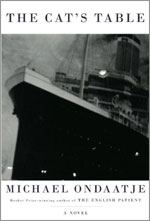
The Cat’s Table, by Michael Ondaatje

The Cat's Table, by Michael Ondaatje

None of the multiple meanings of “the cat’s table” suggest positions in the room, in the world or in life that hold particular esteem or prestige. However, all meanings hint that secretly (or perhaps not-so-secretly!) that’s where we know we’ll gain the most insights, meet the most interesting characters and have the most fun. Certainly, it’s a reverse, perverse privileged position and where you want to be to embark on the latest adventure in storytelling spearheaded by the incomparable Michael Ondaatje.

In sea voyaging parlance, the cat’s table is the polar opposite of the coveted and perhaps ostentatious Captain’s Table, where anyone who aspires to be anyone wants to be and be seen amongst passengers on a cruise, in company of the head of the vessel and voyage. The cat’s table is the humble dining spot for those lowly passengers – maybe not affluent, influential or glamorous, likely young, often carrying some kind of social stigma – with whom no one else is interested in keeping company.

The German expression “Katzentisch” (quite literally “cat’s table”) was also a small low table at which well-heeled people fed their cats or small dogs. (1) Such a table was situated in the dining room, but in a corner away from the dining table. Again, it connotes something at a remove, although perhaps it was a somewhat more exalted position for an actual cat to be at a cat’s table than a human being.

Finally, the cat’s table was and is synonymous with the kids’ table, a dining room tradition still common today at family holiday gatherings, where children are seated at a table separate from and often shorter, humbler and featuring only an abbreviated dining selection from that of the grand dining furniture and repast of the adults. It’s considered a rite of passage and maturity to move up to the adults’ table. At the same time, the most fun, mayhem and mischief can be found and is tolerated at the kids’ table. Notably, adults who join the kids’ table are often remembered most fondly (that would be game-for-anything Uncle John in our family) and are clearly most able to throw aside inhibitions and prejudices to hang with the truly most entertaining crowd.

Ondaatje’s young protagonist, Michael, encounters the cat’s table in almost all of these forms during the course of an eventful ocean voyage in the 1950s. Shunted for not fully articulated or understood reasons from his family in Ceylon to his mother awaiting him in England, 11-year-old Michael balances the freedom of a comparatively unsupervised (except for perfunctory check-ins with a couple of ostensible but largely indifferent guardians) three-week adventure on an ocean liner with feelings of rootlessness, disconnection, loneliness and disaffection in the intriguing, bustling and highly socially stratified of that closed world. Michael finds his niche in that world fairly quickly, and perceptively and precociously assesses its hidden worth: while the Captain’s Table was where self-important people puffed up their dubious significance, the truly worthy people and experiences were at the polar opposite of the dining hall and the social spectrum.

Or is young Michael precocious? While The Cat’s Table shimmers with the freshness of a child’s wide-eyed and openhearted perspective, it is filtered through the sophistication and acquired emotional agendas and baggage of an adult, and is also reframed through the eyes and ears of poets – both Michael the protagonist’s eventual vocation and, of course, Michael Ondaatje’s. At times, it isn’t clear if a given episode or its interpretation is that of the child, the adult or the imaginative artist weaving it all in a new fashion. That’s both part of The Cat’s Table mystery and charm, and sometimes a very minor source of disorientation, possibly germane to a story where both the child and the adult might not entirely know what was going on.

Michael’s alliance with two young fellow passengers, Ramadhin and Cassius, seems initially to be one of convenience, not allegiance. That is, the three boys are handy partners in crime and backups, and egg each other on getting into the varieties of tempting mischief unfettered and parent-less children can get into from the engine rooms to the decks to the staterooms of a largely and surprisingly unprotected environment. As their adventures unfold and the three boys navigate this realm of no parents, lost parents, surrogate parents, and various broken, reconstituted and newly realized families, they come to mean a great deal to each other, which Michael much more fully appreciates as an adult.

The Cat’s Table would have been enchanting as just a series of character sketches and picaresque vignettes, culminating in an affecting reassessment as an adult of the connections made as a child. That a genuine mystery emerges during that short but momentous voyage – gravitating around a menacing, shackled prisoner who is only let out under highly and unusually protected conditions at night – is a splendid, intriguing bonus.

If The Cat’s Table is not Ondaatje’s best novel yet (oh, but I think it is …), it is certainly his most straightforwardly told and emotionally accessible story. It’s a yearning tribute with an almost fairytale-like aura to the memories of awe that pervade our dreams (and nightmares and fears), and the memories of sometimes unlikely affiliation and love and what we mistake as love that pervade and haunt our hearts, guide us or sometimes lead us astray.

Notes

1. Definition of Katzentisch
http://www.katzentisch.com/2009/07/what-is-katzentisch.html

Thank you to the Alfred A. Knopf representative at the June, 2011 American Library Association Conference and Exhibit, who provided a U.S. advance reader’s edition of The Cat’s Table, by Michael Ondaatje.


2011 reading list (so far)

Here are the books I’ve read so far in 2011, with links where they exist to books that I’ve reviewed. It’s a competition with no one but myself, but it is always interesting to reflect halfway through the year where one is at with one’s reading, both quantitatively and qualitatively. I could perhaps have read more thus far, but I’m really liking my reading year so far. How about you?

Braydon Beaulieu and Janet Somerville have been reading up a storm so far in 2011 – theirs are engrossing and impressive lists! Tweet me your list @bookgaga, and I would be happy to link to it here.

  1. Patient Frame
    by Steven Heighton

  2. The Water Rat of Wanchai
    by Ian Hamilton

  3. Better Living Through Plastic Explosives
    by Zsuzsi Gartner

  4. The Canterbury Trail
    by Angie Abdou

  5. Pigeon English
    by Stephen Kelman

  6. The Year of Broken Glass
    by Joe Denham

  7. Irma Voth
    by Miriam Toews

  8. The Bird Sisters
    by Rebecca Rasmussen

  9. A Visit from the Goon Squad
    by Jennifer Egan

  10. Lookout
    by John Steffler

  11. The Guilty Plea
    by Robert Rotenberg

  12. Up Up Up
    by Julie Booker

  13. The Empty Family
    by Colm Toibin

  14. Ossuaries
    by Dionne Brand

  15. Skippy Dies
    by Paul Murray

  16. The Cat’s Table
    by Michael Ondaatje

Currently in progress:

  • Voltaire’s Bastards
    by John Ralston Saul

  • The Mill on the Floss
    by George Eliot

  • Offshore
    by Penelope Fitzgerald (rereading)

Ossuaries, by Dionne Brand

Ossuaries, by Dionne Brand

Dionne Brand’s Griffin Poetry Prize-winning Ossuaries is an extended verse account of the wrenching, troubled life of Yasmine, who lives constantly on the move, assuming new identities to escape activities somewhat vague in their specific intents, but decidedly explosive and violent in their outcomes. Layered over and drifted artfully around the central story are meditations on cultural and historical shifts and evolution: what disappears in the process, what changes, and what bones and remnants are left behind for future generations to unearth and decipher.

Almost 10 years later, the events of September 11th are emerging in varying forms in literature and popular culture. It seems some of the most profound renderings are sufficiently particular in detail, but not so much so that they cannot resonate more broadly, taking in other cataclysmic historical events. Such is the case with Brand’s evocations, which not only echo what happened in New York City, but Oklahoma City, London, Mumbai and other scenes of urban terrorism shattering comfortable, mundane, day-to-day life: “the stumbling shattered dress for work … the seared handbags, the cooked briefcases … it was just past nine in any city …”

An ossuary is a container, building or location meant to house human skeletal remains in their final resting places. While suggesting peace and finality on one level, perhaps mystery and portent on another if those resting places are unearthed generations later, Brand’s ossuaries feel open, unresolved, anything but peaceful. Even the lack of punctuation at the end of each ossuary segment within the long poem gives literal lack of closure to each chapter in Yasmine’s edgily peripatetic existence.

Yasmine has suppressed love and tenderness in her own life, hardened (ossified, even) her heart, glossed and silted over her own personal trail. Still, occasional traces of wistfulness in her observations (“the children mattered, or so she told herself”), or at least acknowledgement that she has held herself too harshly and rigorously (“except it was always there / struck, harder, the lack of self-forgiveness, / aluminum, metallic, artic, blinding”) seem to betray that she would like to leave a trace, have someone care. Finally, that seems to be what Ossuaries encapsulates: the traces that people leave, intentionally or unintentionally, destructively or tenderly – in the world, on each other, and in a collective impact on the environment, culture and history.

here we lie in folds, collected stones
in the museum of spectacles,
our limbs displayed, fract and soluble

Dionne Brand’s readings from her work (even her readings from others’ works, such as PK Page) are never, ever to be missed. Until her entrancing reading from this year’s Griffin Poetry Prize readings is online, immerse yourself in this reading from thirsty, from her last Griffin Poetry Prize appearance.

See also:

materfamilias reads – Review of Dionne Brand’s Ossuaries

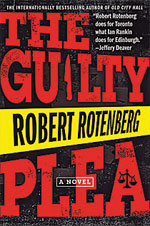
The Guilty Plea, by Robert Rotenberg

The Guilty Plea, by Robert Rotenberg

Robert Rotenberg’s debut novel, Old City Hall stirred delighted buzz and garnered warmly welcoming reviews from Canadian crime fiction circles and fans in early 2009. When the first foray is that good, establishing a pace, personality, setting and cast of characters that readers quickly become keen to revisit, two years feels like a long time to wait for the next installment.

The wait is over, and those waiting will feel well rewarded. Rotenberg has delivered another solidly crafted, engaging narrative with the right balance of primary and secondary (new and previously introduced) players, and diverting but not excessive or distracting subplots (that leave the possibility of being further explored in future books).

The plot of The Guilty Plea focuses on the case of Terrance Wyler, youngest son of a family in the high-end grocery business. He’s found stabbed to death in his luxurious home the morning of what was to have been the start of his and wife Samantha’s divorce trial, made sensational by the fact that he has taken up with a notorious Hollywood actress. That morning, Samantha arrives at her lawyer’s office with a kitchen knife that is undeniably the murder weapon. In what is perhaps becoming a signature modus operandi, Rotenberg presents a much too obvious resolution and then proceeds to take it apart and take the reader along for an engrossing, often surprising reassembling of the real story.

The Guilty Plea is seasoned with artful passing references to Old City Hall, and reconnects again with Detective Ari Greene, police officer Daniel Kennicott, Crown attorney Jennifer Raglan and other previous characters. However, The Guilty Plea can likely be enjoyed with no familiarity with its predecessor. This second novel is almost as crisply paced as the first, although it grows ever-so-slightly sluggish a little over halfway through, and then gets firmly back on track.

Once again, while The Guilty Plea offers up an intriguing and consistently sympathetic cast that interacts in interesting and compelling ways, the most vibrant cast member is still the city of Toronto. Seen in sensorily evocative moments across all seasons (the opening scene in the doldrums of sultry August is especially memorable), and in everywhere from coffeeshops and restaurants to landmark buildings and cemeteries, Rotenberg proves a mastery of establishing a sense of place even more impressive than his skills with plot and character. The fact that Rotenberg heads out into the city to write, rather than exclusively cloistering himself in an office or cottage retreat to write, has paid off in terms of his stories’ atmospheric authenticity.(1)

Ultimately, The Guilty Plea culminates in an untidy but not implausible resolution. It’s therefore pretty lifelike. It’s also therefore infinitely book-club-debate-worthy or just individually ponderable – all not bad things at all, especially to pass the time during the wait for the next thoughtfully forged installment in Rotenberg’s increasingly formidable franchise.

Notes

1. Robert Rotenberg: In search of a public place to write
http://arts.nationalpost.com/2011/05/23/robert-rotenberg-in-search-of-a-public-place-to-write/

and

Robert Rotenberg: Writing about real places
http://arts.nationalpost.com/2011/05/27/robert-rotenberg-writing-about-real-places/

Thank you to Simon & Schuster Canada and the author for providing a review copy of The Guilty Plea, by Robert Rotenberg.

Lookout, by John Steffler

Lookout, by John Steffler

John Steffler’s latest collection, Lookout, is largely focused on and based in natural settings, paying tribute to nature, wrestling with both the enormity and the fragility of nature – nature unto itself and nature as it affects and is affected by human presence and interference. This is not your grandmother’s nature poetry, though – it dispenses with sanctimony and is not afraid of irreverence or even violence. Many poems in this collection sweep the reader through breathtaking transitions from rugged physicality and earthiness to emotional delicacy, frailty and ephemerality.

Former Canadian national poet laureate Steffler’s poems are not just acutely observant, but fully physically engaged. In fact, many of his poems quite literally meld body and landscape in startling, sometimes macabre, imaginative sequences.

Ironically, the most moving, central sequence in Lookout, Once, actually comes indoors to focus on a narrator’s wistful time with his ailing parents, which is simply and poignantly interspersed with memories from their youth and young adulthood.

Along with the recent past, the worries
and duties that kept her fixing and pleasing
are gone. Calmly she orders him to open
the curtains, find her slippers, fetch
her a small dish of strawberry ice cream.
He jokes that he has to serve her smartly
these days, and she answers flatly that she’s
done a lot of serving over the years. Without
apology she indulges her pleasures, and he
is doting and patient, almost equally changed.

… and later …

As I leave, she hugs me and
cries like a child. I have never
seen her like this. I say I’ll
be back in the early fall, and she
nods as she goes on sobbing, not
bothering to dry her face.

Upon that sad departure, it’s as if the same narrator immediately, cathartically leaps back into the natural world in the next sequence, Outside, as if that is where he personally and all of us can ultimately find solace.

Lookout is a worthy contender for the Griffin Poetry Prize, for which it is nominated this spring. Steffler offers a poetry clinic in his mastery of a range of voices and forms, with none of the sterility that a clinic or lessons or examples would suggest. From the rocks and elements to the creatures navigating them, Steffler’s poems are living, breathing, evocative beings.


Pigeon English, by Stephen Kelman

Pigeon English, by Stephen Kelman

Stephen Kelman’s debut novel Pigeon English introduces readers to one of the most pervasively and persuasively authentic narrator voices in fiction in recent memory. That recent memory includes the precocious Jack in Room by Emma Donoghue and the quietly unforgettable Christopher in The Curious Incident of the Dog in the Night-time by Mark Haddon … which means that Kelman’s 11-year-old Harrison Opoku (known as Harri to his family and friends) is in admirable and luminous company.

Harri has just arrived in London from Ghana with his mother and teenaged sister, and is living in a housing estate that would be euphemistically labelled a “priority” or “at risk” neighbourhood in some constituencies. Harri’s family is asunder – his grandmother, father and infant sister remain behind in Ghana – and in some unspecified peril because of the terms by which some of them were able to come to England. Harri’s natural and infectious ebullience seems more affected by long distance yearnings for the people left behind than stymied or threatened by the more immediate cacophony surrounding him at home, at school and on the streets. Even when a boy is stabbed to death in his neighbourhood, it fascinates Harri more than it truly bothers or affects him, as the sound of his baby sister’s voice getting cut off on the phone clearly does.

Voices near and far are just one of an intricate interweaving of metaphors and imagery that Kelman handles with impressive assurance for a first-time novelist. Kelman controls well but not obtrusively not just his protagonist’s voice, but the chorus of supporting characters’ voices echoed and interpreted through the protagonist. Through his mastery of the subtleties of voice, accent and expression, Kelman also sensitively and precisely manages the perceptions that drive the story forward, and the misapprehensions and naivete that lead it understandably astray.

Kelman incorporates other types of potent imagery and weaves them organically and comfortably into Harri’s words and observations, without undermining the believability of Harri’s voice, but also of the gritty realities he faces navigating amongst schoolmates, gangs, shopkeepers, police officers and others in his inner-city world. References to fingerprints and fingertips are especially intriguing – how they are used to identify or when erased, to hide one’s identity – but also how they are used to gather information and experience the textures and sensations of the world. Much of the imagery builds on the feelings of a child hungry to learn, to grow, to love and be loved.

For a story and characters set in an unremittingly urban realm, much of the imagery infusing the world of Pigeon English is exhilaratingly natural, as illustrated in a sequence that captures what a wellspring of vitality and joie de vivre Harri is, in spite of it all:

I don’t have a favourite raindrop, they’re all as good as each other. They’re all the best. That’s what I think anyway. I always look up at the sky when it’s raining. It feels brutal. It’s a bit hutious because the rain’s so big and fast and you think it will go in your eye. But you have to keep your eyes open or you won’t get the feeling. I try to follow one raindrop all the way down from the cloud to the ground. Asweh, it’s impossible. All you can see is the rain. You can’t follow just one raindrop, it’s too busy and all the other raindrops get in the way.

The best bit is running in the rain. If you point your face up to the sky at the same time as running, it nearly feels like you’re flying. You can close your eyes or you can keep them open, it’s up to you. I like both. You can open your mouth if you want. The rain just tastes like water from the tap except it’s quite warm. Sometimes it tastes like metal.

Before you start running, find an empty bit of the world with nothing in the way. No trees or buildings and no other people. That way you won’t crash into anything. Try to go in a straight line. Then you just run as fast as you can. At first you’re scared of crashing into something but don’t let it put you off. Just run. It’s easy. The rain on your face and the wind makes it feel like you’re going superfast. It’s very refreshing. I dedicated my rain run to the dead boy. It was a better present than a bouncy ball. I kept my eyes closed the whole time and I didn’t even fall over.

The only false note in Pigeon English is the intermittent introduction of a second narrative voice that can’t possibly match the authenticity and vivacity of Harri’s voice. This second voice neither expands the view of the story credibly beyond Harri’s perceptions and assessments, nor does it work well metaphorically as other imagery does. As well, the pigeon/pidgin pun is not only forced, but is ever-so-slightly offensive, and seems to strangely demean the book’s greatest achievement: its convincing voices in all of their linguistic originality and complexity. A pidgin language is defined as a simplified language that develops as a means of communication between two or more groups that do not have a language in common. Harri’s voice and vocabulary form a surprisingly sophisticated argot and amalgam of everything from Ghanaian, English and Ghanaian-English slang to commercial and technological terminology to his own sweet and singular usages and classifications of the world. It’s unforgettable and not to be diminished as something lesser or compromised.

When the book ends and Harri’s voice is stilled, this reader immediately, achingly, acutely missed him – true testament to the strength of an indelibly forged voice. Asweh, you won’t want to let go of young, vibrant Harri either.

See also:

Pigeon English book trailer (from House of Anansi Press blog)

Thank you to House of Anansi Press for providing a review copy of Pigeon English, by Stephen Kelman.

The Year of Broken Glass, by Joe Denham

The Year of Broken Glass, by Joe Denham

My 2011 reading got off to a breathtaking start with Joe Denham’s second collection of poetry, vividly and appropriately titled Windstorm. A dense read that was both exhilarating and almost exhausting, I mused as to what Denham might do next.

I didn’t have long to wait. Denham’s first novel, The Year of Broken Glass, arrived this spring with the impact of a strong, bracing blast of cold, refreshing, snow-tinged rain, sluicing the winter away and preparing the earth for new growth. I didn’t have long to wonder, either, as I cleared the “to be read” decks as quickly as I could to get swept into this spellbinding tale.

As Joe Denham unspools the fraught and increasingly fantastical story of Canadian west coast fisherman Francis (aka Ferris) Wichbaun, the intense layering of imagery that is sometimes overwhelming in Denham’s poetry seems to have more room to breathe in the extended novel form. Ferris is tormented and admittedly duplicitious in love, he struggles with an equally conflicted love of the sea, the world around him is in mounting upheaval as a number of natural disasters strike … and then a singular glass object that could mean his fortune and future or could mean something more troubling and sinister pretty literally floats into the midst of it all. Ferris’ emotions and circumstances are ripe for rich and vivid treatment, but also easily threaten to become overwrought. Somehow, Denham forges clear navigation through his captivating novel, even as the seas grow literally stormy, but also as the storyline and character interactions and connections grow more and more complex.

As that complexity drives its way into the evil equivalent of one deus ex machina and then another, what is meant to be “real” and what is possibly fanciful blurs. What is real and what is the fevered imaginations, perceptions and delusions of several of the characters – Denham also takes on multiple voices and perspectives with surprising mastery – also blurs, with the disorienting but still strangely compelling feel of failed literary experiments such as The Raw Shark Texts. But somehow, Denham still keeps muscular control of his plot and characters to keep them on course for a satisfying conclusion that is believable in the context of what has gone on before.

The pervasive metaphoric layers in The Year of Broken Glass bolster the story and character development without tipping into the overwhelming or feeling forced. Denham has created unforgettable, strongly sculpted characters and a cinematic sweep of dramatic circumstance and plot that will stick with the reader for a long time.

Thank you to the author, Joe Denham, and Nightwood Editions for providing a review copy of The Year of Broken Glass.


Better Living Through Plastic Explosives, by Zsuzsi Gartner

Better Living Through Plastic Explosives,by Zsuzsi Gartner

In her new short story collection, Better Living Through Plastic Explosives, Zsuzsi Gartner cuts a satirical swath through the early years of the new millennium. Everyone and everything is fair game, with Gartner’s laser sights set on those who smack of entitlement or hubris. Whatever we now call yuppies and their older demographic successors are and apparently always will be up for grabs, and Gartner takes no prisoners in terms of mocking their houses and lawns, their dietary, career and fashion choices, their family planning and rearing decisions and more. Gartner arranges to mock and reproach them from diverse angles, sources and perspectives. She is also quick to point out that anyone with economic or social pretensions can become them in a heartbeat, and can be brought down a sharp notch or two as quickly and calamitously.

Earthy and quirky comeuppances come to the proud and prissy from everyone from a lusty, barbecue-loving redneck, to another variant of tattooed white trash in a bass-thumping muscle car, to a disquietingly media savvy native elder destined for bespoke suits (with ambitions to become the First Nations Ivan Reitman, don’t you know). The range of characters marching through Gartner’s dizzying stories is breathtaking, not without their piquantly realistic and emotional moments, but ultimately verging on cartoonish, with a didactic, Coyote versus Road Runner sense of who will prevail and why.

So, fleeting jabs aside, if we’re not really meant to wholly and realistically identify with any characters or situations in these stories, what is Gartner trying to achieve with this collection? Is it pre-apocalyptic magic realism, post-apocalyptic surrealism or some other variant of an otherworldly, off-kilter, something-is-not-quite-right-here rising tide of dread of apocalypse in progress, vaguely reminiscent of DeLillo’s White Noise? If it’s any of those, she often overshoots that effect, sometimes grievously. Are we just being lectured at in an over-the-top, albeit highly imaginative fashion?

But then again, something stirring happens when you breathe and digest each story, and set the entire collection down. Weeks later, images and scenarios that seem overwrought as you’re reading them have distilled down from a headlight glare to a haunting, still potent glow after the fact: adopted Chinese daughters tiptoeing grotesquely across the starlit snow; a couple rapidly growing apart by heading in opposite Dorian Gray-esque directions; suburban housewives happily squatting like cavewomen around a fire pit; a bewildered but determined movie producer in sullied designer trousers struggling through the West Coast rainforest; most memorably of all, the final roar of a car approaching that will exact a harsh but symmetrical revenge.

Recognizing but perhaps not best articulating that I appreciate but am not sure what to make of the intriguing alchemy going on with Gartner’s vibrant but thorny stories, I’m delighted to discover that others are being invited to explore Better Living Through Plastic Explosives and other recently published short story collections in a new initiative. I’m interested to hear their reactions and conclusions. How they are going about it in this, the Year of the Short Story (YOSS), is detailed here by the incomparable Book Madam. The YOSS manifesto, spearheaded by Giller Prize nominated author Sarah Selecky, is showcased here. Ms Selecky best captures the special mystique of short stories:

“There’s nothing like that punch in the stomach that you feel at the end of a story, when the question of the story (not the answer!) is revealed in its wholeness, and you don’t know what to do with yourself because it’s so troubling, or beautiful, or impossible, or uncertain.” – Sarah Selecky

I’m wondering if it’s the questions revealed by Zsuzsi Gartner in the stories of Better Living Through Plastic Explosives that I’m still tussling with now. I think so, and I think that’s a good thing.

Thank you to Penguin Canada for providing a review copy of Better Living Through Plastic Explosives, by Zsuzsi Gartner.

The Canterbury Trail, by Angie Abdou

The Canterbury Trail, by Angie Abdou

Writer Susan Swan recently mused on Twitter, “Thinking about the need to show the dark side of fictional characters and how I always want to protect them and show their best side. Wrong.” (1) Did Angie Abdou muse similarly as she lived for some time (the novel first took form as her PhD thesis) with the colourful cast of characters populating her latest novel, The Canterbury Trail? It would seem so, and it would seem she made the right choices in terms of protecting or not protecting them, and showing both their sunny and dark aspects.

Abdou’s greatest gifts as a writer are sheer storytelling prowess, assembling persons, places and things in potent and compelling combinations. She melds that appreciable skill with a fearlessness about presenting her characters with all their warts, making them patently unlikable in some cases, and still managing to endear them to the reader by the end of their adventures. She does this in surprising ways in both recent Canada Reads contender The Bone Cage and The Canterbury Trail.

The range of disparate characters in The Canterbury Trail – stoner ski and snowboarding bums, working class snowmobilers, lesbian hippies with spiritual pretensions, an overly striving real estate developer and his pregnant wife, an urbanite freelance lifestyles reporter, all thrown together in a mountain ski cabin under increasingly treacherous social and meteorological conditions – seems stretched and thinned out to predictable caricatures at the outset. The pleasant surprise is that most of that ambitious cast gain some depth or unique traits before a key character hovering in the background throughout – Mother Nature – takes charge in the end. That’s testament, by the way, to the virtues of sticking with a book to the very end. The Canterbury Trail‘s payoff in that regard is immense.

What we learn from bringing a cross-section of society into pressure cooker close quarters was also the premise, at least in part, of the classic work from which The Canterbury Trail takes everything from its title, to character names, physical traits and profiles. Abdou commented recently on how Geoffrey Chaucer’s Middle English stories The Canterbury Tales, written at the end of the 14th century, so informed her novel:

“That’s the contemporary pilgrimage where I am: that trek through the backcountry,” says Abdou. “And, in a way, Chaucer used the pilgrimage to bring together people who would normally never spend time together in medieval society – the fighters, and the Priors, the workers – and so then he had a little segment from everyone in society where he was able to satirize them. So that’s the part that’s Chaucer: I get the rednecks and the hippies and the young ski bums and the developer guy. They’re all together, and they wouldn’t normally interact.”(2)

While Chaucer’s work clearly laid a strong foundation for the writer, it’s less of a prerequisite for the reader’s enjoyment and edification. Sure, it might give you a chuckle if you know that Alison, the rather lascivious freelance journalist, is gap-toothed. You don’t need a grounding in Chaucer, though, to appreciate the cultural clashes, connections and revelations between the skiing “pilgrims” of The Canterbury Trail, or to relish the authentic suspense Abdou builds through a gradual but genuine investment in the wellbeing of the various characters.

1. @swanscribe, February 23, 2011

2. Pilgrim’s Progress: Angie Abdou talks about The Canterbury Trail
by Mark Medley
National Post, The Afterword