Frozen in Time, by Owen Beattie and John Geiger

Frozen in Time, by Owen Beattie and John Geiger

Subtitled: Unlocking the Secrets of the Franklin Expedition

This slim volume offers revelations and surprises for anyone interested in the modern investigation into the ill-fated 1845 expedition of Sir John Franklin and crew to discover the Northwest Passage. Perhaps the biggest surprise of all is that distilling the story down to forensic data and clinical examination and testing does not rob the Franklin expedition of any of its historic and mythic resonance. Indeed, these new details add a poignant human dimension to the Franklin legend, including some cautionary reflection on man’s ongoing quest to push exploration and technological boundaries.

Most powerful in this account is the sensitivity with which the modern men of science connect across more than a century with the three men whose ravaged bodies revealed significant reasons for why the Franklin expedition met with calamity and death. Considerable emotion colours the descriptions of the exhumation and examination of the bodies of 20-year-old leading stoker John Torrington, 25-year-old able seaman John Hartnell and 36-year-old Royal Marines private William Braine, as presented by lead investigator Dr. Owen Beattie, assisted by journalist John Geiger. Because the three bodies were extremely well preserved in the Arctic permafrost, both as described and hauntingly captured by photographs included in the book, Dr. Beattie and his team were inescapably drawn into feeling very powerfully that they were dealing with almost living human beings in their investigation. In fact, Beattie describes tenderly lifting Torrington’s body from his coffin and feeling like the young man was merely unconscious, not dead for 140 years. The respect with which the investigators returned the men to their graves, and the awe with which Beattie ponders how the men helped in explorations undoubtedly beyond their wildest dreams, is very moving.

That Mordecai Richler went on to cite Frozen in Time as a valuable resource in his brilliant novel Solomon Gursky Was Here is testament to the power of both the Franklin story and how well it is told here.

Canada Reads 2012

Frozen in Time is one of the Canadian non-fiction titles I’ve recommended for Canada Reads 2012: True Stories. If you’d like to support this book as a possible Canada Reads finalist, you can vote for it here, as well as perusing some other great recommendations.


Short Haul Engine, by Karen Solie

Short Haul Engine, by Karen Solie

Shortlisted for the 2002 Griffin Poetry Prize (www.griffinpoetryprize.com), “Short Haul Engine” was Karen Solie’s first poetry collection. The voice in many of the poems is that of someone who is tough, self reliant but also lonely and wistful. (Phrases like “heart wagging its little tail” are surprising and touching.) The fresh attention to the mundane details of life – driving and engaging in other activities in a car, watching an in-flight movie, drinking shots – is at times almost startling.

From the poem Sturgeon:

On an afternoon mean as a hook we hauled him
up to his nightmare of us and laughed
at his ugliness, soft sucker mouth opening,
closing on air that must have felt like ground glass,
left him to die with disdain
for what we could not consume.
And when he began to heave and thrash over yards of rock
to the water’s edge and, unbelievably, in,
we couldn’t hold him though we were teenaged
and bigger than everything. Could not contain
the old current he had for a mind, its pull,
and his body a muscle called river, called spawn.

Marley and Me, by John Grogan

Marley and Me, by John Grogan

This book is insufferable. Or, more accurately, the author is insufferable. Marley seems like an average dog that his self-absorbed owner couldn’t be bothered to properly mind or train.

Not only is John Grogan utterly unaware of the feelings of his four-legged family member, he doesn’t seem to be too connected to his two-legged family members, either. His lack of understanding or sympathy when his wife was obviously suffering post partum depression was horrible – Marley seemed eminently more sensitive and aware.

Cloudsplitter, by Russell Banks

Cloudsplitter, by Russell Banks

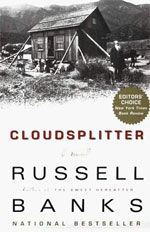
Russell Banks won readers’ hearts in 1991 with “The Sweet Hereafter”. He tackled painful subject matter and populated his story with a cast of damaged, thorny characters. He wrapped it all with a troubling conclusion that somehow had a perverse sense of redemption.

A reader might be predisposed on the basis of that fine accomplishment to assume that only Russell Banks could take on the towering figure of real-life abolitionist John Brown and take him beyond history textbook admirable, and make the firebrand radical both understandable and even sympathetic. Unfortunately, “Cloudsplitter” is told from the reluctant and spiritually browbeaten perspective of Brown’s son Owen, and the result is ponderous and lugubrious. The good that John Brown so determinedly strives for is powerfully overshadowed by his sanctimony, radicalism and religious fanaticism. The reader is left feeling as battered as the narrator, if the reader can even struggle to the end of this overly long tome.

Airstream Land Yacht, by Ken Babstock

Airstream Land Yacht, by Ken Babstock

I always loved this poignant snippet from “Compatibilist”:

I chose to phone my brother,
over whom I worried, and say so.
He whispered, lacked affect. He’d lost
my record collection to looming debt. I
forgave him – through weak connections,
through buzz and oceanic crackle –
immediately, without choosing to,
because it was him I hadn’t lost; and
later cried myself to sleep.

One Child at a Time, by Julian Sher

One Child at a Time, by Julian Sher

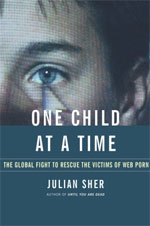
“One Child at a Time” (subtitled “The Global Fight to Rescue Children from Online Predators”) provides an absorbing behind-the-scenes view of how law enforcement officers and organizations in North America, the UK and around the world are growing increasingly sophisticated at fighting back against the network of predators, abuse and materials in circulation online. Thankfully, the book does not get into overly explicit detail, but is sufficiently clear about the types of abusive situations law enforcement is contending with, and touches with moving tact on the suffering and damage done to victims.

Author Julian Sher focuses on examples of the daring and suspenseful rescues as crimes are being committed, and to the seizures of millions of dollars in the offshore bank accounts of the porn merchants. In some respects, de-emphasizing the gory details and focusing on the action-oriented aspects of this particular form of crime fighting probably makes this more accessible to a broader readership, which is a good thing.

Former Toronto police officer Paul Gillespie was instrumental in pushing for the development of the Child Exploitation Tracking System, described in the book and now being extensively deployed to law enforcement organizations worldwide. Gillespie went on to found the Kids’ Internet Safety Alliance (KINSA, at www.kinsa.net), a well-regarded not-for-profit group that advocates with government and industry on online protection initiatives, and also provides programs targeted to families, teachers and others to build awareness of Internet safety best practices.

On Chesil Beach, by Ian McEwan

On Chesil Beach, by Ian McEwan

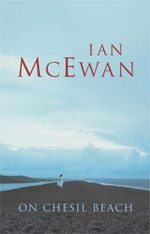
Ian McEwan never fails to write beautifully and hauntingly, whatever the subject matter. That gift is particularly, perhaps perversely, stunning when he writes about horrifying things. However, he writes here about a type of horror, as experienced by one of the main protagonists, that is bewildering and unbelievable in its intensity. In turn, the outcomes and consequences of that horrified reaction do not seem believable, either. For such a slim set piece, I found this a tedious read.

The No. 1 Ladies’ Detective Agency, Alexander McCall Smith

The No. 1 Ladies' Detective Agency, by Alexander McCall Smith

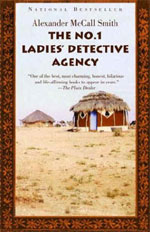
This amiable book is made gently subversive by the fact that lady detective Mma Precious Ramotswe takes on what is considered a rather non-traditional role for a woman in Botswana. The book is an easy and charming read, and refreshingly non-formulaic for the detective/mystery genre. Maybe part of its gentle subversiveness is that the mysteries are not really the point, or maybe the real mystery is the human behaviour and nature behind each crime that Mms Ramotswe investigates.

A Minor Planet for You: and Other Stories, by Leslie Greentree

A Minor Planet for You: and Other Stories, by Leslie Greentree

“A Minor Planet for You” is Greentree’s first foray into the short story form after two accomplished collections of poetry. As it is in her poetry, witty, feisty dialogue is one of Greentree’s strengths. She zeroes in on relationships gone askew, and somehow manages to balance tenderly both the humour and the pain or embarrassment of people’s failures to connect and communicate.

This wistful snippet from the title story is a favourite:

When I get home from work, there’s a note on the table. Brian’s out looking for an asteroid belt tonight, and won’t be back until late. I throw my coat over the back of one of the kitchen chairs and phone my sister, Tanya. When I start complaining about the whole minor planet bullshit plan, she interrupts me.

“Maggie, I think that sounds so romantic. Don’t you think it’s a wonderful gesture, having your husband want to discover a planet for you?”

“I think it would be more romantic for him to stay home with me once in a while,” I say. “Maybe even talk to me.”

The Artist’s Way: A Spiritual Path to Higher Creativity, by Julia Cameron

The Artist's Way: A Spiritual Path to Higher Creativity, by Julia Cameron

I would take this book and concept with a grain or two of salt, because not everything it espouses is for everyone, and I found not all of it completely rang true with me. That said, the very first book in the series by Julia Cameron has something to offer just about anyone who is looking to cultivate their creativity, not just in writing per se, but using writing as largely the outlet and mode of expression. Even if you only take one practice or exercise away from it (the daily writing routine is a good one, and one I’ve personally kept up for close to 12 years now), it’s worth it.