The Red Shoes – Margaret Atwood Starting Out, by Rosemary Sullivan

The Red Shoes - Margaret Atwood Starting Out, by Rosemary Sullivan

Rosemary Sullivan does a superb job of balancing her portrait of the young Margaret Atwood in her childhood, young adulthood and early career with a solid critical assessment of the burgeoning Canadian literary scene and canon. Sullivan also ably dovetails Atwood’s place in the Canadian literary realm, as well as Atwood’s precocious and always growing potential at that point to influence and shape it. Sullivan also captures Atwood’s own sense of balance, grounded in a loving and supportive upbringing, between personal and emotional health, artistic exploration and integrity, and professionalism. Here is an excerpt that expresses it well:

“Margaret made a distinction: personally, art was a vocation, a gift, which required all her imagination and commitment. But publicly, it was also a profession, with rights and responsibilities. Ironically, the romantic notion of the artist confronting demons alone in an attic freed society of any responsibility for art. The artist suffered, by definition, and was placeless in a culture where he or she had no social role. Margaret was beginning to see the artist as completely different from the romantic cliche. The artist was meant to actively shape society, and not be its victim. When the artist actually spoke out, though, society often felt threatened.”


Atwood is and continues to be engaged and impressive (for example, the Globe and Mail just named her Canada’s Nation Builder of the Decade in Arts, and she tweets voraciously at www.twitter.com/MargaretAtwood), and Sullivan is impressive in her portraiture and context setting. Even if one does not particularly care for Atwood’s works (although there is a range of genres and subject to please most omnivorous readers) or politics, “The Red Shoes” is still an absorbing and inspiring examination of a life and a calling well, healthily, optimistically and fiercely lived.

Canada Reads 2012

The Red Shoes is one of the Canadian non-fiction titles I’ve recommended for Canada Reads 2012: True Stories. If you’d like to support this book as a possible Canada Reads finalist, you can vote for it here, as well as perusing some other great recommendations.
Matter, by Meredith Quartermain

Matter, by Meredith Quartermain

Meredith Quartermain’s “Matter” has some interesting echoes amongst its selections: Sylvia Legris’ fascination with birds and birdsong, Don McKay’s veneration of the natural world, Erin Moure’s sprightly dissection of the construction of words. Quartermain’s premise of examining words as if they were species and genera is intriguing, but seems to prove overwhelming over the course of this slim volume. Her concern with sticking to the constructs and constraints of the theme of physical and etymological taxonomies regularly bogs her poems down. The results are just too dense and intricate at times. When Quartermain relaxes and just lets the words flow, as she does in “Matter 18: An Albumen of Absence” and in the whimsical “Life List of Words” at the end of the volume, the premise retains its charm but becomes much more accessible.

White Noise, by Don DeLillo

White Noise, by Don DeLillo

Amazingly visionary satire on the chemical and electronic hum that surrounds us all, clouds our reasoning and distracts us from what should be important in our lives … but doesn’t distract us enough to ameliorate our base fears. Sometimes downright hilarious and often very touching, this is a stunning book.

Invisible, by Paul Auster

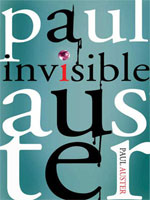
Invisible, by Paul Auster

Paul Auster’s “Invisible” is a compelling, delicious, nasty read. The reader needs to adjust expectations and be reconciled to not really caring about or identifying with any of the characters, as none of them can be trusted to have an accurate picture of the central story and circumstances, and at least two of the characters are likely guilty of monstrous acts. Auster treats his characters more like moral chesspieces than people, and the book is more a puzzle for the reader to solve than a milieu in which the reader can imagine him or herself.  In fact, a reference late in the book to “a laboratory of human possibilities” probably captures it best.

Yann Martel’s thoughtful, thankless mission

What is Stephen Harper Reading? by Yann Martel

R.K. Narayan’s The Financial Expert is the 71st of a series of titles selected by writer Yann Martel to provide to Canadian Prime Minister Stephen Harper, to encourage an appreciation of the arts and literature in particular in the PM, and to also help Harper with his stillness and thoughtfulness. Martel has regularly sent books from a wide range of literary traditions to Harper. Martel has devoted a Web site to the reading list and his kind, considered and often poignant covering letters with each volume. (All of his letters can be read at http://www.whatisstephenharperreading.ca/. They are also now in printed form, in a book entitled, not surprisingly, What is Stephen Harper Reading?)

Martel’s thoughtful persistence in this quest, started in April 2007, is both heartwrenching and highly commendable. He has never received a direct acknowledgement from Harper, and only some fairly form-letter responses from Harper’s staff, and even one from Industry Minister Tony Clement (although it wasn’t directly related to any of Martel’s book selections).

I’m sure Martel will continue to send well-considered choices (although if I was him, I’d be tempted to send “Going [Pro]Rogue” …) accompanied by articulate letters. I so admire his steadfast commitment.

P.S. Congratulations to Yann Martel for the inclusion of Life of Pi in the National Post’s top 10 Canadian books of the past decade.

Another P.S. There’s a great interview with Yann Martel about the What is Stephen Harper Reading? project on the January 9th episode of CBC Radio’s The House, at www.cbc.ca/thehouse.

Yet another P.S. (added February 1, 2010) – Yann Martel has outdone himself, recommending the amazing Eunoia by Christian Bok: http://www.whatisstephenharperreading.ca/2010/02/01/book-number-74-eunoia-by-…. For some reason, that just gets me utterly jazzed, although it’s no more likely than any other book presented by Martel to actually attract Harper’s attention.

Yet another P.S. (added March 1, 2010) – Stephen Harper might not have the good graces to acknowledge Martel, but someone else does.

Another delighted P.S. (added March 17, 2010) – While Yann Martel is off promoting his new book Beatrice & Virgil, Steven Galloway, author of The Cellist of Sarajevo, is keeping up the momentum, with the exquisite choice of Paul Quarrington’s King Leary.

The Journals of Susanna Moodie, by Margaret Atwood and Charles Pachter

The Journals of Susanna Moodie, by Margaret Atwood and Charles Pachter

Margaret Atwood’s poetic reimagining of the hardscrabble life of Susanna Moodie, a British settler who emigrated to Canada in the 1830s, is vivid unto itself. It groups Moodie’s experiences into three sets of poems: the first covers her arrival in Canada and primitive subsistence on a farm near what became Peterborough, Ontario, the second covers her somewhat more civilized existence in the town of Belleville, and the third is actually a posthumous set of reflections that concludes with her spirit inhabiting that of an old woman on a bus travelling along St Clair Avenue in Toronto in the late 1960s. Throughout, Atwood gives Moodie a grittier and more emotional voice than what comes through in Moodie’s prim accounts in “Roughing it in the Bush” and her subsequent memoirs.

While Atwood’s poetic account of Moodie’s adventures and experiences is vibrant by itself, it is further enhanced and animated by the typographic and graphical innovations of artist Charles Pachter, a longtime friend and collaborator of Atwood’s. Interestingly, Atwood and Pachter originally applied for a grant in 1970 to allow him to design a special edition of the collection of poems, but the application was turned down by the Canada Council. Atwood went ahead and got the poems published by Oxford University Press, but she and Pachter held onto the hope that they could one day collaborate on a more fully realized rendition incorporating his ideas and work. Several years later, the University of Toronto Library financed a venture that saw Pachter and two Spanish master printers, Abel and Manuel Bello-Sanchez, bring Atwood’s poems to life in a 120-copy limited edition that combined complex silkscreening, calligraphic and typographical effects. In the early 1980s, examples of this unique work were exhibited at the Art Gallery of Ontario and the National Gallery of Canada. By the early 1990s, it had also been translated into French.

Finally, in 1997, an edition was produced capturing the original text and graphics, with an account by Charles Pachter and a foreword by noted University of Ottawa English professor David Staines. This edition effectively encapsulates the history and collective heft of this work, and puts it in context with Staines’ enthusiastic framing of the work as a uniquely Canadian livre d’artiste. Topping it all off is Pachter’s ebullient account of being inspired by the genius of his friend Margaret Atwood to produce a work of genius of his own, to which the poems are inextricably linked.

2009 reading list

Here’s what I read in 2009, with links to reviews where I have them. (Actually, I’ve commented at least a wee bit on most of what I read this year.)

  1. Letting Go of the Words
    by Janice (Ginny) Redish

  2. The Scream
    by Rohinton Mistry

  3. Great Expectations
    by Charles Dickens

  4. Catching the Big Fish
    Meditation, Consciousness and Creativity
    by David Lynch

  5. Soucouyant
    by David Chariandy

  6. The Importance of Music to Girls
    by Lavinia Greenlaw

  7. Old City Hall
    by Robert Rotenberg

  8. The Other End of the Leash
    by Patricia B. McConnell

  9. Sideways
    by Rex Pickett

  10. 28 Stories of AIDS in Africa
    by Stephanie Nolen

  11. Northanger Abbey
    by Jane Austen

  12. Master of Reality
    by John Darnielle

  13. Crabwise to the Hounds
    by Jeramy Dodds

  14. Margaret Lives in the Basement
    by Michelle Berry

  15. Revolver
    by Kevin Connolly

  16. Pride and Prejudice and Zombies
    by Jane Austen and Seth Grahame-Smith

  17. Rising, Falling, Hovering
    by CD Wright

  18. The Book of Negroes
    by Lawrence Hill

  19. The Family Man
    by Elinor Lipman

  20. Primitive Mentor
    by Dean Young

  21. In the Land of Long Fingernails
    A Gravedigger’s Memoir
    by Charles Wilkins

  22. The Sentinel
    by AF Moritz

  23. What the Body Remembers
    by Shauna Singh Baldwin

  24. The Dog That Pitched a No-Hitter
    by Matt Christopher

  25. go-go dancing for Elvis
    by Leslie Greentree

  26. The Complete Winnie-the-Pooh
    by AA Milne

  27. Extremely Loud & Incredibly Close
    by Jonathan Safran Foer

  28. Middlemarch
    by George Eliot

  29. Brooklyn
    by Colm Toibin

  30. The Dangerous Book for Dogs
    by Rex & Sparky

  31. The Winter Vault
    by Anne Michaels

  32. Stripmalling
    by Jon Paul Fiorentino

  33. The Cure for Death by Lightning
    by Gail Anderson Dargatz

  34. Then We Came to the End
    by Joshua Ferris

  35. Blackouts
    by Craig Boyko

  36. Homesick
    by Guy Vanderhaeghe

  37. The Cellist of Sarajevo
    by Steven Galloway

  38. Solomon Gursky Was Here
    by Mordecai Richler

  39. The Incident Report
    by Martha Baillie

  40. A Bend in the River
    by VS Naipaul

  41. This Shape We’re In
    by Jonathan Lethem

  42. The Grandmothers
    by Doris Lessing

  43. Frozen in Time
    Unlocking the Secrets of the Franklin Expedition
    by Owen Beattie and John Geiger

  44. The Guernsey Literary and Potato Peel Pie Society
    by Mary Ann Shaffer and Annie Barrows

  45. A Gate at the Stairs
    by Lorrie Moore

  46. Paper Radio
    by Damian Rogers

  47. Negotiating With the Dead
    A Writer on Writing
    by Margaret Atwood

  48. The Disappeared
    by Kim Echlin

  49. February
    by Lisa Moore

  50. You Don’t Love Me Yet
    by Jonathan Lethem

  51. The Journals of Susanna Moodie
    by Margaret Atwood and Charles Pachter

  52. The Red Shoes: Margaret Atwood Starting Out
    by Rosemary Sullivan

You Don’t Love Me Yet, by Jonathan Lethem

You Don't Love Me Yet, by Jonathan Lethem

How interesting that author Bruce Wagner makes a fleeting cameo appearance in a party scene in Jonathan Lethem’s “You Don’t Love Me Yet”. Lethem’s slim novel about romantically adrift twenty-something Lucinda Hoekke, bass player in a fledgling alternative band, bears some resemblance to Wagner’s largely Los Angeles-based collection of novels and TV and movie screenplays. The title “You Don’t Love Me Yet” even echoes Wagner’s “I’m Losing You”, “I’ll Let You Go” and “Still Holding”, even though Lethem’s title doesn’t double as a typical telephone stock phrase/excuse. Actually, you would think he might have tried something like that, since Lucinda also answers telephones for a faux complaint line in an art installation.

Like Wagner’s stories, Lethem’s story is set in Los Angeles. His characters stumble (usually under the influence of one toxin or another) through the same decadent, emotionally parched terrain on the fringes of stardom, seeking and usually not finding professional, artistic or personal validation or fulfillment. While Wagner’s stories have Dickensian complexity, Lethem at least musters some Dickensian names – influential radio host Fancher Autumnbreast is a favourite – but isn’t able to match Wagner’s absorbing depth and insight, with one exception. Lethem’s characters are unsympathetic to a person, and their connections with each other don’t ring true, particularly Lucinda’s inexplicable and messy hookup with an enigmatic crafter of slogans that she meets when he starts calling the complaint line. The one exception is that Lethem captures vibrantly the alchemy of how individual musicians collaborate and cohere to make beautiful music.

Celine Dion’s Let’s Talk About Love: A Journey to the End of Taste, by Carl Wilson

Celine Dion's Let's Talk About Love: A Journey to the End of Taste, by Carl Wilson

“Through democracy, which demands we meet strangers as equals, we perhaps become less strangers to ourselves.”

This book is a fascinating exploration of artistic and aesthetic taste, and a kind, intelligent and moving defence of sentiment and sentimentality, using Celine Dion as the perhaps unlikely touchstone. Oh, and it’s cool and even laugh-out-loud funny.


This is a very cool endorsement: