Bestivus, a “best of” list for the rest of us

As 2009 comes to an end, many publications and pundits are offering their assessments of the best whatevers of the decade just past. Inspired by the best books of the decade list from Salon magazine, I’ve listed those from their list with which I agree, and I’ve added my own. These are the books that left the greatest impressions on me as a reader, through the authors’ craft, imagination and that magical je ne sais quoi that makes for a memorable reading experience.

The best books of the decade
A tribute to the fact and fiction we wouldn’t stop talking about in the 2000s
By Laura Miller

From the Salon list, here are the ones I’ve read that I agree are “best of” the last decade:

  • A Heartbreaking Work of Staggering Genius, Dave Eggers
  • The Corrections, Jonathan Franzen
  • Never Let Me Go, Kazuo Ishiguro
  • The Fortress of Solitude, Jonathem Lethem

Additionally, here are other books I’ve read since 2000 that I think are “best of’s”, including links to previous reviews on this blog. (I’ll aim to add reviews for the others in, well, the next decade.)
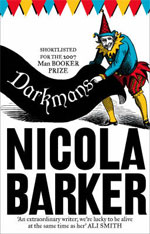
Darkmans, by Nicola Barker


February, by Lisa Moore

February, by Lisa Moore

This moving book captures powerfully the sheer physicality of enormous, yearning grief. Lisa Moore has forged a memorable portrait of a brave, no nonsense individual on her journey to a form of peace after devastating loss. Moore traces in plain-spoken but evocative prose Helen O’Mara’s happy, passionate early life as a wife and mother, to the shattering loss of her beloved husband Cal in the Ocean Ranger disaster, to her struggle to raise her family and keep herself emotionally afloat. Moore engages the reader simultaneously on many levels, from the sensory to the functional aspects of getting on with one’s life to hints of the spiritual. While the focus is on Helen, the subplot involving John, her oldest child and only son, is also absorbing, tracing his development from childhood to adulthood, his career path and his acceptance of unexpected new responsibilities in his life. Throughout, the feisty resilience of the entire cast of February and their ability to even find rueful humour in life’s challenges is both diverting and inspiring.

February by Lisa Moore has been selected as a finalist for Canada Reads 2013. The book will be championed by comedian Trent McClellan, and represents the Atlantic Provinces region in the “turf war” themed competition.

February 14, 201331 years ago today, the Ocean Ranger sank. How fitting that today, February has been recognized as the book that all Canadians should read. What a fine way to honour the memory of the 84 men who perished in that disaster.

Suite Francaise, by Irene Nemirovsky

Suite Francaise, by Irene Nemirovsky

This is an engrossing and sensitive depiction of the complexities of human lives lived during the German occupation of France during the Second World War. It’s made all the more poignant by the fate of the author, who was arrested and died at Auschwitz in 1942. Her notes accompanying the manuscript reveal that she had envisioned an even more sweeping and ambitious work, but that she sensed that her time was running out. The novel’s appendices, detailing her notes and the correspondence of her last days and that of her family and colleagues as they tried to find and rescue her, are as riveting as the novel.

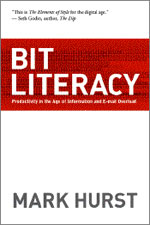
Bit Literacy: Productivity in the Age of Information and Email Overload, by Mark Hurst

Bit Literacy: Productivity in the Age of Information and Email Overload, by Mark Hurst

Mark Hurst waxes exuberantly optimistic on the promise of simple bit literate habits to make every computer user more productive and savvy. I think he underestimates how ingrained people’s habits are, coupled with their fear of the “mystique” of technology and their dependence on specific applications. His contention, though, that bits should be independent of a given company’s software or platforms makes very good sense. Even if you just develop a few of his suggested habits, you’ll be more in control of your digital world … and, whether we admit it or not, we all *do* have a digital world nowadays.

Sleeping It Off in Rapid City, by August Kleinzahler

Sleeping It Off In Rapid City, by August Kleinzahler

I am loving Kleinzahler’s jaunty juxtaposition of high-falutin’ references with down-to-earth commentary. Having heard him read and give speeches, it’s great to hear his voice in my head as I’m reading his words. I go back to this wonderful, funny, moving speech of his all the time:

http://www.griffinpoetryprize.com/awards-and-poets/speeches/august-kleinzahler-2005-awards/

One of my favourite poems from “Rapid City” is thematically similar to Kleinzahler’s “The Strange Hours Travellers Keep”, about the disorientation that travellers feel in places like indistinguishable hotel rooms:

On waking in a room and not knowing where one is

There is a bureau and there is a wall
and no one is beside you.
Beyond the curtains only silence,
broken now and again by a car or truck.
And if you are very still
an occasional drip from the faucet.
Such are the room’s acoustics
it is difficult to place exactly where from.
Also, the tick of the clock.
It is very dark.
There exist all manner of blacks,
lampblack, for instance,
much favored by the ancients,
so deep and so dense
and free of any shade of gray
or brown. But this,
this dark is of another order,
compounded of innumerable shadows,
a weave of them.
One is able to make out shapes.
It is not restful, to be like this, here,
nor is it a fearful place.
In a moment or two you will know
exactly where you are,
on which side of the door,
your wallet, your shoes,
and what today you’ll have to do.

Cities each have a kind of light,
a color even,
or set of undertones
determined by the river or hills
as well as by the stone
or their countless buildings.
I cannot yet recall what city this is I’m in.
It must be close to dawn.