Awake, by Elizabeth Graver

Awake, by Elizabeth Graver

I can’t decide if this is just a story about an emotionally dishonest person, or this is an emotionally dishonest story about an emotionally dishonest person. Awake by Elizabeth Graver starts out as the book equivalent of a well-intentioned and relatively well-made disease-of-the-week TV movie. It’s told from the point of view of Anna, married mother of two boys, the youngest of whom is afflicted with a rare illness that is essentially a severe, potentially fatal allergy to natural light. Overly telegraphed plot developments early on suggest that someone has a penchant for the dramatic, but throughout the book, I tussled with whether this was Anna or Graver herself.

The story of a mother and a family coping with a sick child – including how all of the relationships within the family are affected, not to mention household routines – gets railroaded fairly quickly. Anna finds a summer camp designed especially to accommodate sufferers of her child’s disease and their families. The family’s first visit ostensibly gives all of them new freedoms they have never experienced before. We really only follow Anna’s personal pursuit of freedom, however. It would be acceptable to realize that this was really a story about Anna only and how she’s been affected and what she’s sacrificed and compromised and all the rest, but it all happens too quickly, both in the framework of the book and in presumed calendar time, to emotionally and realistically buy into it and accept the shift in focus. Essentially, the children and husband seemed to be dropped pretty precipitously and remorselessly.

To try to be sympathetic, perhaps Anna has become a bore *because* she has sacrificed so much for her family. But it still just makes for a tedious account of a person rationalizing her selfish, self-absorbed secretiveness, as her current behaviours morph into transgressions. However, when she starts to confess that she’s had a somewhat furtive and untrustworthy track record all along – and therefore her current family situation is not what is driving her to be dishonest for the first time – all sympathy goes out the tinted window.

At least Anna’s comeuppance has a bit of a twist to it. Sadly, that’s not enough to redeem the book or the character. I’ll try to give Graver some credit that she does think what her main character has done is irresponsible. However, it also feels like she cuts her a bit too much slack, lets her rationalize too much, and throws in a few convenient external excuses for her behaviour in the book’s rather perfunctory wrap-up.

Maybe Anna is really just ill-suited for the life of a mother and wife, and she should have stayed on the rootless artist path she seems to yearn for. Or maybe there is a more clinical explanation for at least her more recent personal inconsistencies and inconstancy – she’s just suffering from a variation of seasonal affective disorder, as she avoids the light almost as much as her afflicted child. But it doesn’t explain away some of her earlier duplicity, and ultimately doesn’t make for a sympathetic connection with the character and the book.
The Museum of Innocence, by Orhan Pamuk

The Museum of Innocence, by Orhan Pamuk

Before The Museum of Innocence, the only other Pamuk I’d read was Istanbul, his wistful and somewhat depressing memoir and cultural history of the city. I appreciated the craft of Istanbul, but it was ponderous going at times. There are definitely connections between Istanbul and The Museum of Innocence, and not just in the detailed portrait of the colourful and exotic city. At several points throughout the book, I was ready to conclude that The Museum of Innocence just might be the wistfulness and inwardness of Pamuk’s memoir taken to a verging-on-satirical extreme. Long after leaving the last page of this book, and probably when I revisit and re-read it, I suspect I’ll still be debating how satirical and self-absorbed versus heartfelt this book’s protagonist is meant to be.

Wealthy thirtysomething Kemal Basmaci is engaged to an accomplished woman his age. They are both members of prominent Istanbul families and travel in Westernized society circles. By chance, Kemal encounters a beautiful young shopgirl, Fusun, who is both a distant relative and at 18, at an almost Lolitaesque distance from him in age. He pursues her, they embark on a brief but passionate affair, and when they part, Kemal remains and in fact grows increasingly obsessed with and depressed about losing the young woman. After trying half-heartedly to reconcile with his fiance, he decides to abandon her and his high society life to attempt an unusual and protracted wooing of Fusun, venturing into her lower middle class neighbourhood and life and becoming intimately entangled in but also welcomed into her family’s day-to-day life.

Is Kemal heroically and self-effacingly devoted to Fusun, or unnaturally obsessed with some crazed notion of her as a romantic ideal? Is he passionately in love with the real Fusun, or is he just mired in a form of self-absorption in which Fusun is some wildly distorted romantic icon? Is his increasingly compulsive hoarding of any and all objects associated with his beloved a creative and all-encompassing tribute, or a warped form of romantic kleptomania?

The painstaking detail with which Kemal catalogues his devotion/obsession makes this over 500-page novel engrossing at times, wearying at other times. However, in its last scenes, Pamuk skillfully pulls the book together with an elucidating and validating refocus on Kemal’s obsession, along with a charming switch in voice.

The apotheosis of Kemal’s love for Fusun takes the form of a museum. To further inspire and inform his mission, Kemal wanders the world visiting and researching museums of every shape, size and subject matter, from the sublime to the ridiculous, perhaps skewed to the ridiculous. However, in even the most obscure and overwrought collections and forms of tribute, Kemal finds justification for his passion, and the account of his travels and explorations is surprisingly moving. When he gets to Sir John Soane’s Museum in London, England, I was convinced, having recently had the privilege to view firsthand a place in which obsession, obsessive collecting and curating, and uncommon passions are made so memorably and claustrophically real.

Perhaps the following is a spoiler … At the very end, Orhan Pamuk inserts himself in witty fashion as a character in the book. The change in voice is a bit of a relief after such a long, emotional journey with the protagonist, and allows the reader to step back with some measure of objectivity from this feverish story.

“One could gather up anything and everything, with wit and acumen, out of a positive need to collect all objects connecting us to our most beloved, every aspect of their being, and even in the absence of a house, a proper museum, the poetry of our collection would be home enough for its objects.”

See also:

April 29, 2012
Turkish Writer Opens Museum Based on Novel
by J. Michael Kennedy
New York Times

Eunoia, by Christian Bok

Eunoia, by Christian Bok

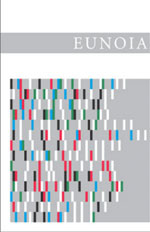
Eunoia by Canadian experimental poet Christian Bok is the 74th of a series of titles selected by writer Yann Martel to provide to Canadian Prime Minister Stephen Harper, to encourage an appreciation of the arts and literature in particular in the PM, and to also help Harper with his stillness and thoughtfulness. Martel has regularly sent books from a wide range of literary traditions to Harper. Since he started this initiative in April 2007, Martel has devoted a Web site to the reading list and to his kind, considered and often poignant covering letters with each volume. (All of his letters can be read at http://www.whatisstephenharperreading.ca/. They are also now in printed form, in a book entitled, not surprisingly, What is Stephen Harper Reading?)

Martel’s thoughtful persistence in this quest is both heartwrenching and highly commendable. He has never received a direct acknowledgement from Harper, and only some fairly form-letter responses from Harper’s staff. He has also received a response from Industry Minister Tony Clement, but it wasn’t directly related to any of Martel’s book selections.

Eunoia won the 2002 Griffin Poetry Prize, became the bestselling poetry book of all time in Canada, and recently came out in a second edition with new material. The Griffin judges cited the work as follows: “Christian Bök has made an immensely attractive work from those “corridors of the breath” we call vowels, giving each in turn its dignity and manifest, making all move to the order of his own recognition and narrative. Both he and they are led to delightfully, unexpected conclusions as though the world really were what we made of it. As we are told at the outset, “Eunoia, which means ‘beautiful thinking,’ is the shortest English word to contain all five vowels.” Here each speaks with persistent, unequivocal voice, all puns indeed intended.” Could Stephen Harper benefit from some “beautiful thinking”? It seems Yann Martel thought so.

Some reviewers dismissed Eunoia as a clever parlor trick, not really a work of artistic merit. Having read it, I confess that while I marvelled at the discipline involved in creating the work, it left me kind of cold at times. However, having seen Bok present it – live and on video – there is no denying the passion he applies to this and all his work.

A Secret Between Us, by Daniel Poliquin

A Secret Between Us, by Daniel Poliquin

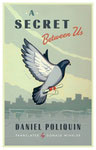
The arrogant, unreliable narrator is a bit off-putting initially, but I found the whole cast of colourful, quirky characters – especially the charming and literally self-effacing Concorde – really drew me in as the story unfolded. The book is a fascinating examination of fidelity and love and how it can turn into obsession, but also how love can just grow and endure.

Enduring Love, by Ian McEwan

Enduring Love, by Ian McEwan

The most riveting, stunning, compelling tour de force of an opening scene in a book – absolutely bar none, and utterly more stunning than anything that could be rendered cinematically, because it is rendered in horrifying detail in the reader’s mind. Amazing!

After such an explosive opening, no book could (or perhaps should) sustain that power for its entirety – it would be unbearable. The book is not exactly disappointing after that, but it does become a somewhat thorny read for the balance. It ventures into other types of intensity, but in a more clinical fashion, as contradictory as that might sound. But interestingly, that thorniness perhaps exemplifies the multiple meanings of “enduring love”.

Edith Wharton, by Hermione Lee

Edith Wharton, by Hermione Lee

Early on in this hefty tome, I found myself enjoying it immensely. The approach is more thematic than chronological, so I wouldn’t recommend this as a first introduction to the life of Edith Wharton – the RWB Lewis biography is still probably best for that. But this is still an engrossing new examination of Wharton as an artist, person and influencer. This book also has some of the best insights I’ve found so far into the complex relationship between Wharton, Henry James and his circle.

Once I finished the book, rather wishing it did not have to end, I concluded that likely no one will ever have the complete picture of this complex woman and artist, in part because she destroyed some of her correspondence along the way. As well, her closest relationships were with two equally enigmatic individuals – Walter Berry and Morton Fullerton. As challenging as this book has been, though, I’m glad I stuck with it because I think it is the fullest, most precise and most respectful portrait of the incomparable Mrs. Wharton. It also provides concise yet incisive analyses of all of her major works, including The Age of Innocence and The House of Mirth.

Man Gone Down, by Michael Thomas

Man Gone Down, by Michael Thomas

For good or bad, when I’ve gone as far as a chapter or its equivalent in a book, I commit to finishing that book. Perhaps life is too short and there are too many good books out there to possibly waste time with something that isn’t clicking with you as a reader. However, I can’t not stick with a book until the (sometimes bitter) end, on the chance that it is just slow to build and win my interest and confidence, and will reward me in the end. Such was the case with Man Gone Down, by Michael Thomas – and I’m very, very glad I stuck with it.

An unnamed African-American man sprints through a four-day period in New York City, scrambling to find jobs, settle debts and just plain score in order to amass enough money to win back his estranged wife and three children by finding a new home and paying his children’s school fees. During that sprint, he struggles with real and perceived demons from the past and present, including alcoholism, professional and creative disappointment, and racism. He also struggles with whether or not he’s actually sprinting after the right things, from his family to his aspirations to what he’s been led to believe are his top personal and financial priorities in this compressed and nerve wracking exercise. The authenticity of the proverbial American Dream is hinted at, and the striving of Jay Gatsby is referred to specifically and yearningly several times.

What initially verges on irritating about this book is perhaps also what is brilliant about it. You can’t get a purchase in this slippery narration, as the beleaguered  narrator layers his four-day grocery list of desperate “to do’s” with complaints about why he’s in this situation to begin with, flashbacks to ostensibly pivotal moments in his life and so on. As a reader, it’s disorienting … but then it occurred to me that this effect was exactly the point. The narrator was unable to get his own purchase, kind of like he was tumbling faster and faster downward … ah yes!

Just as it is difficult to get your footing with the narration, it is difficult to get a clear handle on the nameless narrator for, in fact, much of the book. It becomes an increasingly tedious thing to listen to a protagonist bemoan his so-called life as a social experiment. Something or someone other than him is always responsible for his failings and shortcomings – he even blames his dissatisfaction with how he strums a guitar on genetics. As the reader, you rally with him when he reacts to a real insult – someone on a renovation job site singling him out with the n word – but then you shake your head when he also perceives insult from someone inadvertently putting milk in his coffee. As he reaches the end of this breathless sprint, though, he seems to acknowledge that everyone is a social experiment, and it’s all a social experiment. And on that encouraging point with his own character, I don’t think it’s a spoiler to say that the book ends on a significantly hopeful note.

Cambodia: A Book For People Who Find Television Too Slow, by Brian Fawcett

Cambodia: A Book for People Who Find Television Too Slow, by Brian Fawcett

This is a thorny, challenging, brilliant book.

Fawcett serves up a series of memorable and provocative essays illustrating and reflecting on the effects of mass media. The sequence of essays is anchored by a running commentary (placed in the footnotes and intentionally not sync’ed to the beginnings and ends of each essay) on how the Khmer Rouge destroyed the memories and imagination of the Cambodian people and culture.

Canada Reads 2012

Cambodia is one of the Canadian non-fiction titles I’ve recommended for Canada Reads 2012: True Stories. If you’d like to support this book as a possible Canada Reads finalist, you can vote for it here, as well as perusing some other great recommendations.