A book tweeting milestone, a literacy commitment and a challenge

I recently mused on the importance of literacy, and asked for input and insights from the Twitter booklovers community on organizations promoting literacy. With that valuable feedback, I committed to expressing my gratitude for my own literacy and this community by aiming to make a donation to a literacy organization once my own Twitter presence arrived at and exceeded 1,000 followers. That has happened (woo hoo and thanks!), and I’ve made my donation, as follows:

Children's Book Bank

The Children’s Book Bank is a charitable organization designed to support children’s literacy by providing free books and literacy support to children in lower income neighbourhoods. Based in Toronto, the organization offers a range of gently used and new books secured through donation, school and community book drives. Staffed by volunteers and working within the community, The Children’s Book Bank focuses on the literacy needs of children aged 2-12 and works to support and develop each child’s interest in and success with reading. In addition to providing books, The Children’s Book Bank offers literacy support and programming. Learn more at www.childrensbookbank.com.

Much more important than numbers of followers or Klout scores or whatever is that we are in this social milieu reading and writing and talking … about books and literature and print and digital formats and bookstores and libraries and the vital reading experience in all its forms. I value those who follow me, those that I follow and those that I come across in this vibrant tweeting, retweeting, chattering, enthusiastic and engaged environment … not the number of them, but the quality of the discourse and the spirit, dealing with vital and fundamental issues, not to mention delights.

Numbers are just numbers. But then again, we can use those numbers in creative ways to challenge ourselves to remember, to recognize, to give back. Through this exercise, I’ve learned about other organizations and institutions supporting literacy and books that I’d like to recognize in future, so I’m going to set a goal to do just that whenever I hit one of those “number” milestones. I challenge other book tweeters and bloggers to do the same.

An Object of Beauty, by Steve Martin

An Object of Beauty, by Steve Martin

Francoise Gilot was lover and muse of Pablo Picasso in the 1940s and 50s, and mother of two of his children. She was a gifted painter herself. Her insights into both the artistic process and behind-the-scenes with the personalities in the art world are absorbing and authentic. Look up her memoirs and other books for works of both technical and emotional accuracy about the art realm. (1)

Steve Martin is no Francoise Gilot. The eclectic modern Renaissance man Steve Martin doesn’t exactly need my defence or support of his take on the art world. The preternaturally accomplished actor, comedian, writer, playwright, art collector, musician (and who knows what else he’ll master on a seeming whim, like his facility with Twitter via @SteveMartinToGo) likely won’t be stymied and in fact would be rather existentially amused by any of his works provoking vitriol. Inexplicably, his novel An Object of Beauty seems to have excited criticism in some quarters (2) that his story is not technically and historically accurate. This reader respectfully contends that is neither the point nor an impediment to an elegant and enjoyable read here.

The protagonist of An Object of Beauty is Lacey Yeager. She is an up-and-coming young art dealer making her way in the late 1990s world of the high-end art trade in New York City through a combination of rapidly acquired knowledge and experience, craftiness, chutzpah and fairly carefully wielded personal charms.

“Lacey’s uptown moves, high-style reserve with a playful edge, had been perfected, but she hadn’t used her downtown moves – fearless sexuality with a flapping fringe of pluck and wit – in a long time.”

She balances the personal and professional with clear-eyed calculation, skewing decidedly towards the professional. Her machinations and survivor’s instincts are the most intriguing aspects of this story. Lacey’s premeditation paints her (pun intended) as essentially amoral, while paradoxically quite warm-blooded in other respects. Interestingly, Martin accentuates Lacey’s rather flat affect by not directly using her voice, but having art journalist Daniel Franks, an ex-lover of Lacey’s, tell the tale. While obviously still enamoured of this intrepid if slightly off-putting heroine, Daniel is less Nick Carraway to Lacey’s Gatsby than he is the authorial voice of Thackeray to the self-reliant and cunning Becky Sharp. Martin holds his heroine considerably less in awe than either of the narrators of The Great Gatsby and Vanity Fair, but certainly An Object of Beauty invites valid if less profound comparisons to the complicated and nuanced social strata of both of those classics.

Martin’s airy, but not unintelligent, rather emotionless touch neither bogs down nor condescends to the reader, either about the rarified milieu in which the story is set or about the thoughts and feelings of the players in that milieu. (And no, the inclusion of small reproductions of works mentioned in the story are not Modern Art 101 condescension, either. They are helpful and elegant additions to the reading experience.) However, does the narrative distancing make the story bloodless, and therefore does the reader feel no connection to either story or characters? Apart from some wistful regret for Daniel and art collector Patrice Claire, both who seem to genuinely care for Lacey … indeed, the story is rather emotionally disconnected from its characters. That said, it is still an informative exploration of a particular world at a particular time, digestible and sufficiently absorbing perhaps because it travels light.

In An Object of Beauty, it seems that the strongest feelings are not between people, but for the art, even if that fascination is not always the most fully articulated:

“Well, the water, to me, represents the earth and all the things that happen on the earth, reality. And the moonlight represents our dreams and our minds.”
“And …”
“And the reflection … well, I guess the reflection represents art. It’s what lies between our dreams and reality.”

This light, elegant book will still entertain and even edify without much more in-depth reflection than that.

Notes

1. Francoise Gilot’s Matisse and Picasso – A Friendship in Art (1990) is splendid:
http://query.nytimes.com/gst/fullpage.html?res=9C0CE2D81538F935A25751C1A966958260

2. Chelsea Girl, review of An Object of Beauty, by Steve Martin, by Andrew Butterfield
The New Republic, December, 22, 2010
http://www.tnr.com/book/review/chelsea-girl


The Water Rat of Wanchai, by Ian Hamilton

The Water Rat of Wanchai, by Ian Hamilton

Forensic accounting meets Kill Bill in the form of compelling heroine Ava Lee

Ready for a breathtaking rush starting with multi-million dollar purchase orders and dodgy accounting practices (um … ho hum?), segueing to financial transactions of varying legitimacy and 24/7 international banking activities bouncing from Toronto to Seattle to Hong Kong to the British Virgin Islands (hmm, OK …), sharply punctuated with more than a dash of Kill Bill (what …???) You’re in for a singular and suspenseful globetrotting ride with Ava Lee, one-of-a-kind forensic accountant and collections expert employing unique accounts receivable practices. Ava is the compelling heroine of The Water Rat of Wanchai, the first in an eagerly anticipated crime fiction series from Ian Hamilton.

Ava Lee is a young Chinese-Canadian forensic accountant who specializes in recovering large debts. She works closely with a Hong Kong-based “uncle” who is extensively connected, possibly with the Chinese criminal underworld. In The Water Rat of Wanchai, Ava takes on an assignment to retrieve money swindled from a business financing substantial purchase orders for a seafood distribution company supplying a major US retailer. A fairly straightforward case necessitating perhaps some minor negotiating and intimidation swiftly becomes complicated and possibly deadly when Ava runs up against and struggles to hold her own against a Caribbean-based crime kingpin who is seemingly business-like and even charming, but also amoral and menacing.

The Water Rat of Wanchai is a brisk, entertaining read. There is sufficient detail to capture the essence of every global stop in Ava’s journey, from Toronto to the British Virgin Islands. The storyline touches just the right amount on but is never too heavily freighted with the technicalities of the transactions along the way. The action is explosive whenever it occurs, is never couched in a fashion too unsettling for even the mildly squeamish, but is still offered up in suitably brutal and authentic form. The suspense is well concocted and genuine.

Hamilton obviously adores his intelligent and refreshingly self-aware heroine, and she quickly captivates the reader. Her resourcefulness, aplomb and, where necessary, outright sangfroid has brilliant flashes of other singular and often cinematic heroines, from Reese Witherspoon’s Tracy Flick to Uma Thurman’s unforgettable Beatrix Kiddo. Still, Ava Lee is ultimately her own unique being, and Hamilton leaves the reader wanting more of her and wanting to learn more about this enigmatic and forceful young woman.

How wonderful then to know that Hamilton and House of Anansi Press has astutely set the Ava Lee story in motion with four books queued up. A second book will appear this summer, and two more are slated for 2012. The Ava Lee series is the first offering of a new House of Anansi Press crime fiction imprint called Spiderline, and things are clearly off to a strong start.

Hamilton has left numerous doors enticingly ajar to further explore Ava’s family and personal life, get to know more of her professional associates and perhaps contend with repeat engagements with those with whom she’s tangled in this first installment. For example, Ava’s work associate Derek remains largely offstage in this book, but it would be intriguing to see him onstage in future installments. At any rate, readers captivated by this first encounter with Ava Lee won’t have long to wait.

Thank you to House of Anansi Press for providing a review copy of The Water Rat of Wanchai, by Ian Hamilton.

Thinking about literacy … and asking for your insights

Family Literacy Day

When you have it, do you just kind of take literacy for granted?

It’s second nature for those of blogging and tweeting and conversing about books to be engaged with words, and to understand them on many levels, from the instructional to the soul deepening. We plough through books and magazines and articles and blogs. With heedless joy, we update our read and to-be-read lists. We even blithely misuse or misunderstand words at times, but that comes from a foundation of at least being able to comprehend them. From there, we can study and correct and learn from them. It all comes as naturally as breathing, doesn’t it?

The many joys of reading, not to mention essential survival skills, are simply not possible without basic literacy.

This past January 27th has been designated Family Literacy Day for about the past 12 years. We can and should venerate and celebrate literacy and wish it for others every day. But I suspect we need to do more than wish it. We who are fortunate to have it need to help others who don’t have it.

To be honest, I guess I’m naive or not really versed in how someone gets to a certain point in their life minus the ability to understand street signs, newspaper headlines, warning labels on product packaging or equipment, nutritional information on food, restaurant menus … not to mention books and their many delights. (In another context – a vivid defence of the value of libraries – author Philip Pullman referred to books stirringly as “… the expression of the human spirit, vessels of delight or of consolation or enlightenment.” Oh, that some of our fellow citizens are missing that …)

I’m not sure I’ve expressed my gratitude as well or as precisely as I’d like to, but the fact that I can at all and at least some of you reading these words will understand … well, that’s testament again to the power of literacy to bridge gaps, extend one’s thoughts, establish communication, make connections.

When I reach an upcoming milestone in the Twitter book community, I want to further express my gratitude by giving to a literacy organization. That is, when I reach and exceed 1,000 followers, that is something of a modest symbol to me of the richly literate environment I’ve enjoyed, learned from and thrived in, thanks to so many of you reading this. Where I would ask for your insights, fellow booklovers, is in suggesting to me how best a donation can be channelled to help someone else enjoy what we enjoy. In the comments or in your tweets, please suggest any organizations or initiatives you think are effective in this area. If possible, I’d like to contribute locally, so something in Toronto, Ontario or Canada would be of particular interest.

Thanks for listening … and reading.

Burley Cross Postbox Theft, by Nicola Barker

Burley Cross Postbox Theft, by Nicola Barker

At first glance, it seems Nicola Barker has left behind the dark, menacing, labyrinthine world of Darkmans for sunnier, simpler climes – a quaint, pleasant village, the setting of Burley Cross Postbox Theft. Then again, whether you know this author by reputation or by past experience with her singular collection of works, do you really think she would pen a straightforward, conventionally charming epistolary novel along the lines of, say, The Guernsey Literary and Potato Peel Pie Society?

Any such misapprehensions are quickly set aside as the first letter detailing the village’s recent postbox (mailbox) theft case is teed up … and devastatingly tees off on its recipient. That first letter is ostensibly a directive from a police sergeant to a police constable, instructing the constable to take over the investigation of the theft and recovery of a box of mail shortly before Christmas. That missive rapidly takes on strange intensity and personal viciousness, seemingly for nothing more than perverse reasons, as Sergeant Everill taunts Constable Topping on besting him in everything from job promotions to romance. Everill’s odd, manic outbursts carry with them more than a shade of the troubled Dory from Darkmans, a character who was possibly clinically schizoprenic. Before the reader can figure out what to make of it, the book rolls on into the seemingly random collection of letters that make up the recovered postbox plunder.

There are three types of epistolary novels (1): monologic (giving the letters of only one character), dialogic (giving the letters of two characters), and polylogic (with three or more letter-writing characters). In addition, a crucial element in polylogic epistolary novels (such as Dangerous Liaisons) is the dramatic device of ‘discrepant awareness’, wherein the simultaneous but separate correspondences of the heroines and the villains create dramatic tension. Burley Cross Postbox Theft is an arresting amalgam of all three, capturing connections made and missed.

Many of the diverted letters are comic monologues about life’s petty annoyances, ballooned into hyperbolic diatribes. Other monologues capture loneliness, longing and yearning. The inventory of the ill-fated Auction of Promises is a unique monologue of good intentions going horribly awry.

The book as a whole is a cacophonous polylogue, seemingly random at first but falling together in interesting, startling and often heartrending fashion as each letter is opened. The interjections of an opinionated translator form a kind of dialogue with her interpretation of one letter for which the need for translation is not entirely clear. Finally, the collection of letters is framed by a dialogue of sorts between assigning sergeant and investigating constable, where PC Topping renders both the final word as well as a singularly soul-redeeming monologue.

Throughout, Barker populates this written – sometimes scribbled, sometimes meticulously typed and tapped out – chorus with characters who run the sympathetic gamut, from quirky, forlorn and wistful to bewildering, manic and kinda scary, to the edge of irredeemable. And this is just as Barker would have it for the readers willing to hang in with her often dense, often thorny, always rewarding stories:

‘There are writers who exist to confirm people’s feelings about themselves and to make them feel comforted or not alone. That’s the opposite to what I do. I’m presenting people with unacceptable or hostile characters, and my desire is to make them understood.’(2)

Not only does she make her disparate tangle of souls understood by the end, but Barker sews it up elegantly, organically and in a way that is both uplifting and just a touch satisfyingly vindictive. It’s delicious.

In this day and age – and Burley Cross Postbox Theft is firmly set in the present – why should anyone care if some random bits of paper get lost in the increasingly dismissed and antiquated post? Barker addresses that in fine fashion, too, as part of PC Topping’s summing up of the postbox theft mystery:

“Let’s see … I know that pubs are on their way out (hundreds are closing every week), that they’re merely a sad reminder of things past (the way we once were, The Good Old Days), just like ‘community spirit’ is, and communities themselves, and churches, and local bobbies, and pickled walnuts, and brass bands at fetes, and tall hedgerows, and handwritten letters, and home-cooked meals, and sparrows, and boredom, and books, and gob-stoppers, and ladybirds, and innocence … Yes. All for the high jump. All for the chop. All nearly eclipsed, now (may they rest in peace), by a much bigger, brighter future, in twenty-four-hour digital HD.”

But just as PC Topping didn’t buckle under Sergeant Everill’s verbal assault when passed the postbox theft assignment, so his seeming rueful lament for a world quickly passing by is actually no lament at all, but a gentle yet pointed reprimand. Just as he plausibly disentangles the postbox theft and sorts out who needs to see which of the misdirected missives, his self-effacing tidying up at the end seems to more profoundly echo E.M. Forster’s beloved call to “only connect.”

Notes

1. Wikipedia: http://en.wikipedia.org/wiki/Epistolary_novel

2. ‘I won’t make you feel better’
Nicola Barker revels in giving her readers hostile characters in odd locations. No wonder she’s addicted to Big Brother …
http://www.guardian.co.uk/books/2007/apr/29/fiction.features3
by Alex Clark, The Observer, April 29, 2007

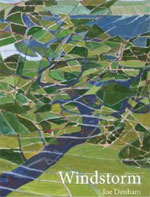
Windstorm, by Joe Denham

Windstorm, by Joe Denham

Joe Denham’s second collection of poetry is aptly titled. From the first line and page, Windstorm sweeps the reader in with powerful, all-encompassing imagery couched in rapid, muscular tercets. That unrelenting rhythm swoops from the broad – swirling cyclones, wild seas, wheeling flocks of birds – to the grimly specific: the pain, panic and bloodshed of an injury inflicted with a saw while mending a fence. The plunge from the immense natural world to the personal in spiritual and bodily senses, to the even microscopically analytical is often swift, breathtaking, dense and condensed:

the artery opened to a world now losing
        ocean life oceans wide (spirit
of its soul) and through in time life renews

it is a world beyond weeping the exiting
        blood enters, it is perpetual
shock, miasma, day upon day, it

is bees leaving the hive, then lost (little
        wonder, little wonders)
it is the cost analysis, and the cost …

Even when a bit of comparative whimsy slips into the passionate barrage of what is essentially one poem in five sections marked with epigraphs, the momentum never lets up. When the reader encounters the rueful “Under a clusterfuck of stars (the names of which I’ve never / cared to learn …” one might think things are switching to a more contemplative pace. However, the next stanza ricochets from someone on cocaine screaming on a cellphone to that crazed cell signal bouncing off satellites, to the life of fish, to the poet’s brain radiating in that cell signal … and the interconnected images, vignettes and philosophizing blaze on, both exhilarating and verging on exhausting.

Admittedly, all that windswept swooping and the intense rhythms can produce some dizziness – albeit not unpleasant – in a reader. Perhaps some more modulation, more variety of form and tone, would then set the most powerful aspects in even stronger contrast. Some spare, succinct lines could have as much thematic and emotional impact as the onslaught that preceded it. After all, aren’t we often most in awe of the power of a storm once the world falls silent and then the small, modest sounds of life resume?

This is my first introduction to Denham’s work. He has a previous poetry collection, Flux, published in 2003, and a forthcoming novel, The Year of Broken Glass. Windstorm inspires this reader to look back and look forward to what Denham will do next.

2010 reading list – not best of, but all of …

Here are the books I read in 2010, with links to reviews where I have them. This is an exhaustive, all of list, not a best of list … although there are some “best of” in there … you can guess! It feels like it was a year of lively reads indeed.

  1. Sink Trap – A Georgiana Neverall Mystery
    by Christy Evans

  2. Matter
    by Meredith Quartermain

  3. Invisible
    by Paul Auster

  4. This is Water – Some Thoughts, Delivered on a Significant Occasion, about Living a Compassionate Life
    by David Foster Wallace

  5. Man Gone Down
    by Michael Thomas

  6. The Museum of Innocence
    by Orhan Pamuk

  7. Awake
    by Elizabeth Graver

  8. The Ordeal of Oliver Airedale
    by D.T. Carlisle

  9. The Bishop’s Man
    by Linden MacIntyre

  10. Outliers
    by Malcolm Gladwell

  11. The Children’s Book
    by A.S. Byatt

  12. Solar
    by Ian McEwan

  13. The Last Woman
    by John Bemrose

  14. Nox
    by Anne Carson

  15. Chronic City
    by Jonathan Lethem

  16. So Much For That
    by Lionel Shriver

  17. The Sweetness at the Bottom of the Pie
    by Alan Bradley

  18. Coal and Roses
    by P.K. Page

  19. Pigeon
    by Karen Solie

  20. Useless Dog
    by Billy C. Clark

  21. The Certainty Dream
    by Kate Hall

  22. The Heart is an Involuntary Muscle
    by Monique Proulx
    (translated by David Homel & Fred A. Reed)

  23. The Imperfectionists
    by Tom Rachman

  24. Migration Songs
    by Anna Quon

  25. Grain
    by John Glenday

  26. The Sun-fish
    by Eilean Ni Chuilleanain

  27. 2666
    by Roberto Bolano

  28. A Single Man
    by Christopher Isherwood

  29. Night Work: The Sawchuk Poems
    by Randall Maggs

  30. Far To Go
    by Alison Pick

  31. Gould’s Book of Fish
    by Richard Flanagan

  32. Fauna
    by Alissa York

  33. Freedom
    by Jonathan Franzen

  34. Sandra Beck
    by John Lavery

  35. Annabel
    by Kathleen Winter

  36. The Death of Donna Whalen
    by Michael Winter

  37. Room
    by Emma Donoghue

  38. Ghost Pine
    by Jeff Miller

  39. L (and things come apart)
    by Ian Orti

  40. The Bone Cage
    by Angie Abdou

  41. Windstorm
    by Joe Denham

  42. An Object of Beauty
    by Steve Martin

  43. Burley Cross Postbox Theft
    by Nicola Barker


I start 2011 with the following books started in 2010 and still in progress:

  • Voltaire’s Bastards
    by John Ralston Saul

  • Maggot: Poems
    by Paul Muldoon

  • Patient Frame
    by Steven Heighton

  • The Mill on the Floss
    by George Eliot

In 2009, I read 52 books, inspired a lot by great discussions and suggestions I found amongst the book blogging and reader community on Twitter. I didn’t match my 2009 total – not even close, really … but then, I have to ask again (as I did a year ago) are total numbers of books or pages really the point? What do you think?

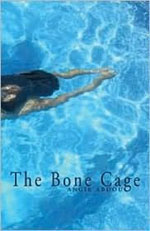
The Bone Cage, by Angie Abdou

The Bone Cage, by Angie Abdou

Dangerously dedicating oneself, body and soul – two contrasting views of elite performance in Black Swan and The Bone Cage

‘Tis the season for awards buzz that sparks as one year wanes, and blazes into the new year. In the movie realm, Black Swan is igniting that Academy Award spark. The movie is a psychological thriller about a young ballerina sacrificing and striving for the pinnacle role of her profession. On another level, the story of actress Natalie Portman’s physical and mental dedication to making the role authentically her own has been intriguing and even inspiring. As reviewer Roger Ebert observed:

“The tragedy of Nina, and of many young performers and athletes, is that perfection in one area of life has led to sacrifices in many of the others. At a young age, everything becomes focused on pleasing someone (a parent, a coach, a partner), and somehow it gets wired in that the person can never be pleased. One becomes perfect in every area except for life itself.”(1)

‘Tis also the season for continued buzz in the Canadian literary realm – a buzz that revs up for the fall literary awards – and it’s fair to say that buzz is just as intoxicating for many as the Oscars. Really. Intriguingly, there are some striking parallels between Black Swan and one of the Canada Reads contenders.

The Bone Cage by Angie Abdou is about young and not-so-young elite athletes striving for their own pinnacle, a place on the Canadian Olympic team. The story is traced compellingly through the alternating and eventually intersecting trajectories of speed swimmer Sadie and wrestler Tom (Digger to family, friends and teammates). Abdou draws persuasively on her own competitive sports background (she swims at the Masters level, her brother was an Olympic wrestler) to build as convincing and approachable a story as Black Swan is fascinating but utterly rarified.

Black Swan unfolds against a stark black and white backdrop, splashed with highly symbolic pink and blood red, and keeps up that striking visual assault from beginning to end. The Bone Cage uses different and instantly more pervasive sensory cues, where the book’s pages seem almost redolent of sweat and chlorine from the outset. From the beginning, Abdou takes you under the skin of her singular characters and taps into how they’re feeling in every sense of the word, from the physical satisfactions and strains to the emotional exhilaration and tribulations. From the beginning, you take in the flesh of the dancers in Black Swan, both at its most beautiful and at its most damaged and grotesque, and you see their conflicts, but it’s all surface. While this is perhaps comparing apples and oranges, it could also be said this is a fair contrasting of the accessibility of the storytelling and believable forging of the characters in the two works, regardless of the medium. Black Swan is gorgeously, frostily played out at arm’s length, whereas The Bone Cage draws you in warmly.

Ebert’s observation about Black Swan points out that the elite performer strives to please, and notable in that comment is that the performer doesn’t seem to have the actual support, emotional or otherwise, of others. Nina literally and/or figuratively (really, it’s hard to tell – this is a psychological thriller and so I don’t think this is a spoiler) kills off everyone who could possibly offer her solace and support in her quest, not only making her victory her own in the end, but making it *exclusively* her own. In vivid contrast, The Bone Cage delves deeply and convincingly into the team dynamics, friendships and family relationships that do inspire the athletes to please, but even more, provide the athletes with invaluable safety nets on many levels. In Black Swan, perhaps Barbara Hershey’s tragically botoxed face elicits some sympathy as Nina’s well-intentioned if claustrophobically supportive mother, but she can’t hold a candle to the earthy, flesh-and-blood presence of Sadie’s stalwart grandmother and Digger’s slightly embarrassing but steadfast father.

It’s Sadie’s palpable connection to her grandmother that best captures the dichotomy of the body’s power and fragility, and serves as a harbinger of Sadie’s own unexpected confrontation with her physical, emotional and even spiritual limits. In Black Swan, bodily fragility or threats to bodily supremacy create downright horror, but the challenges Sadie, Digger and their respective teammates face are couched with depth, subtlety and resonances such that anyone, of whatever physical prowess, can feel some empathy.

Both Black Swan and The Bone Cage explore the relationship between elite performers and their “shelf life” and constrained time in the spotlight, and their consciousness of being part of a competitive continuum of those preceding and following. And again, Black Swan‘s assessment of that reality is tinged with horror, while The Bone Cage confronts it, admittedly, with a mix of disdain, anxiety and resentment, but presents everyone on that continuum (such as Sadie’s predecessor Lucinda and heir apparent Katie) with subtlety and understanding.

Both Black Swan and The Bone Cage make sorrowful classical references to the body as a type of prison to be transcended. The obvious foundation of Black Swan is the spell cast in Tchaikovsky’s Swan Lake – it’s integral to the story, it is the story. By contrast, one minor shortcoming of The Bone Cage (a multi-layered reference to battle armor in Beowulf) is that attempts to give the intersecting stories some additional heft with classical references feels uncomfortably tacked on rather than an organic part of an already impressive whole. The Browning, Yeats and even the Ethel Wilson references are all technically congruous with Sadie’s background, but they’re all rather superfluous and don’t really add to the richness of the story.

Nor does the fleeting reference to Tom Buchanan add – well, what was it supposed to add to the ending of The Bone Cage? But before you can accuse Abdou of taking it all too seriously, she ends on a note that is both earthy and whimsical. I wish the same could be said for the end of Black Swan.

Black Swan‘s Grand Guignol ending is chillingly drenched in perfection in every sense, and that perfection is explosive but also finite. You’ve been entertained, but you’re glad it’s over, and you feel no need to wonder about the obsessively dedicated ballerina you’ve observed with fascination, but have really not come to know. The Bone Cage‘s wistful ending is ambiguous, tinged with hope and various possibilities. You wonder what happens next for the young athletes. (Maybe Abdou will consider updating us at some point …?) Black Swan is a twisted confection, but The Bone Cage is the real deal.

I would recommend both the movie and the book, truth be told. As I remarked to a friend recently, though, “I would recommend Black Swan … I just don’t know who I would recommend it to …” No such problem with The Bone Cage. I would recommend it, too, and unreservedly to anyone who enjoys a good, engaging story with believable characters that either welcomes you with credibility and authenticity to a world you might know, or introduces you unthreateningly to a world you might not.

Notes:

1. Black Swan review by Roger Ebert
http://rogerebert.suntimes.com/apps/pbcs.dll/article?AID=/20101201/REVIEWS/101209994

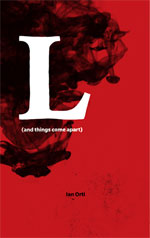
L (and things come apart), by Ian Orti

L (and things come apart), by Ian Orti

L (and things come apart), by Ian Orti, is a haunting novella about a disintegrating marriage, a disintegrating mind, or maybe both. L (and things come apart) is an extended prose poem about a new relationship springing from the ashes of a lacerated and incinerated relationship. L (and things come apart) is all this and more.

Cafe owner Henry seems to acquiesce to being cuckolded and humiliated by his nameless wife, a museum director, who invites her lovers to interminable dinner parties in the home she shares with Henry. Henry seeks solace in longer hours at his cafe, where he enjoys the company of his quirky customers and rents an upstairs apartment to an attractive, enigmatic woman named L. L is quietly mercurial and troubled, and possibly being pursued. Henry is attracted to her and wants to help her, but perhaps cannot, as his world seems to be figuratively and literally crumbling.

Orti has constructed a dark, enticingly murky tale that might or might not be a romance. The book is deceptively rich and complex in form and imagery despite its comparative brevity. Matryoshka dolls of story fragments and images are repeated and reopened within other stories and images. New life and stories rise out of the ashes of previous lives and stories. Old rooms and houses renovate themselves magically overnight. Plants rapidly overgrow a burned-out cafe (is this real or imagined?), possibly out of season when the seasons seem to be out of sync to begin with … and on and on.

As Henry struggles to keep his modest business operating, and his modest and increasingly fragile psyche functioning, the city around him is tumbling into disarray. Is there a transit strike going on, or has the climate come irreparably unhinged and the citizenry is banding together and protesting? And what about the mammoths?

Enormous impossibilities marching towards them one large impossible step at a time: elaborately decorated, fully tusked, long-haired mammoths. How many he couldn’t tell, but they were in rows of two, surrounded on either side by the people of the city. Their bodies swayed with each imposing step. Henry searched people’s faces for some explanation or at least a sign of terror, but he found neither.”

Is Henry indeed coming apart – but gently so, hence the absence of terror over the improbable things happening around him – and in the process, are his images and memories of the key people in his life also shattering and fragmenting? In the end, perhaps his cruel, unfaithful wife is not what she seems. Are she and L and a mysterious other woman at the dinner parties all facets of the same person? Orti leaves enough shimmering clues and suggestions that each reader can draw his or her own conclusions.

As it culminates, L (and things come apart) reveals its circular structure, similar to the likes of Under the Volcano, with which it shares a hypnotic quality. This is a book that will be something new and fresh with each re-reading, which it deliciously invites.

Thank you to Invisible Publishing for providing a review copy of L (and things come apart), by Ian Orti.

The Death of Donna Whalen, by Michael Winter

The Death of Donna Whalen, by Michael Winter

A brief synopsis of The Death of Donna Whalen would seem simple on the surface, and would also seem to separate swiftly those who would read such a story from those who would not. Based on a true case, the story is about a spirited but troubled young woman who meets a premature and very violent end. Her troubles prior to her death included dealing in behaviours and with people who were truly or reputed to be dangerous. It would seem clear who was responsible for her death. End of a cautionary tale, grimly told …?

Not at all. Drawing on a daunting array of records from the real-life trial of the suspected murderer – court transcripts, police wiretaps, police and news reports, letters, diary excerpts and more – author Michael Winter has distilled them into a singular account of a murder case and its attendant tragedy that is not at all what it seems. Its transcendent approach to capturing this story should and will also draw in readers to the book who might normally eschew “true crime” fare.

Winter’s innovation is that he has created an unlikely Greek chorus out of the voices that emerge from the towering stack of material that apparently lived at the back of his closet for a number of the years during which he grappled with how to tell the story. Further, out of the cacophony of confused, fearful and duplicitous voices telling their versions of Donna Whalen’s story and fate, Winter forges a distinct voice of his own. The alchemy is that he takes first person accounts, compresses them, and sensitively and acutely converts them to the third person, while still retaining accents, inflections and resonances that create an unforgettable collective voice that haunted this reader in her dreams. The result is simultaneously intimate, distancing and authentic, making the story that much more compelling. The final effect also likely replicates the maddening conundrum that law enforcement, investigators and ultimately justice faced and struggled with in arriving at their flawed conclusions.

Many of the relationships between voices and figures in the story are not explained until the end of the book. While this creates some confusion, it also adds to the effect of there not seeming to be a single, reliable voice telling Donna’s story. The reader struggles with her own trust and skepticism – which can change in waves from character to character, and from moment to moment with given characters – that is almost visceral, and therefore that much more intensely engaging.

Winter himself, as well as reviewers, have cited Truman Capote’s In Cold Blood as a point of reference and comparison for The Death of Donna Whalen. While Donna is equally groundbreaking in form, the book is really closer in spirit, form and voice to Kenneth J. Harvey’s Inside. Donna‘s collective voice is as pervasive, haunting and mercurial as Inside‘s beleagured Myrden.

Winter as author and narrative voice is often charmingly, gregariously present in his previous books, such as This All Happened and The Architects Are Here. His presence in The Death of Donna Whalen is deceptively influential, but also respectfully circumspect. It will be interesting to see what Donna does or does not do with his voice in future works. Even if Donna stands alone in his oeuvre … well, it truly stands alone, in every good sense of the phrase.

See also

Michael Winter recently talked most revealingly about his new book “The Death of Donna Whalen” on CBC Radio’s The Next Chapter
http://www.cbc.ca/thenextchapter/2010/10/michael-winter.html