Category Archives: Reviews

Half-Blood Blues, by Esi Edugyan

I’m really thrilled to introduce Bookgaga blog visitors to another wise and diligent guest book reviewer. Sue Reynolds is a life-long reader and animal lover whose sudden, passionate love for Bette Davis movies threatens to consume all of her reading time.

Half Blood Blues, by Esi Edugyan

Half-Blood Blues has won or been shortlisted for an impressive array of prestigious awards since its publication in 2011. It won the Scotiabank Giller Prize, the Ethel Wilson Fiction Prize, and the Anisfield-Wolf Book Award, was nominated for the Governor General’s Award for Fiction, the Orange Prize for Fiction and the International IMPAC Dublin Literary Award, to name a few. The great success of the book has generated countless descriptions and reviews, both in print and online. In the interest of taking a different approach, the Bookgaga kindly suggested that my review might take the Canada Reads theme into consideration.

Half-Blood Blues, Esi Edugyan’s second novel, moves back and forth between Berlin and Paris in 1939-40, and Berlin and Poland in 1992. Its action revolves around a jazz band, the Hot-Times Swingers, which is composed of black and white musicians from the United States and Europe. With World War II looming on the horizon and harassment of “undesirables” (band members Chip and Hiero are both dark-skinned black men, Paul is a blond-haired, blue-eyed Jew) becoming increasingly violent, the Hot-Times Swingers flee Berlin for Paris, partly to escape the worsening situation in Berlin, partly to meet and record with Louis Armstrong.

Edugyan smoothly moves from the drama of the Swingers, their interpersonal tensions, artistic struggles and more serious challenges of avoiding the Nazi presence in Berlin and Paris, to future scenes with the surviving members, years later, who are now old men. The 1992 sections of the novel feel almost like a detective story, as Sid, our elderly narrator, and his best friend, Chip, travel to Berlin and Poland in search of Hiero, the genius trumpeter, assumed killed during the war but alive and living in obscurity.

Canada Reads asks: what is the one novel that could change Canada, that Canadians can look to for inspiration? That will compel Canadians to make a change in their lives, at home or at work, in their community, in their country or around the world? Although the bulk of Half-Blood Blues takes place on the world stage with the horrors of World War II as a backdrop, the novel has an intimate and personal feel to it. We are witness to the creative process that Sid and his bandmates live for and we watch Sid’s infatuation with jazz singer Delilah Brown play itself out.

Half-Blood Blues works its magic, not necessarily through its story, but in how it tells that story. Edugyan conveys the mysteries of jazz music through her use of the written word:

“Kid wasn’t even hardly listening, it seemed. Handling his horn with a unexpected looseness, with a almost slack hand, he coaxed a strange little groan from his brass. Like there was this trapped panic, this barely held-in chaos, and Hiero hisself was the lid.

…I might’ve been crying. It was the sound of something growing a crust, some watery thing finally gelling. The very sound of age, of growing older, of adolescent rage being tempered by a man’s heart. Yeah, that was it. It was the sound of the kid’s coming of age. As if he taken on some of old Armstrong’s colossal sadness.” (p. 278)

Whether Edugyan is describing the freedom found in creating music or the chaos of thousands of panicked Parisians trying to flee their occupied city, her prose sings and reminds us that we are interacting with a living, breathing language. This, I think, is her gift to her readers: she calls attention to the musical, evocative beauty of the English language, how it can be bent and twisted to do the writer’s bidding.

Should all of Canada read Half-Blood Blues we may end up with a nation of book-lovers who have decided to read aloud, the better to hear the music embedded in every text they open.


Note: I’m approaching my preparations for Canada Reads 2014 a little differently than previous years. This year, I’m not reading and reviewing the books in advance of the debates. Instead, I’ve asked five wise and articulate readers – of whom Sue is the third – to review the finalist books and convince me one way or the other of the value of the book and its suitability for this year’s Canada Reads theme of “What is the one book that could change Canada?”

how the gods pour tea, by Lynn Davies

how the gods pour tea, by Lynn Davies

You know how with a really great, involving, engaging work of fiction, you can feel like you don’t want the book to end because you’ll miss the stories, the characters, that narrator’s voice in your head? I’m not sure that is often said of poetry collections … but I know I didn’t want this poetry collection to end. Davies’ voice throughout is warm, accessible, wise, observant and whimsical in a charmingly earnest way. Whether a poem’s subject matter is grounded in the real world or takes off in otherworldly flights (or just hops) of fancy, you trust completely where Davies is going to take you.

Her often economical expression by no means suggest she skimps on resonance, either.

“Might be grief in a puddle
and the puddle dries up.”
(from “On Mercy”)

“licks the shadows of trees off her paws.”
(from “Senility”)

“a river braiding light
as it rounds the bend.”
(from “Trout Lilies”)

“To be clear
as a crocus
among last
year’s shoe-
leather leaves.”
(from “Arrival”)

“I leave books open
in every room
of our house.”
(from “Alone”)

“I love you like crates of potatoes
and abandoned roads.”
(from “The Great Escape”)

These simple, elemental words and phrases … and many more … will vibrate in your mind, in your cells, long after you reluctantly turn over the last page.

Thank you to Goose Lane Editions for providing a review copy of how the gods pour tea, by Lynn Davies.

See also:

Lynn Davies – how the gods pour tea (an interview)
(The Toronto Quarterly)

Annabel, by Kathleen Winter

Allow me to introduce Bookgaga blog visitors to another wonderful and perceptive guest book reviewer. Natasha Hesch loves novels. She started out as a public librarian, and now works at BiblioCommons. She regularly shares short reviews of what she has read as tegan on BiblioCommons’ library software.

Annabel, by Kathleen Winter

I had been wanting to read Annabel by Kathleen Winter for quite some time, but it had just not made it to the top of my reading list. When Vicki asked me to read and review one of the 5 selected Canada Reads books, I jumped at the opportunity to review Annabel.

As I made my way through the novel on my daily TTC commute, I kept thinking about this year’s Canada Reads big question “What is the one novel that could change Canada?” I haven’t read the other 4 Canada Reads titles, but by reading Annabel I think Canadians could become more open-minded and accepting of other people’s differences. Discrimination against people who don’t fit neatly into sex and gender constructs persists today.

The main character of Annabel is a child who is born a hermaphrodite. Treadway, the father independently decides that the child should be raised as a boy: “[Treadway] knew his baby had both a boy’s and a girl’s identity, and he knew a decision had to be made.” (Winter, 26). Although Jacinta and Treadway’s baby is born in 1968, I wonder how different of a situation parents would be in today? I didn’t look into what the typical medical practices are today, but there is still a definite requirement to label a child: governmental institutions still impose the binary of male vs. female upon parents right from the start. I took a quick look at the Ontario and Newfoundland form for getting a birth certificate, and both forms still have only two check boxes available for sex: male or female. At a federal level, Statistics Canada also erases the existence of intersex individuals: on the 2011 Census of Population, only male and female populations are recorded.

Annabel really makes you think about the labels that are placed upon people, and the problematic nature of trying to label everything to try to understand it. Throughout the novel, there are numerous references to naming, defining and labeling things: “Everyone was trying to define everything so carefully, Jacinta felt; they wanted to annihilate all questions” (Winter 45). By labeling things, we are often imposing limits; as Winter eloquently writes “You define a tree and you do not see what it is; it becomes its name” (Winter 350).

As a reader you can’t help but want Wayne to just be who s/he is. There is a very sweet moment early on in the book where Wayne longs for a girls orange bathing suit. He begs his mother for one, but knows his father would not approve: “Could we get me a bathing suit like Elizaveta Kirilovna’s and not tell Dad?” (Winter 86). I wanted to buy the swimsuit for Wayne/Annabel. The innocence of Wayne’s desires are at times heart-breaking. I think if all Canadian’s read this book, they would empathize with Wayne, and be more open to accepting the blurry lines that exist with sex and gender identity.

There is much time spent in the novel on bridges. Thomasina, who accepts Wayne/Annabel for who s/he is, sends postcards of bridges to Wayne/Annabel. S/he is obsessed with these bridges, s/he is constantly looking at the postcards and redrawing the bridges. I couldn’t help but think that the bridges were a symbol of the interstitial space that Wayne/Annabel lives in. A space bridging two places, not male, not female, but in between.

Wayne/Annabel as a character is a very inspiring one. S/he never complains about his/her situation, no matter what happens to him/her. Although at times Winter writes Wayne/Annabel through very difficult experiences, I was very happy and relieved that Winter wrote Wayne/Annabel to a ‘happy ending’. I think that Annabel as a novel has the ability to create empathy for people who are different than one’s self. I look forward to the Canada Reads debates.


Note: I’m approaching my preparations for Canada Reads 2014 a little differently than previous years. This year, I’m not reading and reviewing the books in advance of the debates. Instead, I’ve asked five wise and articulate readers – of whom Natasha is the second – to review the finalist books and convince me one way or the other of the value of the book and its suitability for this year’s Canada Reads theme of “What is the one book that could change Canada?”

The Orenda, by Joseph Boyden

I’m delighted to introduce Bookgaga blog visitors to another thoughtful and insightful guest book reviewer. Cheryl Finch is an editor in the Greater Toronto Area. She specializes in non-fiction manuscript development; website copywriting and SEO; online article writing; and content marketing. Cheryl can be reached at cfinch999@gmail.com.

The Orenda, by Joseph Boyden

Set in the mid-1600s, Joseph Boyden’s The Orenda is a fascinating and often harrowing account of life during the French colonization of New France, when warring Huron and Iroquois nations fiercely battled for control of the fur trade, and resolute Jesuit missionaries were determined to convert their Huron allies to Christianity.

The Orenda chronicles the experiences of Bird, a Wendat (Huron) warrior; Snow Falls, a Haudenosaunee (Iroquois) girl; and Christophe, a French Jesuit missionary. As the story unfolds, Bird has led a small war party out to avenge the deaths of his wife and daughters, who were killed by the Haudenosaunee. Christophe is delivered to Bird’s temporary camp as part of the Wendat’s crucial trade arrangement with the French colonists, and Snow Falls is captured after Bird and his warriors attack a Haudenosaunee hunting party, killing her family. Christophe and Snow Falls are brought back to Bird’s village as captives.

Thus begins an uneasy and forced association among the three. They mistrust each other, but they also need each other. They feel superior to each other, but they also envy each other. They have many differences, yet they share common drivers: loyalty to family, spiritual conviction, the will to survive. And they are united in their fear of brutal torture and slow death by their current or future captors.

The Orenda is narrated alternately in the first person by Bird, Snow Falls and Christophe themselves, each character speaking directly to a loved one with the freedom and honesty accorded to only the most trusted of confidantes. They reveal their intentions, motivations and knowledge, giving us, the readers, a fully informed understanding of their conduct. We see that each character has virtues and flaws; each character is truly human, worthy of our understanding and empathy.

The characters themselves do not have the benefit of this insight about one another – they see the “what” but don’t know the “why”. They must simply interpret each others’ actions in the context of their own experiences and belief systems. Incorrect assumptions and misunderstood behaviour foster suspicon, judgment and intolerance. Bird, Snow Falls and Christophe slowly grow to accept, and eventually appreciate, respect, even care for one another, but this is a long and arduous process made all the more difficult by language barriers, religious differences and subjective frameworks.

Can The Orenda inspire social change? In some ways, things are no different today than they were for Bird, Snow Falls and Christophe 400 years ago. In both the national and international contexts, people of diverse cultures, belief systems, lifestyles, customs and languages live together but don’t necessarily understand or respect each other, resulting in misinterpretation, judgment and prejudice. Warring nations fiercely battle for economic and religious control, often resorting to ritual brutality rooted in tradition and vengeance. Change will only be possible if we make the effort to listen to each other, consider differing viewpoints, and understand the “why” behind the “what”. We must focus on our similarities rather than our differences, and learn to empathize. We must recognize that every human being is capable of great compassion and extreme cruelty, depending on past experience and present circumstance.

These are not quick or easy undertakings. Important change takes significant time and effort. But if we don’t start, it will never happen. The Orenda closes with the words “Now is what’s most important … the past and the future are present”. This book certainly has the potential to change Canada and even the world, if we choose to take its lessons to heart.


Note: I’m approaching my preparations for Canada Reads 2014 a little differently than previous years. This year, I’m not reading and reviewing the books in advance of the debates. Instead, I’ve asked five wise and articulate readers – of whom Cheryl is the first – to review the finalist books and convince me one way or the other of the value of the book and its suitability for this year’s Canada Reads theme of “What is the one book that could change Canada?”

Life After Life, by Kate Atkinson

Life After Life, by Kate Atkinson

Kate Atkinson’s Life After Life offers a fascinatingly structured and choreographed approach to the “what if’s” of both an individual life’s journey and the broad sweep of history. The individual journey Atkinson traces is that of Ursula Todd, born to an upper middle class British family before the First World War. Ursula, her lively, loving and personable family, her friends and colleagues contend with the upheavals of both World Wars and beyond. That is, they go beyond the Second World War in some variations of Ursula’s and their lives … and in some variations, they don’t.

Atkinson posits intriguingly how a matter of minutes or a minute recalibration of your decision making or the decision making of people around you can have a profound impact not just on personal outcomes, but on the fate of those around you. Those outcomes can spiral out into influencing sequences of wider events and, ultimately, the course of history.

To describe Atkinson’s approach as “choreographed” might suggest it’s too calculated, but that’s not the case. There is a wonderfully natural feel to dialogue and character that has you falling in love, worrying about (especially during the vivid, heartwrenching and intimately horrific sequences set amidst the Blitz) and missing even the most peripheral characters as the story unfurls, rolls back and unfurls again in increasingly captivating waves. What will change, even ever so slightly, in the next rendition of Ursula’s life, and what repercussions will result? Not only will you want to ride each new wave, but you’ll want it to continue long past the last tantalizing ripple. Life After Life might even inspire you to ponder your own “what if’s” …

See also: Kate Atkinson’s notes on Life After Life (with spoiler alert)

What I read in 2013

The Miracles of Ordinary Men, by Amanda Leduc

I’m already off to the races with some delicious 2014 reading, but I know I need to take a look back … so here are the books I read in 2013, with links to reviews (here on this blog or on Goodreads) where I have them. Again, as I’ve done in previous years, this is an exhaustive, “all of” list, not a “best of” list. (Have we had enough “best of” lists, perhaps?)

In addition to the interesting and often challenging complement of books I enjoyed this year, I continued my commitment in 2013 to a daily devotion to at least one poem … and usually more, as more and more friends on Twitter began to generously share their poem choices and reflections via the #todayspoem hashtag. Now two years in, it continues to be a truly revelatory and wonderfully communal experience. I’ve now pondered the works of over 450 unique poets, writers, songsmiths and wordsmiths I’ve revisited or unearthed myself, and countless more via others wielding that often eye-opening hashtag. I’m continuing with my #todayspoem habit every day heading into 2014, and I hope many will continue or join anew.

As I did in 2012, I also celebrated some beautifully built books in 2013, including:

The books I read and relished in 2013 …

  1. The Age of Hope
    by David Bergen

  2. May We Be Forgiven
    by A.M. Homes

  3. CivilWarLand in Bad Decline
    by George Saunders

  4. Pastoralia
    by George Saunders

  5. Red Doc>
    by Anne Carson

  6. Tenth of December
    by George Saunders

  7. Traveling Light
    by Peter Behrens

  8. Stories About Storytellers
    by Douglas Gibson

  9. How Should A Person Be?
    by Sheila Heti

  10. Seldom Seen Road
    by Jenna Butler

  11. The April Poems
    by Leon Rooke

  12. The Shore Girl
    by Fran Kimmel

  13. Li’l Bastard
    by David McGimpsey

  14. 1996
    by Sara Peters

  15. One Bird’s Choice
    by Iain Reid

  16. Clear
    by Nicola Barker

  17. Under the Keel
    by Michael Crummey

  18. Coping with Emotions and Otters
    by Dina Del Bucchia

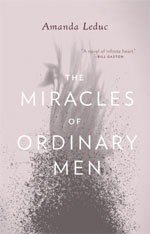
  19. The Miracles of Ordinary Men
    by Amanda Leduc

  20. What’s the Score?
    by David W. McFadden

  21. Bone & Bread
    by Saleema Nawaz

  22. Lyrics and Poems 1997-2012
    by John K. Samson

  23. Journey with No Maps: A Life of PK Page
    by Sandra Dwja

  24. Big Day Coming: Yo La Tengo and the Rise of Indie Rock
    by Jesse Jarnow (read aloud)

  25. Rosina, the Midwife
    by Jessica Kluthe

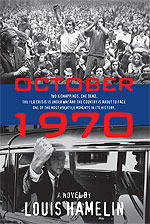
  26. October, 1970
    by Louis Hamelin, translated by Wayne Grady

  27. Clear Skies, No Wind, 100% Visibility
    by Theodora Armstrong

  28. All We Want is Everything
    by Andrew F. Sullivan

  29. The Soul of Baseball – A Road Trip Through Buck O’Neil’s America
    by Joe Posnanski (read aloud)

  30. Let Me Eat Cake
    by Leslie F. Miller

  31. We So Seldom Look on Love
    by Barbara Gowdy (reread)

  32. Minister Without Portfolio
    by Michael Winter

  33. Hellgoing
    by Lynn Coady

  34. Caught
    by Lisa Moore

  35. How to Get Along With Women
    by Elisabeth de Mariaffi

  36. The Old Lost Land of Newfoundland
    by Wayne Johnston

  37. Leaving Howe Island
    by Sadiqa de Meijer

  38. Cataract City
    by Craig Davidson

  39. Going Home Again
    by Dennis Bock

  40. The Embassy of Cambodia
    by Zadie Smith

  41. A Fairy Tale
    by Jonas T. Bengtsson, translated by Charlotte Barslund

  42. The Dove in Bathurst Station
    by Patricia Westerhof

  43. Monoceros
    by Suzette Mayr

  44. Correspondences
    by Anne Michaels (portraits by Bernice Eisenstein)

  45. Knife Throwing Through Self-Hypnosis
    by Robin Richardson

Notes

A read aloud book is a book that my husband Jason and I read aloud to each other, typically while one was, say, cooking dinner, doing dishes, driving, what have you … and the other was, well, reading aloud. Each read aloud book was read in its entirety. Other than the read aloud sessions that took place in cars, zesty beverages were often consumed. It’s a wonderful way to read and share a book.

A reread is a revisit with a previously read book. The book is completely read again, not just browsed. I try to reread at least one book every year … but I think I’d like to up that quotient, even just a bit.

Currently in progress, heading into 2014:

Writer Pasha Malla made some interesting year-end observations about achieving balance in one’s reading (be it gender, genre, region and more), which should remind us to expand our reading horizons by being aware of our defaults (Globe Books 2013: How can you change what (and who) you read? Globe and Mail December 27, 2013). Inspired by his books “numbers game” (male/female author split in reading), I checked my own 2013 reading. I read 45 books, with two in translation, so 47 writers and translators: 22 men and 25 women. In terms of gender, that looks like a pretty balanced reading selection in 2013. I suppose I could tip and turn that list a few more ways: between fiction (novels and short stories), non-fiction and poetry; author nationality and race, and more. I don’t want to get overly conscious but I do want to be aware of the balance of choices I’m making, while still going with the lovely flow of natural discovery and kismet and all the rest as I go from one book to the next.

Looking back fondly on my 2013 reading, looking forward eagerly and with anticipation to my 2014 reading, I’ll simply conclude (as I did last year) …

It’s not how many you read that counts. It’s that you read that counts.

The Embassy of Cambodia, by Zadie Smith

The Embassy of Cambodia, by Zadie Smith

The heroine of The Embassy of Cambodia by Zadie Smith, and the story itself, both seem slight and spare early on. Fatou casts a seemingly matter-of-fact gaze on her life of few pleasures in NW London as the domestic servant of the demanding Derawal family. She slips away each week for a swim at a community health centre using purloined guest passes. She meets an earnest but vaguely unappealing suitor for church and tea on Sundays. She is entranced by the mysterious goings-on at a nondescript building in her employer’s neighbourhood that is labeled as the eponymous institution.

Stated laconically, perhaps catatonically to start, the story rapidly grows rich with layers of meaning and intrigue – not to mention hints of menace, some palpable, some inexplicable – and also with burgeoning emotion and profundity that will assuredly demand and reward repeated readings. And the heroine? Fatou has endured much, in both the country she fled and the country she fled to. She possesses depths of unappreciated resilience and compassion that perhaps she doesn’t fully realize herself. She will keep swimming, sturdily and unfailingly. She is unforgettable.

As striking as this heroine is this report, published within days of the publication of Smith’s story.

October 1970, by Louis Hamelin, translated by Wayne Grady

Update: October, 1970 remains in contention as a Top 10 pick for Canada Reads 2014.

October 1970, by Louis Hamelin, translated by Wayne Grady

“There is no doubt fiction makes a better job of the truth.”
Doris Lessing, Under My Skin

For its latest foray into rallying all Canadians around one compelling book, CBC’s Canada Reads recently kicked off the discussion for its 2014 literary tournament with the question, “What is the one novel that could change Canada?” and then elaborated:

We want the final contenders to be great stories, but we also want them to address the issues facing Canada today. In these times of political change, economic uncertainty and civil upheaval around the world, what’s the one book we can look to for inspiration? That will compel Canadians to make a change in their lives, whether it’s at home or work, in their community, in their country or around the world? Perhaps Canada needs a novel to inspire compassion, humour, political engagement, environmental awareness, insight into the lives of First Nations, or a new lexicon for mental illness?

We want you to recommend the novels that have this power.

I was delighted to be asked to offer a recommendation and here’s how I responded:

Change is best ignited by first understanding pivotal moments of social upheaval, the layers and complexities of how they came to be, and how we as individuals and as a nation responded. What better piece of recent history to consider than the October Crisis, reimagined in vivid fictional form in October 1970 (translated by Wayne Grady from the French novel La Constellation du Lynx by Louis Hamelin). The retelling of the series of events in Quebec that culminated in domestic terrorism, kidnappings, murder and Canada’s only peacetime invocation of the War Measures Act is compelling unto itself. Adding a spirited cast of characters gives voice to the maelstrom of conflicting social and political aspirations and agendas that collided so violently at that time. Expanding the story in this fashion also allows room to examine how that clash of societal, governmental, civil and other forces translates into personal challenges, dilemmas or opportunities. Through the lens of what came before and how it succeeded or failed, we can evaluate social change that probably still needs to happen or at least continue to evolve today.

In terms of subject matter, scope and approach, October 1970 is not for the faint of heart. It’s a sprawling, prickly, often violent amalgam of political and social history and commentary, police procedural, action thriller and murder mystery, with great dollops of intellectual, faux intellectual and ribald meanderings along the way. It fascinates and infuriates with its rollicking cast of characters, many with satirical monikers, that even a list at the front of the book doesn’t keep fully sorted out. The book is saturated with vibrant animal imagery from beginning to end, largely depicting or connoting the harsh but sometimes ambiguous hierarchy of predators and prey.

The book rewards the dedicated reader though, with a denouement boiled down suspensefully to a true page turner, particularly surprising since we all already know the ending. But no matter where we were, how old we were (I was 10 years old, perhaps precociously followed what I could on TV and in the newspaper, and was utterly bewildered and terrified), how much we comprehended of what was going on and where we stood politically and philosophically, this fictional interpretation offers some plausible explanations for troubling holes in the story. The story can still shock and reveal new, startling details in this retelling and rendering, more than 40 years later.

If this sounds like a book that fits the latest Canada Reads call to action, you can still vote for it among up to 10 titles until 11:59 p.m. ET on Sunday November 3rd. Vote here. If the time has passed and/or you’re not inclined to getting gladiatorial with your reading, this admittedly thorny book is still worth your consideration.

See also:

Read October: As the only Quebec novel on the Giller Prize longlist, Louis Hamelin’s take on the FLQ crisis is unsettling
by Noah Richler
National Post
October 10, 2013

Get to know the Top 40: 6 Books that will change your perspective on Canada
CBC Books

Let Me Eat Cake, by Leslie F. Miller

Let Me Eat Cake, by Leslie F. Miller

In Let Me Eat Cake, Leslie F. Miller has an entertaining idea: coupling historical and contemporary/pop culture views and even some technical insights into this culinary delight with her personal reflections, reminiscences and engagement verging on obsession with the subject matter. The tone is amiable if a bit self-inflating, even where it intends to be self-deprecating. Unfortunately, the overall approach is uneven and long-winded.

Interesting factoids are scattered throughout, like a cake with baked-in trinkets, but the filler in between will put off all but the most stalwart readers long before the end … and occasionally you just might chomp down on something that might put you off, like the extended prattle about in-fighting amongst competitive bakers. Intentional or not, some of the asides about eating that which is forbidden and how that relates to body image hint at a more intriguing theme below the surface.

The whole at times too-packed-with-rich-ingredients read is almost redeemed by this:

Tell me I’m beautiful, and that’s nice of you (I don’t believe you, but it’s nice). Tell me I’m funny, and I thank you, though you state the obvious. But tell me I’m a good cook, that you love my meat loaf and my lemon layer cake, and you are loving me. Food is love.

but you might not make it to that genuinely sweet conclusion because of the overstuffed and sometimes cloying material that precedes it.

Big Brother, by Lionel Shriver

I’m thrilled to introduce Bookgaga blog visitors to another lively and insightful guest book reviewer. Ruth Seeley rattles cages for a living via Twitter and at No Spin PR and occasionally reviews books on her blog and Goodreads.

Some Straight Talk About Big Brother by Lionel Shriver

Big Brother, by Lionel Shriver

Write a novel about The Post-Birthday World of a woman who leaves her sensible partner for a much sexier one – or not.

Write a novel about being the mother of a school shooter in the wake of Littleton, CO. We Need to Talk About Kevin.

Write a novel about the vaunted US health care system no one can ultimately afford. The one that puts profit ahead of quality of life. So Much for That.

Write a novel about The Troubles when you’re handicapped by having been born American. Welcome to The New Republic.

Write a novel about an anthropologist – The Female of the Species – who can’t resist a man she knows she should.

Write a novel about letting your Big Brother die from gluttony. Or not.

It’s hard to resist the temptation to reduce Lionel Shriver’s subject matter to exercises en style sometimes, because she persists in tackling big subjects. But despite the assertion on one of the front end papers that, ‘The dieting industry is the only profitable business in the world with a 98 percent failure rate,’ Big Brother is not about the dieting industry at all. It’s not even about the politics of obesity.

‘I have spent less time thinking about my husband than I have thinking about lunch,’ says Pandora Halfdanarson on the first page of Big Brother. Married to Fletcher, Edison’s perpetual little sister, daughter of a 70s sitcom star, Pandora’s an ex-caterer turned nasty Chatty Cathy doll manufacturer for the rich and passive aggressive. So it’s perhaps not surprising that she’s spent more time thinking about lunch and amuse-bouches than her husband. She’s married late and is raising two step-children. And she’s a busy woman. Her doll business is getting some national attention (think Newsweek cover), yet she feels a sibling twang when Edison’s friend Slack tells her he’s down on his luck. So down on his luck he’s unrecognizable when she picks him up at the airport for an extended stay, as he’s worn out his couch-surfing welcome in New York. The fat smelly guy in the wheelchair everyone who’s deplaning is complaining about is actually Pandora’s brother! How humiliating.

Pandora, whose brother has always loomed large in her life, makes it her mission to restore him – at least on the surface – to her image of her big brother as he was – big in the figurative but not literal sense. She herself manages to lose 60 pounds – 20 more than she needs to – and Edison loses closer to 200 after a year of serious exercise and not-so-closely supervised starvation. Herbal tea FTW! In order to accomplish rehab conditions, Pandora moves her brother out of the family home and into an apartment, abandoning husband and step-children. Since Fletcher is a very fit, cycling and raw food fanatic, it’s not quite clear why this is necessary, but never mind. Edison – whose jazz pianist career is on the rocks, having copped Keith Jarrett ‘tude without actually Keith – becomes a productive member of society, takes a day job in Pandora’s factory and reasserts his sexuality by having a one-night stand with a not-unattractive younger woman (enabled in this endeavour by sister Pandora, who’s replaced his buttery leather black jacket to aid in the restitution of her brother’s image as ‘jazz stud’). Or does he/do they?

Like all Shriver’s women, Pandora is a high achiever. The least competent of Shriver’s women are, at the very least, more than capable of supporting themselves nicely and supremely competent in their fields. But Pandora may well be Shriver’s least accessible and least charming character, and in a novel where the protagonist is a buffoon (of not-quite-Monty Python dimensions) and the antagonist remains shadowy (an angry cycling gnat, munching aggressively on celery stalks), the reader feels the loss of a plausible omniscient third-person narrator. Pandora’s not to be trusted. And with its surprise ending, Shriver proves she can’t be trusted either. And by that I mean, she refuses to write about we might like her to write about.

Ultimately, like all of Shriver’s novels, Big Brother is about family – or rather families. Dread families of origin, families we create, the collisions between the two; the children, parents, siblings and exes left in our wake; and ultimately our need to be known to a select group of individuals in a way far deeper and more significant than the personae we present to the world.