Big Brother, by Lionel Shriver

I’m thrilled to introduce Bookgaga blog visitors to another lively and insightful guest book reviewer. Ruth Seeley rattles cages for a living via Twitter and at No Spin PR and occasionally reviews books on her blog and Goodreads.

Some Straight Talk About Big Brother by Lionel Shriver
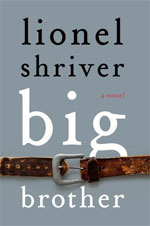
Big Brother, by Lionel Shriver

Write a novel about The Post-Birthday World of a woman who leaves her sensible partner for a much sexier one – or not.

Write a novel about being the mother of a school shooter in the wake of Littleton, CO. We Need to Talk About Kevin.

Write a novel about the vaunted US health care system no one can ultimately afford. The one that puts profit ahead of quality of life. So Much for That.

Write a novel about The Troubles when you’re handicapped by having been born American. Welcome to The New Republic.

Write a novel about an anthropologist – The Female of the Species – who can’t resist a man she knows she should.

Write a novel about letting your Big Brother die from gluttony. Or not.

It’s hard to resist the temptation to reduce Lionel Shriver’s subject matter to exercises en style sometimes, because she persists in tackling big subjects. But despite the assertion on one of the front end papers that, ‘The dieting industry is the only profitable business in the world with a 98 percent failure rate,’ Big Brother is not about the dieting industry at all. It’s not even about the politics of obesity.

‘I have spent less time thinking about my husband than I have thinking about lunch,’ says Pandora Halfdanarson on the first page of Big Brother. Married to Fletcher, Edison’s perpetual little sister, daughter of a 70s sitcom star, Pandora’s an ex-caterer turned nasty Chatty Cathy doll manufacturer for the rich and passive aggressive. So it’s perhaps not surprising that she’s spent more time thinking about lunch and amuse-bouches than her husband. She’s married late and is raising two step-children. And she’s a busy woman. Her doll business is getting some national attention (think Newsweek cover), yet she feels a sibling twang when Edison’s friend Slack tells her he’s down on his luck. So down on his luck he’s unrecognizable when she picks him up at the airport for an extended stay, as he’s worn out his couch-surfing welcome in New York. The fat smelly guy in the wheelchair everyone who’s deplaning is complaining about is actually Pandora’s brother! How humiliating.

Pandora, whose brother has always loomed large in her life, makes it her mission to restore him – at least on the surface – to her image of her big brother as he was – big in the figurative but not literal sense. She herself manages to lose 60 pounds – 20 more than she needs to – and Edison loses closer to 200 after a year of serious exercise and not-so-closely supervised starvation. Herbal tea FTW! In order to accomplish rehab conditions, Pandora moves her brother out of the family home and into an apartment, abandoning husband and step-children. Since Fletcher is a very fit, cycling and raw food fanatic, it’s not quite clear why this is necessary, but never mind. Edison – whose jazz pianist career is on the rocks, having copped Keith Jarrett ‘tude without actually Keith – becomes a productive member of society, takes a day job in Pandora’s factory and reasserts his sexuality by having a one-night stand with a not-unattractive younger woman (enabled in this endeavour by sister Pandora, who’s replaced his buttery leather black jacket to aid in the restitution of her brother’s image as ‘jazz stud’). Or does he/do they?

Like all Shriver’s women, Pandora is a high achiever. The least competent of Shriver’s women are, at the very least, more than capable of supporting themselves nicely and supremely competent in their fields. But Pandora may well be Shriver’s least accessible and least charming character, and in a novel where the protagonist is a buffoon (of not-quite-Monty Python dimensions) and the antagonist remains shadowy (an angry cycling gnat, munching aggressively on celery stalks), the reader feels the loss of a plausible omniscient third-person narrator. Pandora’s not to be trusted. And with its surprise ending, Shriver proves she can’t be trusted either. And by that I mean, she refuses to write about we might like her to write about.

Ultimately, like all of Shriver’s novels, Big Brother is about family – or rather families. Dread families of origin, families we create, the collisions between the two; the children, parents, siblings and exes left in our wake; and ultimately our need to be known to a select group of individuals in a way far deeper and more significant than the personae we present to the world.

Rosina, the Midwife, by Jessica Kluthe

Rosina, the Midwife, by Jessica Kluthe

Jessica Kluthe reaches a hand – at first tentative and trembling – across oceans and generations from her life in Canada to that of her ancestors in Italy in her captivating family memoir, Rosina, the Midwife. Those ancestors were part of a 26-million-strong exodus of Italians from 1870 to 1970, departing Italy for other parts of Europe and further afield, to North America. Kluthe’s particular focus, however, is the stalwart and enigmatic figure of a family member who chose to stay behind: her great-great-grandmother, Rosina, respected matriarch and, as a practising midwife, essential keeper of community tradition, secrets, and life.

Kluthe imagines poignantly and strikingly Rosina’s determination to see her family succeed and thrive, even if and when it means separating from loved ones permanently:

“She didn’t have a picture of her husband, but she could see him when she looked into her son’s face: everyone could. And, as her family would resettle, she would be left to remember this day of goodbyes and their faces – Giovanni’s and Generoso’s. And their eyes so dark that she couldn’t see their pupils – so dark that she could see her face reflected in Generoso’s as she stepped back, her hands still on his shoulders, and smiled as she wished him safe travels.”

Kluthe’s passion for the intricacies of heritage and the enduring love of family and how they inform both social fabric and individuals make Rosina an absorbing read. Kluthe’s pursuit of answers, interwoven with her own life’s joys and sorrows, rounds out the emotional satisfaction quotient of the book, making Rosina a “can’t put down” book for any season.

It was a pleasure to offer a version of this review to 49th Shelf for their Summer 2013 “Couldn’t Put It Down” feature, which includes great summer reading recommendations by noted Canadian reviewers, bloggers, publishers, authors, editors, and publicists with whom I was delighted to have my name and recommendation included. Read the feature here.

2013 reading list (so far)

The Alice Poems by Leon Rooke

Here are the books I’ve read so far in 2013, with links where they exist to books that I’ve reviewed (either here on this blog or briefly on Goodreads). As I’ve remarked before, it’s a competition with no one but myself, but it is always interesting to reflect halfway through the year where one is at with one’s reading, both quantitatively and qualitatively.

This has been another fine and interesting year in reading so far. I see I need to invest some more time in getting some more reviews on this blog, although I think that has been supplanted a bit by #todayspoem activities and reflections on beautiful book-shaped objects. I’ve been trying to balance my reading so that I always have prose and poetry on the go at the same time. I’m also pleased to see that 16 of the 21 books I’ve read so far this year are Canadian, and 8 of that total are poetry collections.

    canlit

  1. The Age of Hope
    by David Bergen (a Canada Reads selection)

  2. May We Be Forgiven
    by A.M. Homes

  3. CivilWarLand in Bad Decline
    by George Saunders

  4. Pastoralia
    by George Saunders

  5. canlit

  6. Red Doc>
    by Anne Carson

  7. Tenth of December
    by George Saunders

  8. canlit

  9. Traveling Light
    by Peter Behrens

  10. canlit

  11. Stories About Storytellers
    by Douglas Gibson

  12. canlit

  13. How Should A Person Be?
    by Sheila Heti

  14. canlit

  15. Seldom Seen Road
    by Jenna Butler

  16. canlit

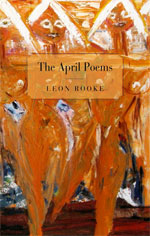
  17. The April Poems
    by Leon Rooke

  18. canlit

  19. The Shore Girl
    by Fran Kimmel

  20. canlit

  21. Li’l Bastard
    by David McGimpsey

  22. canlit

  23. 1996
    by Sara Peters

  24. canlit

  25. One Bird’s Choice
    by Iain Reid

  26. Clear
    by Nicola Barker

  27. canlit

  28. Under the Keel
    by Michael Crummey

  29. canlit

  30. Coping with Emotions and Otters
    by Dina Del Bucchia

  31. canlit

  32. The Miracles of Ordinary Men
    by Amanda Leduc

  33. canlit

  34. What’s the Score?
    by David W. McFadden

  35. canlit

  36. Bone & Bread
    by Saleema Nawaz

Currently in progress:

  • Journey with No Maps: A Life of P.K. Page
    by Sandra Djwa

  • Big Day Coming: Yo La Tengo and the Rise of Indie Rock
    by Jesse Jarnow

  • Lyrics and Poems 1997-2012
    by John K. Samson

How is your reading going so far in 2013?

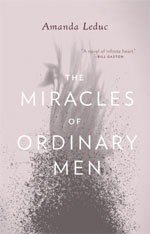
The Miracles of Ordinary Men, by Amanda Leduc

The Miracles of Ordinary Men, by Amanda Leduc

Among its many bittersweet delights, Amanda Leduc’s The Miracles of Ordinary Men makes me miss Peter Falk. One of Falk’s most unforgettable roles was playing himself – but that self as a lapsed angel – in the haunting 1987 film Wings of Desire. While they take different approaches, both the film and the book turn the tables on a spiritual concept that we perhaps all take for granted: that angels are benevolent celestial beings that look out for us, perhaps intercede between us and our higher being of choice … and are happy to do so, with no troubles, desires, anguish or emotions of their own.

The angels in Wings of Desire feel, but what they feel most is absence, because they observe human beings experiencing frustration, loneliness, pain and love, tasting food and life … and wonder what it would be like to experience that figurative and literal palette of sensations themselves. They have the choice to do that, but only by becoming mortal.

The Miracles of Ordinary Men reverses that process. Mortals become angels, and it is an increasingly excruciating process that Leduc renders with a psychological and physical detail and believability balanced with just enough ambiguity that a reader can perceive it as literally, clinically or symbolically as suits one’s perspective. Like Peter Falk, only a chosen few in The Miracles of Ordinary Men can see and even begin to comprehend the angels or angels-in-the-making before them.

Leduc is never heavy handed about what anyone’s form of belief or source of hope might be. She wisely posits that even the most doubtful or agnostic want something to turn to, and it is brave to acknowledge that desire, even if succumbing to it won’t necessarily achieve anything. This exchange captures it aptly and beautifully:

“People always want to pray when they’re down. It’s the easiest thing in the world.”

“I don’t think so. I think it’s the hardest thing anyone can do. Because there’s a part of you that always knows nothing might happen, that you might just be speaking words into air. And people do it anyway.”

The dual protagonists in the midst of this making of angels are English teacher Sam and executive assistant Lilah, both struggling, fresh from or in the process of suffering personal loss, estrangements and deaths. They are depressed, distraught and punishing themselves for those losses in different and some cases very overt fashion. It isn’t really a spoiler to note that their stories are quietly, elegantly constructed to intersect.

Even at its most troubling, the tone of The Miracles of Ordinary Men is almost determinedly evenhanded. Even at its most violent, the story and how it is told is essentially, if inexplicably gentle, always reaching for comfort and solace. As their stories accelerate and inevitably tilt towards each other and some kind of conclusion, Sam and Lilah both experience a falling away, a dispensing with, a distillation that holds the reader’s attention to the very last page. Is it the flat affect of shell shocked survivors, or the preternatural serenity of those who know something better is coming?

The Miracles of Ordinary Men is a book you’ll want to revisit and from which you could derive an entirely different but equally rich, redeeming and satisfying interpretation each time.

Small acts of poetry

Louise Gluck

Even in the afterglow of the Griffin Poetry Prize festivities, which are about as close as you’re going to elevate poetry and poets to a combination of Nobel Prize veneration and rock star status … loving poetry still feels like a rarified pursuit. It touches you, excites you and jazzes you – and yet the eyes of your colleagues, friends and loved ones might still glaze over when you start to rhapsodize about Don McKay, Tomas Transtromer or Louise Glück.

It isn’t enough to try to defend and promote a somewhat misunderstood or underappreciated art form by insisting that those song lyrics your sister can’t get out of her head, even that clever advertising slogan that resonates for your co-worker … well, just might have an element of poetry to it. No, poetry should not be the spinach hidden in the brownie recipe. And no, the benefits of poetry should not be a clinical Yahoo Answers entry, complete with crowd-sourced ratings, right in there with how to remove grass stains from silk or how to configure your web site’s htaccess file.

You want to see that light in your doubting loved ones’ eyes sparked by a whimsical or startling insight from John Ashbery or Kathleen Jamie or Dina Del Bucchia or Lorna Crozier or Phil Hall or … And if you can create that illumination while supporting the poets and publishers and curators of collections and readings events who make it all possible, all the better. Some small acts of poetry are in order.

You can start with something modest and fleeting (but still thoughtful and tailored to the recipient) like this …

Facebook stealth poem

With so much poetry offered online in delicious treasure troves and repositories, from Poetry Foundation to The Academy of American Poets to The Poetry Archive to the Griffin Poetry Prize to countless journals and publications (Arc Poetry Magazine, ditch, Forget Magazine, Jacket2 … and … and …) … well, it’s easy to find and post the perfect stealth poem on the appropriate subject, in the ideal style, striking just the right tone, for someone who needs it … or doesn’t yet know he or she needs it.

Poems in the Waiting room

Feeling adventurous? Want to kick that stealth poetry thing up a notch? How about trying it in real life, easing some poetry into unexpected locations where people might need it more than they realize?

My own forays into real life stealth poetry have been inspired by Poems in the Waiting Room, a UK-based initiative spearheaded by the Arts in Health charity, which publishes and supplies short collections of poems for patients to read while waiting to see their doctor and to take away with them. There is no charge to the patient or to the National Health Service. What a receptive setting into which they’re introducing poetry – one where people are seeking comfort or at very least some distraction or diversion. With that in mind, I left this in my dentist’s office …

Stealth poetry by Roo Borson

… and this in my doctor’s office, where I was thrilled to see someone actually pick it up as I was departing after my appointment.

Stealth poetry by Jennifer Still

Oh, and then there’s #todayspoem, the daily small act of giving and receiving poetry that many of us have been practicing on Twitter for a year and a half. I’ve described and discussed (gone on about it?) it enough on this blog that it warrants its own category. More than 250 individuals on Twitter have contributed at least once and usually much more frequently to daily tweeted poetry excerpts that – a mere hashtag away – run the gamut of the art form and range from earliest days to the freshest, newest voices. Simply look at the gorgeous book covers and radiant faces shining out here.

The Argossey, by Ben Ladouceur

I was inspired to think about small acts of poetry (and lifted the phrase, which I hope she won’t mind) from a quietly moving piece by poet Amanda Earl recently posted in the ottawa poetry newsletter.

I am the last person to rabbit on about the therapeutic value of poetry. I don’t really need poetry to have some kind of function in society. I don’t really know what my point is here except to say that these small acts of poetry helped me through a very difficult time.

What were those small acts of poetry that had such powerful and healing effects? Read Amanda’s story here.

The elegance and grandeur of the Griffin Poetry Prize events and the relatively substantial media attention they garner, combined with the diversity of poetry and poets the prize showcases, needs as its counterpoint the small acts of poetry that bring it home, by virtue of the personal and trusted recommendation, the hand-delivered physical book object, the intimate connection when it’s most needed … to bring it all swiftly, soundly and beautifully to heart.

What are the small acts of poetry you’re going to give and that you’re going to look forward to receiving?

See also:

being Bogey, a poem by Leslie Greentree

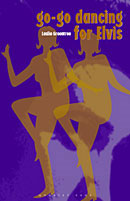
go-go dancing for Elvis, by Leslie Greentree

My #todayspoem choice yesterday was an excerpt from the poem “being Bogey” by Canadian writer Leslie Greentree. She has kindly granted permission for me to post the complete poem here.

being Bogey

by Leslie Greentree

ever since you told me Casablanca was your favourite movie
I knew you would leave eventually     could see how the appeal
of sacrificing yourself to a higher good would be stronger than
anything I could offer you     how you were one of those men
who had to do what was right and honourable

you be Bogart then     lay yourself at the altar of an old empty
promise     at the feet of the children who will eventually scorn
your sacrifice as weakness spit I hate you when you won’t buy
them a car or this season’s green Capri pants whenever they
turn those practised pouting eyes on your stricken face

who shall I be then     Deborah Kerr in An Affair to Remember
she too must have always secretly known that love could never
conquer all the pissy details of reality     that’s why she couldn’t
offer him her flawed self     shall I sit here now with a blanket
over my legs pretending I’m not crippled

the worst part is that even though I’ve been hit by a truck there
is still a part of me that knows that this is the best way to make you
love me     if you had stayed eventually I would have driven you
away in tiny increments with my sharp tongue and my clawing
need

now you will pine for me always and I for you     absence and loss
the only guarantees of a great and lasting love     the ideal and
torment of what’s lost somehow more real than making supper
washing dishes taking out the garbage     but I’m still crippled
still sitting under this blanket and I’m not as drawn to the
romance of this movie as you

From go-go dancing for Elvis, by Leslie Greentree
Copyright © 2003

Leslie Greentree’s go-go dancing for Elvis was shortlisted for the 2004 Griffin Poetry Prize. Learn more here.

Celebrating the beautiful book object – The Pope’s Bookbinder, by David Mason

It’s fitting that the story of a rather legendary crafter, dealer and seller of books should be encased in a beautiful book.

The Pope's Bookbinder, by David Mason, published by Biblioasis

The Pope's Bookbinder, by David Mason, published by Biblioasis

The Pope's Bookbinder, by David Mason, published by Biblioasis

The Pope's Bookbinder, by David Mason, published by Biblioasis

It’s also fitting that this beautiful book should take up residence in this household, alongside the many books and literary artifacts we’ve purchased from David Mason’s antiquarian treasure troves over the years.

From the warm-toned, linen-textured dustjacket to eye-pleasing and easing type to charming endpapers depicting watercolour streetscapes on which the various iterations of Mason’s shop have resided, this book welcomes the reader into what promises to be a series of delicious tales and absorbing commentary on the book trade. A most-anticipated book of the first half of 2013, you can learn more about it and its delightfully acerbic raconteur author here, here and here. If you can’t make your way to his shop (from which you will not emerge empty-handed), you can visit online at www.davidmasonbooks.com.

Spring/summer 2013 reading aspirations and inspirations

Cottage shoreline, to eventually include dock

Unprecedented high water levels on our lake this year could mean a bit of a delay getting the cottage dock installed and ready for another season of sunny lolling and reading. That doesn’t mean I can’t start thinking about what books I hope to be devouring in the midst of our Canadian spring and summer splendour. I did that in delicious anticipation last year, and I thought it might be fun to reflect and plan (and salivate a little) and do it again this year.

This is an ambitious list, but I know it’ll give me lots to choose from – new reads, overdue reads, and maybe even a reread or two.

Coping with Emotions and Otters, by Dina Del Bucchia

  • Clear Skies, No Wind, 100% Visibility, by Theodora Armstrong ✔
  • Coping with Emotions and Otters, by Dina Del Bucchia ✔
  • Journey With No Maps, by Sandra Djwa ✔
  • We So Seldom Look on Love, by Barbara Gowdy (reread)
  • Music For Torching, by A.M. Homes
  • Rosina, the Midwife, by Jessica Kluthe ✔
  • The Miracles of Ordinary Men, by Amanda Leduc ✔
  • The View from Penthouse B, by Elinor Lipman
  • Monoceros, by Suzette Mayr
  • Discovery Passages, by Garry Thomas Morse
  • Bone and Bread, by Saleema Nawaz ✔
  • In the Skin of a Lion, by Michael Ondaatje (reread)
  • Your Call is Important to Us – The Truth About Bullshit, by Laura Penny
  • The Soul of Baseball – A Road Trip Through Buck O’Neil’s America, by Joe Posnanski ✔
  • The Truth About Luck, by Iain Reid
  • Studio Saint-Ex, by Ania Szado
  • Bender – New and Selected Poems, by Dean Young

(As I read them, I’ll tick them off my list … ✔)

Dock reading in July, 2013
(July update: Here is some of the reading material that made it to the dock.)

Is there anything else you’d recommend that I really need to read and that really lends itself to an accompaniment of summer breezes and beverages?

What are your spring/summer reading plans and desires? Please share them here in the comments, or send or tweet me (@bookgaga) a link to your list – would love to compare notes!

As I said last year, this list is subject to change, whim, fancy and recommendations from my erudite and persuasive book friends. Still, it’s nice to start dreaming, isn’t it?

There are lots of nice recommended summer reading lists out there. Here are some that particularly caught my fancy (hmmm):

Cottage shoreline, to eventually include dock

Project Bookmark Canada, placing stories and poems right where literary scenes are set

In The Skin Of A Lion, by Michael Ondaatje

When I moved to Toronto in 1983, my enduring romance with the place I chose and still choose to call home started in a small apartment on the edge of the Don Valley, just north of Broadview and Danforth Avenues. My memories of those early days have the rumble of the subway in the soundtrack. Fresh out of university, I always had my nose in a book as I took the TTC downtown to my first job after graduation. Actually, I would drink in a breathtaking view from the Bloor Viaduct – the sun glinting off the CN Tower to the south, or the amazing masses of trees to the north, and yes, traffic mayhem of one sort or another on the DVP – and then my nose would be in my book once we hit the tunnel heading west to Castle Frank station.

I still lived in that neighbourhood in 1988, when my subway book one morning was Michael Ondaatje’s In The Skin Of A Lion. I now live further east of that area, but I still regularly take the subway along that line and over that bridge … and every single time, the phrase “We have to swing” sweeps through my mind and I shiver. I love that the first Project Bookmark plaque captures an unforgettable scene from one of my all-time CanLit favourites, which is linked intimately to an important part of place and time and life for myself … and, I know, for many others.

Canadian literature – poetry and prose – informs our personal and physical terrains. At its best, it both grounds and puts our spirits in flight. Project Bookmark so brilliantly makes manifest this idea, with a dozen plaques (so far) across Canada that mark the places where real and imagined landscapes meet, placing text from imagined stories and poems in the exact, physical locations where literary scenes take place. Writers, readers and those who will become writers and readers need to see more of these essential markers in their communities and in the places they visit across our country.

Please donate to Project Bookmark

I want to see this network of sites and stories expand and capture the imaginations of Canadians young and old, so I’ve donated and become a Project Bookmark Canada Page Turner. Please join me. For $20, less than the cost of the average paperback, you can help create a tribute to Canadian sites and stories, for today’s readers and for generations to come. It’s easy – just click the Donate button here: http://projectbookmarkcanada.ca/

If you donate today – April 12th – your name will be entered into a draw to win tickets to the Griffin Poetry Prize 2013 shortlist readings (Wednesday, June 12th at magnificent Koerner Hall in Toronto) and copies of the Griffin Poetry Prize anthology.

Celebrating the beautiful book object – Seldom Seen Road, by Jenna Butler

Although the calendar says it’s spring tomorrow, Mother Nature is having none of it here in Toronto. As a howling wind swept around my house in the east end yesterday, variously tossing down rain, snow, sleet and hail in succession, a little package arrived from Edmonton’s NeWest Press. When I opened the package, it was as if a warm spring breeze wafted out …

Seldom Seen Road, by Jenna Butler, published by NeWest Press

Flipping through, sampling intriguing dashes of poetry from Jenna Butler’s third collection, I found I was as enamoured by the fresh first impressions of the physical book as I was by the words on the page. No surprise, then, to discover that this book’s design was imagined with the signature subtlety, attention to detail and fidelity to the subject matter that characterizes all of Natalie Olsen’s fine work. (Learn more about her work and creative process at her Kisscut Design blog.)

Seldom Seen Road, by Jenna Butler, published by NeWest Press

Seldom Seen Road, by Jenna Butler, published by NeWest Press

Seldom Seen Road, by Jenna Butler, published by NeWest Press

Seldom Seen Road, by Jenna Butler, published by NeWest Press

The lattice of leaves and tendrils, underpinning the themes and images of nature throughout Butler’s collection, is echoed throughout the book. Swoon … even wee leaves sprout from the page numbers. Spring is in the air!

Just as the book’s epigraph from George Melnyk states, “the visual turns visionary.”

Thank you to NeWest Press for providing a review copy of Seldom Seen Road, by Jenna Butler.