Annabel, by Kathleen Winter

Annabel, by Kathleen Winter

Even a brief summing up of the story of Annabel is by no means simple. A child is born in a remote Labrador village in the late 1960s. The child is born a hermaphrodite, bearing both male and female reproductive organs. Three people know how the child came into the world: the child’s parents and a woman who is a trusted family friend who attended at the birth. The three people have different perspectives then and throughout the child’s life as to how the child should be raised. However, a decision is taken early in the child’s life to raise him (well, that gives it away, doesn’t it?) one way, and to keep the other part of his identity a secret, even from him.

Not unexpectedly, the decision has repercussions: some immediate, some longer term, some clearly and directly affecting and making an impression on the child Wayne, and some having more effect or creating more strains or complications for the people around him/her. In many ways, Wayne’s childhood is one of growing and thriving in a curious, unique but generally emotionally and physically secure fashion, with the firm but divergent nurturing of the three loving people who know his complete story. He also flourishes with the friendship and affection of a singular female friend. That friend’s name is Wally, short for Wallis, which echoes a famous Wallis who, ironically, was also rumoured to be intersex … which, of course, only added to her mystique.

Author Kathleen Winter populates Wayne’s world with images and influences that fill out the fraught, magical world of his/her existence like so many swirling snowflakes, but also testify symbolically to the very particular beauty of his not fully realized duality. Stars and constellations, statistics and synchronized swimming are all literal interests of Waynes, but also manifestations of and analogies for the symmetries and mysteries of which he/she is comprised. They also hint at how those symmetries are not fully realized and balanced.

“You can’t be synchronized if you’re by yourself. Imagine synchronizing your watch to the right time if it is the only watch in the world.”

Wayne’s fascination with the idea of living on (rather than crossing) a bridge, and Wayne and Wally’s fanciful, fragile and temporary refuge, a fort built and poised delicately over a creek … Annabel brims with vivid images that capture memorably Wayne’s unwitting suspension between worlds, genders and selves.

Perhaps most potent of all the elements in Annabel are those of voices literally and figuratively suppressed and lost, then regained and found. Wayne/Annabel learns in very dramatic and specific fashion what he/she is comprised of, and then is tested most cruelly only as he/she is gaining a true sense of self and voice. Similarly, long lost and then found friend Wally fights to regain her voice in a long fought battle of a different kind. For both, their new voices …

“… came from a different person, a person who had learned how to build a voice from the ruins up, a person who had lost everything and had begun from having worse than nothing.”

The weekend I devoured Annabel, I was also reading an absorbing essay by the award-winning Canadian poet A.F. Moritz, entitled “What Man Has Made of Man / Can poetry reconnect the individual and society?” In many respects, Moritz’s essay is a reflection on the differences between solitude (a good and contemplative state), communion/community and isolation.

“The formative struggle of the modern individual’s life is to find a place in society …There’s no such division as the one usually made, between inward and private life on the one hand, political and economic life on the other. It’s a matter of life and death. Isolation is death. A society that isolates its individual members from itself, placing them in enforced solitude, or that gives them only a simulacrum of communion, is deathly, and it is deathly because what it believes in is death. Communion on the other hand is life and comes out of belief in life.”

While Wayne/Annabel’s future is not defined in the end, that future’s prospects are presented with hope nonetheless. Wayne/Annabel is moving steadily from isolation to communion and to a comfortable and rightful place in a world of his/her choosing.

Kathleen Winter has seamlessly woven compelling and organic layers of themes and symbols with, at its foundation, a heartfelt story of loving steadfastly and unconditionally, and striving to find one’s place and identity while retaining respect for others.

Sandra Beck, by John Lavery

Sandra Beck, by John Lavery

John Lavery’s Sandra Beck is entrancing, at times infuriating and ultimately unforgettable. This applies to both the mercurial, enigmatic titular character and the book of which she is the beating heart, the central obsession and the puzzling, then gaping, then heart wrenching absence.

What we do know fairly factually about Sandra Beck is that she is ravishingly beautiful, musically gifted, an indefatigable administrator for the Montreal Symphony and equally tireless about perambulating through the world on fiercely wielded crutches as the result of losing a foot to bone cancer. The impressionistic portrait of the spirit of Sandra Beck is painted by the two people who love her most, and perhaps know her least: her jittery, intense, word-besotted teenaged daughter Josee, and her passionately devoted but bewildered husband, Montreal police chief and television personality Paul-Francois (PF) Bastarache, who has known and been fascinated by Sandra since they were teenagers. Josee’s and PF’s collective composition of Sandra Beck is both compelling and contradictory.

Josee sees Sandra as her consummate and ultimate “happiness”, but one that radiates only cold and is often simply not there. Josee’s obsession with her mother overshadows everything, so much so that the girl’s troubling sexual initiation seems like a peculiar afterthought, something with medical consequences that she simply must recover from so that she can continue to strive to please her mother.

Misunderstandings between francophone and anglophone culture, obdurate silences between Catholic and Protestant faiths, and odd miscommunication and misreading between French and English (the misapprehended phrase “Visit Bill” stands out vividly) all seem to be precursors of the more profound disconnection between Sandra Beck and her husband PF. While PF struggles to understand Sandra and give her personal and psychic space, while still feeling consumed by her powerful presence and wanting to support her, particularly during her recovery from the surgery to remove her foot, he despairs: “Sometimes I wonder if I’m listening in the same language she’s talking in.”

The first quarter of the book, told from Josee’s point of view, is uneven, somewhat queasy and seemingly a little too captivated with its own wordplay, although that could be as much an accurate depiction of a bright, troubled teenager as it is lack of discipline on Lavery’s part. It’s worth pointing out, however, as that may be the point in the book where some readers might give up on the book. However, Sandra Beck swiftly gains momentum and gathers emotional resonance as soon as PF’s voice takes over.

PF traces tenderly the milestones of the life of the woman he has known “off and on” (an odd but increasingly poignant phrase) throughout his life. He starts to mingle those memories with equally striking reminiscences about his career in law enforcement. PF is haunted by the victims of and suspects in crimes he has assisted in investigating, and that becomes entwined with an almost overpowering sense of Sandra Beck’s presence in an empty car seat as PF drives and unspools stories and memories in an extended scene. PF’s revelatory memory of the real-life École Polytechnique massacre is devastating, and then that shock builds to a stunning, emotionally lacerating crescendo – yes, the perfect musical metaphor to link to the mysterious and beloved Sandra Beck.

Although it is juxtaposed with thoughts and memories of his wife, PF’s contemplations about his life in law enforcement unto themselves vividly capture the impact of violent crime on those who examine crime scenes and help seek justice for victims. In contrast to the numbing litany and inventory of death in Roberto Bolano’s 2666, which has its own kind of power in sheer numbers but is grindingly inhuman, PF’s insights are shockingly intimate, but humanizing in that very unsettling intimacy. As he observes: “Having spent the day tramping through the swamp of the vilest human conduct imaginable, he was in an over-extended state of brittle nervousness which neither gentility nor prayer had managed to appease.”

What Sandra Beck the book seems to conclude is that neither love nor desire nor compassion, nor even acute powers of vigilance and observation, are ever going to give you the complete picture of another person, or solve the mystery that is another human being. However, this strangely bewitching book manages to couch that in a way that is not pessimistic. Although we have not learned as much as we would like to about Sandra Beck, we have learned a great deal about passionate, unconditional love that does not need to know all to love all.

Thank you to House of Anansi Press for providing a review copy of Sandra Beck, by John Lavery.

Fauna, by Alissa York

Fauna, by Alissa York

Early in his own reading of Fauna, a panelist with the National Post Afterword Reading Society referred to the urban wild settings in the book as “a kind of subconscious of the city”.1 I latched on to that observation about one-third of the way through my own reading of Alissa York’s fine novel. I found that characterization of Toronto’s Don river, valley and ravines as the subconscious, the undercurrent and the foundation of this haunting urban wildlife love story gorgeously informed my Fauna experience. “Characterization” is probably a particularly apt word, as the urban wild settings are almost a collective character unto themselves. York sensitively and unforgettably weaves the presence of this character throughout a tale of damaged souls struggling to survive in a large city and in the world in general.

Fauna’s characters, separate and with seemingly little in common initially, cross paths, converge and ultimately connect against a background that runs the gamut from the office towers of the city’s intimidating financial district, to the sweeping roadways and busy streets, to the lush, labrynthine, simultaneously welcoming and sinister forests, bushes, creeks and ravines. York deftly handles multiple voices and perspectives, including those of a federal wildlife officer on stress leave, an auto wrecking company owner and self-taught wildlife rescuer and sanctuary manager, a homeless teenager and her faithful dog, a veterinarian specializing in animal rehabilitation, a young military veteran and a controversial blogger who might or might not be on a deadly mission. Each character is troubled in one form or another in the present, but can also trace many current tribulations and challenges to dark chapters and influences in their respective pasts. They gravitate to each other through their love of and connection to nature and animals. In one case, where that love and connection do not exist, the character hostile to nature is tragically isolated.

York’s facility with balancing different voices and points of view extends beyond the human. The sections seen through the eyes of various urban wildlife are sufficiently convincing and germane to the story and its themes of personal and collective survival. This multi-layered approach is only occasionally an impediment to this otherwise engrossing novel when some of the switches are made a little too quickly, when you’d perhaps rather spend just a few more pages or even paragraphs with a specific character or situation.

Do I find this book resonates so much because the Toronto backdrop is literally so close to home? Perhaps, but I hope it would similarly strike a chord with any citizen sensitive to that same urban wild undercurrent in his or her own city.

Notes:

1. The Afterword Reading Society (National Post)

I’m really enjoying how Alissa York manages to incorporate the wilds of the Don Valley and Toronto’s ravines in this novel. To me those areas are a kind of subconscious of the city and it’s just more than appropriate that Fauna’s characters spend their time moving in and out of it.
Ron Nurwisah, National Post arts editor

2. The terror within (The Globe and Mail)
When humans respond with fear to a threat from a predator, they should remember who the most dangerous animal on the planet is
Essay by Alissa York

I think [American writer and naturalist] Barry Lopez was right: While a cautious approach to any wild animal is only sensible, a phobic response is less about the beast in the underbrush than it is about the beast within. When we refuse to look inward – when we fix our fear on the head of a coyote or any other fellow predator – we miss the opportunity to face up to our own demons.

Book manna from heaven … from CBC Books

The Culprits, by Robert Hough

By virtue of the simple acts of reading a book. forming an impression of a book, forming that impression into something expressed in 140 characters, and then sending out that impression via Twitter with the wee tag #cbc140 added to it … one can be subject to the generosity of the Canadian Broadcasting Corporation’s Book Club, who might just reward your efforts with … more books.

Thanks to CBC Books’ most recent largesse, I just took delivery today of the following:

1. More Money Than Brains, by Laura Penny
2. April in Paris, by Michael Wallner
3. The Eye of Jade, by Diane Wei Liang
4. Peddling Peril, by David Albright
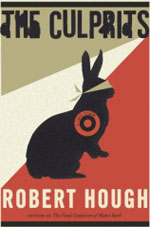
5. The Culprits, by Robert Hough

I confess that – as well read as I fancy I am – I know little about any of these books and authors. That’s what makes this package so delightful and makes me that much more grateful, as I’ll now have the opportunity to read some books I might not have chanced upon otherwise, and will learn about some new authors. Yes, the ice cream headache of bookish delight is gaining momentum already!

Give it a try: tweet your mini book reviews to #cbc140, and you could soon be feeling that same lightheaded feeling of bookish delight yourself!

Gould’s Book of Fish, by Richard Flanagan

Gould's Book of Fish, by Richard Flanagan

Gould’s Book of Fish brings to alarmingly vivid fictional life the goings-on at Macquarie Harbour penal colony, reputedly one of the harshest of the real-life British penal settlements in Van Diemen’s Land (now the Australian state of Tasmania) in the early 1800s. The rambling, at times hypnotic tale is told from the point of view of William Buelow Gould, jailed regularly as a forger but perhaps more unfortunate and imprudent in his choice of company than genuinely criminal. Throughout his personal history in and out of various forms of incarceration, he finds both salvation and damnation through his skills with a paintbrush.

Alternately crisp, shocking and brilliant, then long-winded to the verge of tediousness, Richard Flanagan has forged a thorny masterpiece. Description of life – if it could be called that – in the penal colony is thick with unforgettable and at times macabre violence, the singular perversity and brutality of what those in nominal power do to those in their control in the surreal penal colony. At its best, some of the bizarre plans of those besotted with their pathetic power in this setting take on a comic grandiosity reminiscent of Peter Carey’s Oscar and Lucinda. The rush of almost unbelievable cruelty is sometimes halted in its tracks, though, by moments of stunning, lyrical intimacy and love, as Gould simply fights to survive, to maintain his sanity and to make human connections.

While Gould’s Book of Fish is ostensibly about a visual artist, it is a unique tribute to both the power and, at times, the impotence of words. Characters die, quite literally, because of the words they have amassed and the deceptions or other nefarious purposes for which they have amassed them. While Flanagan has created a story about and structured using pictures (taken from archived images by the real Gould), he has created with words many images so indelible you won’t be able to erase them, even if you most fervently wish to.

Gould’s Book of Fish culminates in the layering on of so many themes and considerations that some readers will be left exhausted, on the heels of the shock and brutality of much of what Gould has gone through and witnessed. That he does get through it to a form of perhaps unusual peace is some reward for persevering with this demanding book. I commit to revisiting this review in a few months’ time, as I suspect another reward of persevering is that there will be a revelatory afterglow from this book once its demands and shocks have dissipated.

Far To Go, by Alison Pick

Far To Go, by Alison Pick

Would opening words such as these turn you away from a book?

“I wish this were a happy story. A story to make you doubt, and despair, and then have your hopes redeemed so you could believe again, at the last minute, in the essential goodness of the world around us and the people in it. There are few things in life, though, that turn out for the best, with real happy endings.”

They shouldn’t. They’re spoken by the world-weary but compassionate modern day narrator of a generations-old tale. The narrator leads those not stymied by that opening into the compelling story of an unusually courageous family facing increasingly troubling and demanding challenges, dilemmas, changes and decisions in the face of the start of World War II. While that might sound daunting and indeed, not a happy story as the narrator warns, it’s the narrator’s own unwitting warmth that will draw you in, that counterbalances the grim aspects of the unfolding story, and ultimately offers forms of hope and redemption, more than the narrator would even credit.

The Bauers, Pavel and Anneliese and their six-year-old son Pepik, are a well-off, secular Jewish family living a quiet life in a small town in the Bohemia region of western Czechoslovakia in the late 1930s. Their story begins with a jolt, as they learn of violence touching their extended family, as rumours of the growing Nazi occupation start to intrude on their comparatively idyllic existence. The characters of the Bauer family, including Pepik’s young, beloved governess, Marta, business associates from Pavel’s textile factory and others, start out somewhat wooden. The initial jolting sequence aside, you might be slow to connect with any of them and feel their rising concerns and confusion. (Thankfully, the present day narrator offers a plausible explanation later for some of the woodenness.)

Even so, the Bauers and their child’s governess gradually develop into complex beings facing complicated times and situations, with often conflicting but very believable motivations and desires. At the same time, their eventual courage and determination seems unusual because these individuals don’t initially seem capable of great or even resourceful acts. They’re all in varying degrees of denial about the encroachment of the Nazi occupation of Czechoslovakia, seemingly too young or too sensitive to understand and cope with what is going on, or simply absorbed in day-to-day business and busy-ness, much of it ephemeral, trivial or distracting. In other words, the Bauers are authentically human in the face of forces beyond anyone’s comprehension.

Author Alison Pick was inspired by her grandparents’ own arduous five-year exodus from Czechoslovakia to Canada during World War II in constructing the story of the flight of the Bauers. She couples down to earth, propulsive description and dialogue with occasional flourishes of the cinematic, all interwoven with the deft and poignant use of literal and symbolic images. Trains, which bookend both the story of the Bauers and the voice of the narrator, are a powerful case in point. Pepik’s toy train set interconnects the Bauer home, is a source of both distraction and solace for him and his family, and is a reminder of his absence when his parents secure him a place on a Kindertransport, part of a series of trains used to rescue children from Nazi occupied territories to be placed with families in the United Kingdom until and if the children could be reunited with their parents after the war. Arrivals and departures on train platforms, especially Pepik’s dramatic departure, are on one hand like typically dramatic movie scenes, but Pick underpins them with the earthy sights, sounds and smells of desperate, frightened human beings. Throughout, she invests images like this with both thematic potency and realistic dramatic resonance.

Other examples of pervasive, effectively used imagery include references to lost children and lost childhood, and suppressed and denied identities. Marta, in that regard, is darker and more dimensional than her callow, innocent exterior first suggests. Most wrenchingly, the Bauers struggle with revealing or suppressing their Jewish heritage or assuming different identities in order to survive.

The voice of the present-day narrator in Far To Go – wounded but resilient – is a reassuring and steadfast guide to the conclusion of this riveting story of a family torn asunder, then reassembled in a perhaps somewhat surprising fashion.

“There was not joy, exactly, in finding each other – we were too old, too set in our ways – but our pain was dulled. What we felt was not quite pleasure, but contentment. We had each finished our searching.”

The voice is wary, damaged, almost resigned, but the note of contentment suggests a faith not entirely extinguished by the cruelties of history. This is a journey and a voice worth following to an unexpectedly redemptive resolution. Even the green-tinged tones of the cover convey a hopefulness that builds with a subtle momentum over the course of this absorbing book.

See also

Alison Pick recently discussed “Far To Go” on CBC Radio’s The Next Chapter
http://www.cbc.ca/thenextchapter/2010/11/alison-pick.html

Thank you to House of Anansi Press for providing a review copy of So Far to Go, by Alison Pick.

Night Work: The Sawchuk Poems, by Randall Maggs

Night Work: The Sawchuk Poems, by Randall Maggs

Randall Maggs’ gritty poetry collection Night Work: The Sawchuk Poems casts a semi-biographical gaze on the life and times of legendary and troubled NHL goalie Terry Sawchuk. Arguably the standard by which hockey goaltenders are still measured today, with many records that have only recently been broken, Sawchuk played most of his 21 seasons in the NHL, spanning the 1950s and 60s, with little of the protective equipment in which modern goalies gird themselves. He also played in an era where backup goalies weren’t customary. This foreshadows and explains a lot.

How did Maggs formulate the balance of history, fact and imaginative interpretation to come up with his fierce and wrenching version of the Terry Sawchuk story? As he explains in the closing acknowledgements:

“What appears in the poems is based on stories told to me by those listed gratefully below or on what I have read or on what I brought to the book from my own life and playing days. As far as pure veracity is concerned, I don’t know which of the three would be the most unreliable.”

(Those listed gratefully include sports greats – players, officials and writers such as Johnny Bower, Carl Brewer, Ken Dryden, Ron Ellis, Trent Frayne, Dick Irvin, Red Storey and Stephen Brunt, as well as poetry greats Don McKay and Karen Solie.)

Maggs takes a varied approach to presenting Sawchuk the man, the figure and the legend, with different variations of dense but absorbing blank verse forms, and with a wide range of perspectives and colourful, often haunting voices. The tales, not just of action on the ice, but in the locker room, facing or avoiding the media, travelling, finding some quiet and solace on a frozen lake, run the gamut from rollicking and down to earth to dark and brooding to lyrical.

Sensitively researched and curated photographs are touchstones for several of the poems and fragments in this collection, and are arresting all on their own. In the mid-1960s, Life Magazine had a makeup artist superimpose scars and stitches on Sawchuk’s face to illustrate all of the injuries he’d incurred over his career. That picture concludes the collection, and is a wrenching poem unto itself.

The mounting inventory of Sawchuk’s mental and emotional suffering, including alcoholism and depression, is perhaps even longer than the physical injuries that either sparked or exacerbated his ongoing woes. But arching over it all and captured powerfully in Night Work: The Sawchuk Poems was the man’s unstinting determination to succeed and triumph and, in his way, transcend the harsh, grinding vocation he’d made his own and in the process, transcend time, even if only one game, one period or one play at a time.

Talk’s over at the glass, the captains
waved away. The referee holds four fingers up
and folds his arms, four seconds he wants put back
on the clock. Son of a bitch, an old defender
sags against the boards. Still, imagine the power,
to kick time’s arse like that.

The following is a dramatic short film based on Night Work: The Sawchuk Poems.

The following is an audio excerpt, courtesy of Brick Books, of Randall Maggs reading the poem “No Country for Old Men” from this fine collection.

2010 reading list (so far)

Here are the books I’ve read so far in 2010. In 2009, I read 52 books, inspired in part by great discussions and suggestions I found amongst the book blogging and reader community on Twitter. I’d like to at least match my 2009 total … but then again, are total numbers of books or pages really the point? What do you think?

  1. Sink Trap – A Georgiana Neverall Mystery
    by Christy Evans

  2. Matter
    by Meredith Quartermain

  3. Invisible
    by Paul Auster

  4. This is Water – Some Thoughts, Delivered on a Significant Occasion, about Living a Compassionate Life
    by David Foster Wallace

  5. Man Gone Down
    by Michael Thomas

  6. The Museum of Innocence
    by Orhan Pamuk

  7. Awake
    by Elizabeth Graver

  8. The Ordeal of Oliver Airedale
    by D.T. Carlisle

  9. The Bishop’s Man
    by Linden MacIntyre

  10. Outliers
    by Malcolm Gladwell

  11. The Children’s Book
    by A.S. Byatt

  12. Solar
    by Ian McEwan

  13. The Last Woman
    by John Bemrose

  14. Nox
    by Anne Carson

  15. Chronic City
    by Jonathan Lethem

  16. So Much For That
    by Lionel Shriver

  17. The Sweetness at the Bottom of the Pie
    by Alan Bradley

  18. Coal and Roses
    by P.K. Page

  19. Pigeon
    by Karen Solie

  20. Useless Dog
    by Billy C. Clark

  21. The Certainty Dream
    by Kate Hall

  22. The Heart is an Involuntary Muscle
    by Monique Proulx
    (translated by David Homel & Fred A. Reed)

  23. The Imperfectionists
    by Tom Rachman

  24. Migration Songs
    by Anna Quon

  25. Grain
    by John Glenday

  26. The Sun-fish
    by Eilean Ni Chuilleanain

  27. 2666
    by Roberto Bolano

  28. A Single Man
    by Christopher Isherwood

  29. Night Work: The Sawchuk Poems
    by Randall Maggs


A Single Man, by Christopher Isherwood

A Single Man, by Christopher Isherwood

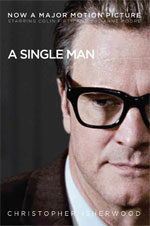
Truth be told, I came to this book by way of the movie (and hence the book cover art which, for sake of accuracy, is the version of the book I read, showing Colin Firth depicting central character George). I love thoughtfully made movies, but they are not my preferred avenue to discover books … but sometimes it works out for the better and this is one such case.

A Single Man, the mid-1960s short novel by Christopher Isherwood, captures the delicate minutiae of one person’s day, along with that person’s welling emotions and surprising spirit. George is a literature professor at a college in Southern California, set in the time in which the book was written and published. He is grappling with the sudden death of his longtime lover, Jim. While going about his day and his usual encounters in his neighbourhood and workplace, he is struggling from moment to moment with, well, how to *get* from moment to moment in the face of pervasive grief. I won’t spoil either the book or the movie by saying that each interprets differently George’s success in this struggle. In both, the end of George’s day is both ironic but oddly life affirming. In both, it’s entrancing to share the protagonist’s 24-hour journey.

Migration Songs, by Anna Quon

Migration Songs, by Anna Quon

Migration Songs by Anna Quon is a most worthy addition to the CanLit mosaic. The book’s own mosaic is a sympathetic and memorable cast of characters of varying pedigrees contending with literal and figurative migrations in their respective personal journeys.

By the dictionary definitions, a migration is the seasonal passage of groups of animals for survival, feeding and breeding, or the movement of a person or persons from one country or locality to another. While one sounds natural, normal, organic and positive, the other sounds possibly artificial, forced or prompted by negative reasons. This dichotomy distinguishes the types of migrations of various characters surrounding the troublingly static main character, who is finally compelled and inspired to set her own migration in motion.

The narrator of Migration Songs is reclusive, rueful Joan, a 30-something variously un- or underemployed loner. She sits at the eye of a storm of swirling and intersecting migration paths that enfold and perhaps protect, but increasingly intimidate, confuse and paralyze her. Joan’s mother Gillian is a fiercely determined Chinese-Canadian immigrant who forged her own migration from her parents’ tradition by resisting an arranged marriage to find her own choice of partner, David, who in turn migrates from England to start a new life with his wife. He had perhaps already set his personal migration in motion before even meeting Gillian by diverging from his British upbringing to become an avid if perhaps naive Maoist. David and Gillian’s transition into marriage and parenthood ultimately separates into divergent personal migrations.

As influential as her parents are to Joan is Edna, a feisty Hungarian immigrant who works as a live-in housekeeper in Joan’s family’s neighbourhood. Edna becomes a de facto parent, mentor and champion for the often fragile Joan. The true extent to which Edna’s own life was a series of daunting migrations – not just from one country to another, but over and through harrowing personal terrain – does not emerge until Edna has aged, has moved to a retirement home and is starting to descend into dementia. When Joan is finally in a position to both repay Edna’s devotion and pay tribute to her personal courage, she is able to set in motion her own migration, unfurl her own migration song and confidently take hold of her own life.

While there is much to recommend this book, Quon particularly excels at capturing the perceptions and wonderment and misapprehensions of a child as she traces Joan’s life and arrested maturity. While fragile, Joan is still extraordinarily faithful and stalwart, and even determined in her fashion. Quon has managed to create an indelible character in Joan who is comparable to young, troubled but striving heroines from Anne Shirley to Madeleine McCarthy of The Way the Crow Flies to Thebes Troutman of The Flying Troutmans.

Is having migrated in one form or another (through parentage, heritage, what one calls home) a self-fulfilling or self-denying construct? Some survive and thrive when they migrate, others allow the fact of having migrated in one form or another – or maybe to have been denied the opportunity to migrate – to always impede them. As frustrating as Joan’s inertia and reticence can be at points throughout the book, the reader is always rooting for her, hoping she’ll ultimately find some direction for her own migration.

Author Anna Quon offers some inspiring insights into her own journey or migration to write this book in the following interview: